
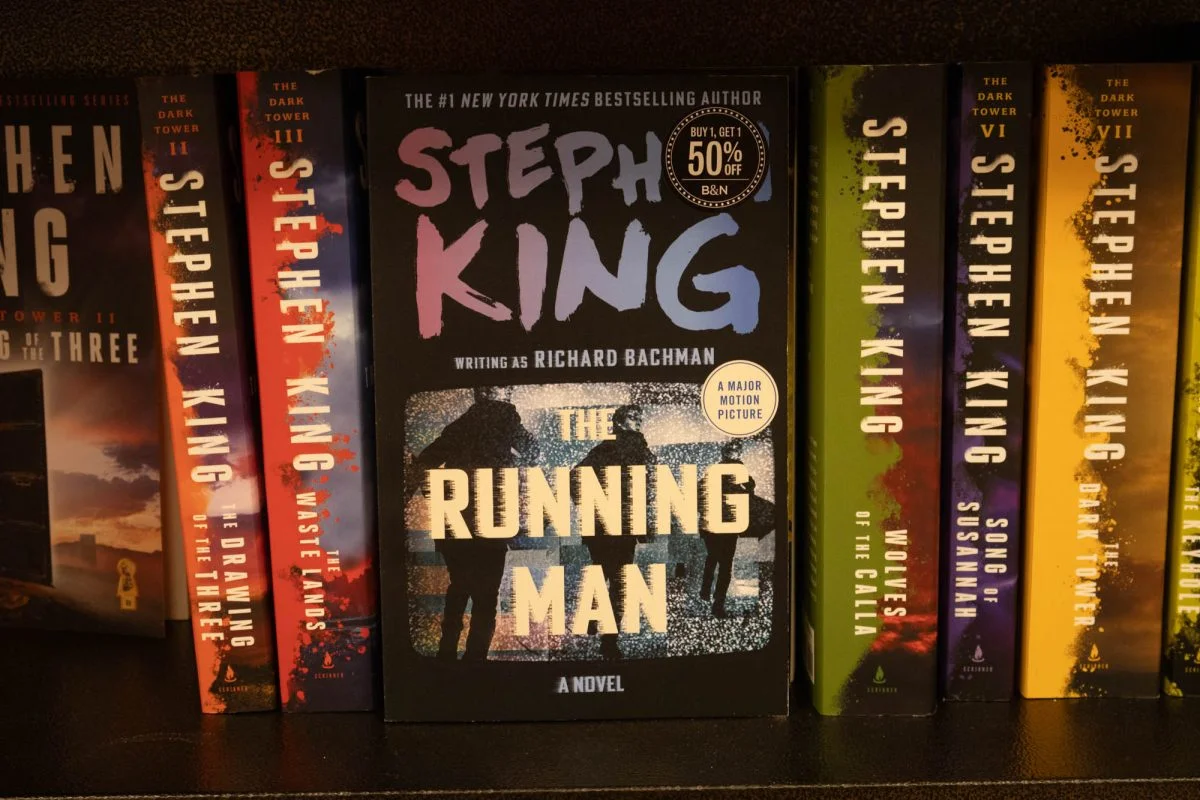
The new adaptation of Stephen King The Running Man, directed by Edgar Wright, has hit theaters in 2025 with significant changes separating it from the original novel. This comparison highlights the eight most notable differences between Wright’s film and King’s 1982 book, as the story is reimagined for modern audiences.
Edgar Wright, best known for his inventive cinematic style and action-driven films such as the Cornetto trilogy and Baby Driver, brings a star-studded cast to his take on Stephen King The Running Man. The film’s reviews have been mixed, but it remains a compelling watch for fans of action thrillers and King’s dystopian vision. The original novel, published under the pseudonym Richard Bachman, has been praised for its oppressive yet nuanced depiction of a future society where entertainment and cruelty blur.
The Film’s Record for Surviving the Running Man Is Greatly Increased
One of the earliest divergences between the novel and the 2025 film is the record set by previous participants in the deadly game. In the film, audiences are told that a contestant managed to survive for 29 days, setting up hope for Ben Richards, played by Glen Powell. This figure influences the film’s tension and storyline, especially as the reveal comes that Evan McCone, portrayed by Lee Pace, is a former competitor who now leads the Hunters after making a deal under terrible pressure.

This dramatic storyline signals that McCone is not an elite villain, but rather an ordinary individual forced into brutality by Dan Killian (Josh Brolin). In King’s novel, the reality of the deadly competition is more grim: the record for survival is only eight days and five hours, as revealed in a confrontation where McCone congratulates Ben for surpassing this mark by two hours. The extended record in the film introduces an element of hope missing from the book’s bleak depiction.
Expanded Prologue for Ben and Sheila in the Movie
Wright’s movie introduces Ben Richards returning to his old workplace with his daughter, Cathy, hoping to regain steady employment. This sequence sets the emotional stage and quickly reveals Ben’s temperament when he threatens his boss in frustration. Audiences are shown his relationship with Cathy as they watch disturbing Games Network content together, adding layers to Ben’s character early on.
Sheila is also reimagined as a hostess working at a gentleman’s club, a detail not seen in the original novel. This element is later used in the film to incite public outrage against her during the running game’s broadcast. By comparison, in the novel, Ben and Sheila discuss Cathy’s wellbeing briefly before Ben seeks out the Games Network. The film’s approach deepens character motivation and builds early audience empathy for the Richards family, who are at the heart of the narrative’s stakes.
The Addition of the “Americanos” Reality Show
In Wright’s adaptation, a satirical reality series called The Americanos is broadcast on Free-Vee, functioning as a sharp parody of the genre exemplified by Keeping Up With the Kardashians. This new element emphasizes societal distraction and declining critical thought, with Games Network using shows like this to further numb the population, making resistance to authoritarian control even less likely.
While the book describes Free-Vee programming and the pervasiveness of mindless content alongside severe restrictions on access to books, it does not include the concept of reality TV, which was not yet prominent in 1982. This cinematic addition allows the film to critique the impact of present-day media and how it can be weaponized by those in power, making the dystopia feel timely and on point for current audiences.
Michael Cera’s Character and Booby-Trapped Escape Are Exclusive to the Film
A memorable, action-packed segment in the movie features Michael Cera as Elton Parrakis, collaborating once again with Wright after their work on Scott Pilgrim vs. the World. In the film, Elton engineers a unique escape by inviting adversaries into his home, where unexpected contraptions await them, including an electric water gun.
This dynamic sequence is invented for the movie and does not exist in Stephen King’s novel. There, Elton has a more limited presence, offering some assistance to Ben Richards but not staging an elaborate or comedic attack. However, both versions share the detail that Elton’s mother is a Free-Vee addict, underscoring the corrosive influence of media on the populace. The expansion of Elton’s role in the movie introduces both levity and suspense, giving viewers memorable set pieces while still serving the core narrative.
The Film Introduces Three Contestants in the Deadly Game
Another major update is the introduction of three total contestants in the televised Running Man competition. In Edgar Wright’s film, Tim Jansky (played by Martin Herlihy) brings humor as an overconfident and ill-prepared participant who is quickly eliminated. This is used as an opportunity to present the different “archetypes” found in the show’s contestants, offering insight into the metrics and manipulation behind the Games Network’s production choices.
This approach adds another layer to how the dystopian world views its players and the stakes of the game as entertainment. In the original book, only one other contestant named Laughlin (Katy O’Brian in the film) is mentioned. The inclusion of a third player in the movie adds both comic relief and an extra dimension to the Games Network’s strategy for keeping viewers engaged.
Artificial Intelligence Wields Major Influence in the Story’s 2025 World
Artificial intelligence is a key tool used in the movie’s dystopian society, present in settings ranging from airports to the Games Network’s manipulation of footage. AI is employed to create realistic fake news, deepfakes, and advanced surveillance, updating the narrative for a modern cautionary context. The prevalence of AI manipulation in Edgar Wright’s adaptation mirrors ongoing real-world debates about technology and truth.
In contrast, King’s novel involves Richards submitting tapes that are later dubbed over by the Games Network—sometimes poorly, but with little concern for audience scrutiny. The film’s version is more convincing and disturbing, making the consequences of misinformation and loss of privacy even more striking for today’s viewers.
The Apostle: A Revolutionary Figure Created for the Film
Daniel Ezra brings to life a completely new character in the film known as the Apostle, who adopts a masked, secret identity to produce rebellious online content. This is a significant departure from the book, where Ben Richards’ encounter with Bradley and his child in Boston lacks any digital-age revolutionary or content creator undertones. In the movie, Apostle’s videos break the relentless tension and give voice to the new spirit of resistance in a world governed by oppressive media structures.
This innovation reflects how resistance looks in the era of viral online protest and digital crusaders. The Apostle’s role also adds a sense of hope and agency to the broader population, making revolution seem both possible and relatable to contemporary audiences.
A Drastically Different Ending Sets the Film Apart
The most fundamental change comes in how the film ends compared to King’s novel. In the book, Ben Richards and Dan Killian have a tense, climactic exchange over the phone, during which Ben—mortally wounded—takes over the navigation of a hijacked plane. He steers the aircraft directly toward the Games Network headquarters, resulting in an explosive crash that kills both himself and Killian, leaving the ending ambiguous and bleak. Ben’s fate is sealed, and his family’s survival remains uncertain, emphasizing the personal and societal costs of the system.
Edgar Wright’s film, however, modifies the conclusion, allowing for a moment of revolution and hope. A short epilogue presents Ben Richards as an inspirational figure, a symbol for those resisting the corrupt power structure. Rather than exiting on a note of tragic finality, the movie aims to leave viewers with the sense that the battle for justice and humanity continues, even after enormous sacrifice.
These eight major changes show how Stephen King The Running Man has evolved across mediums and decades. With Edgar Wright’s imaginative direction and a strong ensemble cast including Glen Powell as Ben Richards, Josh Brolin as Dan Killian, Lee Pace as Evan McCone, and Daniel Ezra as the Apostle, the new film situates King’s dystopia in a future shaped by media obsession, technology, and the enduring drive for survival against the odds. As society continues to grapple with the influence of entertainment, reality TV, and artificial intelligence, this fresh adaptation encourages both longtime fans and new viewers to consider what resistance and hope look like when fiction mirrors reality.
