
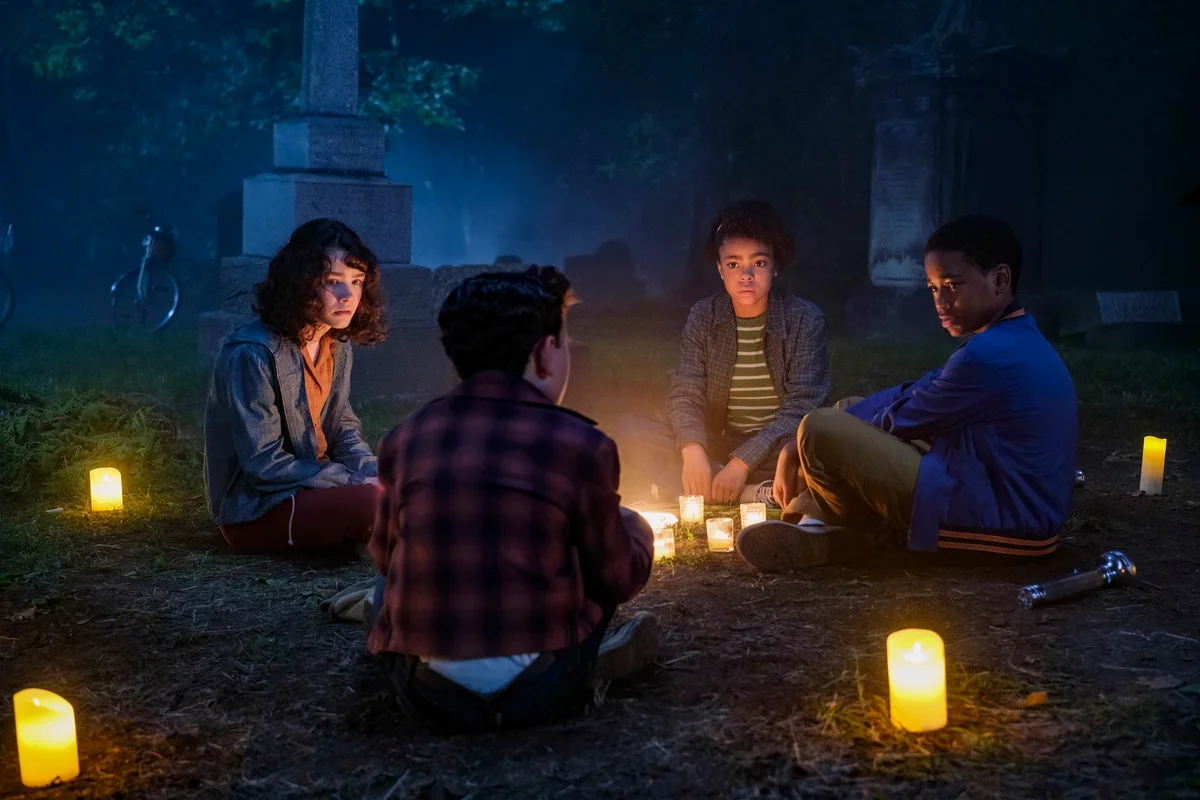
Stephen King IT Welcome to Derry viewers have been gripped by the show’s blend of harrowing horror and emotional trauma, with the series quickly establishing itself as a must-watch on HBO. The premiere left audiences stunned after a dramatic episode-ending cliffhanger, and Episode 2 introduced a scene so disturbing that it unsettled even Stephen King himself, underscoring the show’s ability to evoke genuine terror through fresh storytelling.
Horrific Scenes and Emotional Depth Set the Tone
Since its debut, IT: Welcome to Derry has drawn wide attention not just for its gruesome visuals, but for exploring deep psychological scars within its young cast of characters. Barbara Muschietti, one of the show’s co-creators, described the series opener as a ‘Red Wedding’ moment, with the shocking loss of nearly all the newly introduced children. This event sets a devastating emotional backdrop for what follows, marking the start of even darker events awaiting the survivors. Among the remaining children, Lilly, played by Clara Stack, becomes a focal point in the unraveling story following the initial tragedy.
The second episode, titled “The Thing in the Dark,” reveals more about Lilly’s haunted past. Through a flashback involving Matty, portrayed by Miles Eckhardt, viewers learn that Lilly’s father died in a bizarre incident at the pickle factory where he worked, trying to recover her lost mood ring. This accident became the source of a grim urban legend, with townsfolk whispering that pieces of her father ended up in pickle jars across Maine. The weight of guilt and sorrow eventually drove Lilly to a mental hospital, while her peers cruelly tormented her by filling her school locker with pickle jars, further isolating her in her grief.

The Supermarket Nightmare: King Endorses Chilling Originality
One of the most memorable moments for both viewers and Stephen King occurs when Lilly enters a local grocery store, only to be thrust into a chilling hallucination. The environment twists around her—aisles warp, images of her deceased friends replace friendly faces on cereal boxes, and the loudspeaker derides her, echoing the words “losing her marbles.” This psychological onslaught mirrors the unique dread that Derry’s supernatural presence inflicts upon its children, but Lilly’s experience is particularly vivid and personal.
The hallucination escalates as every shelf becomes crowded with jars of pickles. What begins as a mere childhood phobia quickly transmutes into full-blown horror, as Lilly sees her father’s severed remains floating within the jars. When the jars shatter, their contents morph into a grotesque, tentacled monster made from pickles and glass, confronting Lilly in a scene designed to both shock and unsettle. The sequence is so effective that it has clearly lingered with Stephen King himself. As King stated in a recent interview:
“There are plenty of horrors and lots of surreal visuals. There’s a supermarket scare that sticks in my mind, complete with pickle jars.”
— Stephen King, Author
Despite feeling like a page torn from one of King’s legendary novels, this particular sequence is a fresh creative addition by the show’s writers, not an adaptation of any previously published material.
Original Additions Deepen the Mythos
The introduction of Lilly and her terror in the supermarket marks one of the show’s most significant creative risks—crafting a storyline that sits comfortably within the IT universe, yet is entirely independent of prior source material. Writers Jason Fuchs, Brad Caleb Kane, and the Muschiettis have succeeded in developing a narrative that echoes Stephen King’s renowned themes: emotional pain, guilt, and the ways supernatural horror can amplify the anguish of traumatic memories.
Stephen King himself recognized the distinctive vision behind these new chapters of his classic universe, singling out Andy Muschietti’s direction in particular. As King commented:
“a touch of genius when it comes to scares.”
— Stephen King, Author
This praise holds added weight given King’s history of expressing reservations about other adaptations of his work. Andy Muschietti and his team have managed to impress the author by not only expanding upon the established lore, but by anchoring the series’ most terrifying moments in human emotion and psychological authenticity. King’s enthusiasm for their interpretation further validates the series as a bold new facet of the Derry mythology.
Expanding the World of Derry Through New Characters
Characters like Lilly have given IT: Welcome to Derry a renewed sense of unpredictability, delving deep into the everyday suffering and lost innocence of Derry’s youth. Clara Stack’s compelling portrayal brings profound vulnerability and fear to the screen, and her journey speaks to Stephen King’s ongoing exploration of childhood trauma and the origins of evil in seemingly ordinary towns. Other key characters, such as Charlotte Hanlon (played by Taylour Paige) and Leroy Hanlon (portrayed by Jovan Adepo), contribute to the tapestry of lives affected by the relentless horrors plaguing their community.
Lilly’s suffering underlines a recurring idea throughout King’s stories: Derry’s nightmares aren’t defined by Pennywise alone. The malevolent force at play preys on individual weaknesses, and the most terrifying monsters often take shape from personal loss and guilt. The supermarket scene resonates long after viewing, amplified by Stack’s intense performance and the show’s unwavering focus on psychological terror.
Anticipation Builds as the Terror Escalates
With only three episodes aired so far, IT: Welcome to Derry is already proving itself a formidable successor within the King universe. Each new chapter hints at even greater threats, notably the looming reappearance of Bill Skarsgård’s Pennywise, promising to escalate the terror further. Fans, including Stephen King himself, are witnessing a series willing to forge its own path while honoring the emotional core of its source material. The infamous pickle-jar sequence stands as a testament to the creative risks being taken—if such scenes are just the beginning, viewers can expect the horrors in Derry to intensify as the story unfolds and the show scales the streaming charts.
