
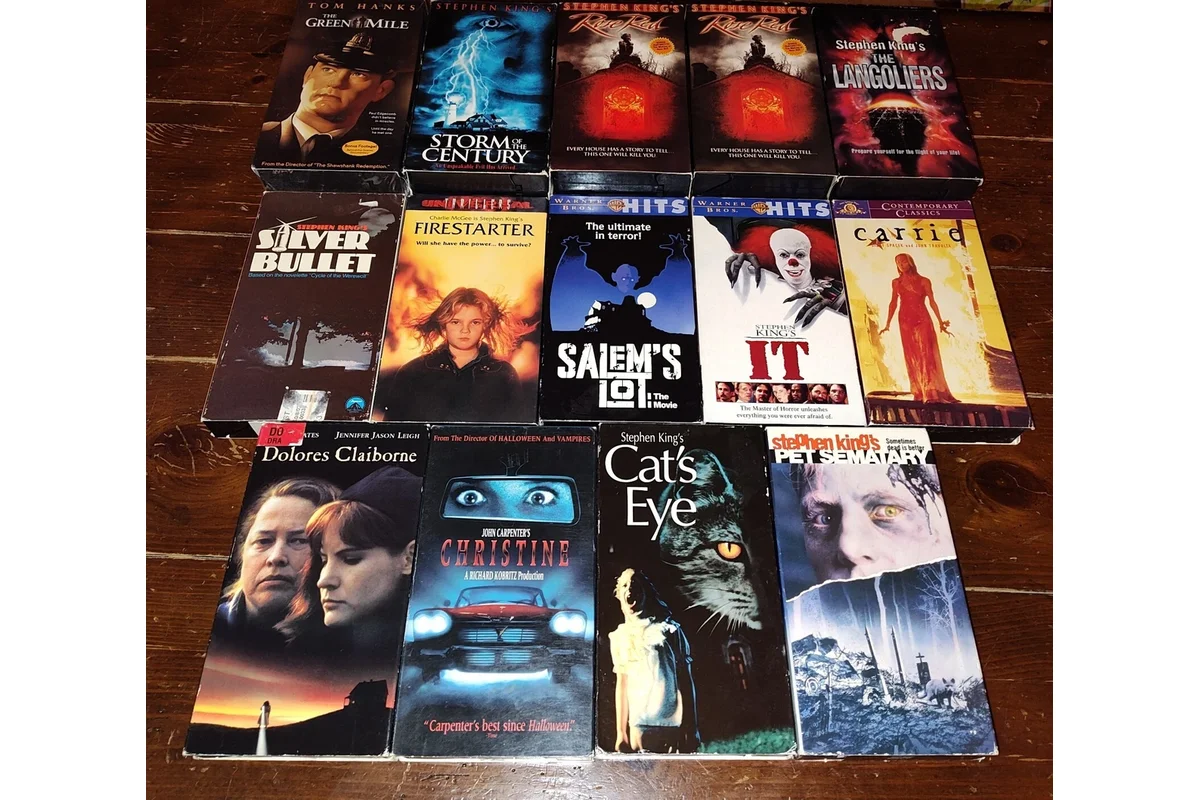
Stephen King horror movies have long captivated audiences with their intense atmosphere and psychological depth, making them some of the most unsettling works in modern cinema and television. As HBO’s upcoming It – Welcome to Derry stirs anticipation, it’s clear that King’s extensive universe offers no shortage of chilling adaptations that push the boundaries of fear and suspense.
From the nerve-wracking predicaments faced by Paul Sheldon in Misery to the chilling legacy of the Marsten House in ‘Salem’s Lot, Stephen King’s stories teem with characters caught in psychological and sometimes supernatural nightmares. Among countless adaptations, these ten stand out for their lasting impact and sheer terror, solidifying their place in popular culture.
The Langoliers (1995): Lost in Time’s Void
Adapted from King’s novella in the Four Past Midnight collection, The Langoliers miniseries translates existential terror onto the small screen. Though some viewers find Bronson Pinchot’s portrayal of Craig Toomy exaggerated and the titular monsters more comical than frightening, the deeper dread comes not from the CGI but from its jarring premise.
A small group aboard a red-eye flight suddenly awakens to discover the rest of the passengers have vanished, leaving behind only their possessions and surgical implants. Deadheading pilot Brian (portrayed by David Morse) is forced to land the plane in an utterly deserted Bangor airport, where an elemental and unexplainable silence pervades everything. The world they find themselves in is flat and lifeless—food is flavorless, matches don’t ignite, and sound itself is dull, rendering even the most mundane sensations disturbing.

The narrative leans into the horror of isolation and the breakdown of reality, as the passengers begin to fear they have slipped outside the flow of time itself. The strict logic and mounting tension, coupled with Dean Stockwell’s turn as a writer who attempts to piece together the mystery, result in a uniquely unsettling television event.
The Stand (1994): Humanity After the End
The 1994 miniseries adaptation of King’s epic The Stand unfolds across a desolate America almost completely annihilated by a laboratory-borne superflu. With an ensemble cast featuring Gary Sinise, Ruby Dee, Miguel Ferrer, Molly Ringwald, Kathy Bates, and Ed Harris, the series quickly plunges viewers into a world transformed by catastrophe.
The drama opens with a visceral escape from a quarantined military base, foreshadowing the relentless mortality to come. Though primarily a dark fantasy exploring the aftermath and morality of civilization’s collapse, the series bears many scenes of genuine terror, particularly as the scattered survivors are haunted by paranoia and dread.
Most of the six-hour saga observes the principal characters trekking across a devastated nation, drawn to ominous fates by supernatural forces—some by the pull of good, and others by darker temptations. There are no cheap scares. The chilling sense of emptiness, from abandoned highways to eerily silent tunnels, amplifies a suffocating existential dread, reminding viewers that profound horror can reside not just in monsters, but in what remains once humanity is stripped away.
IT (1990): A Generation’s Nightmares
The 1990 IT miniseries traumatized an entire generation with Tim Curry’s unforgettable portrayal of Pennywise, a shape-shifting manifestation of pure fear. Staying true to the structure of King’s sprawling novel, audiences follow a group of childhood friends who battle the ancient predatory force first as youngsters, and later as adults when it re-emerges in Derry, Maine.
What sets the original apart from its more recent, effects-driven remake is its reliance on psychological horror and atmosphere. The limitations of television production and the absence of modern CGI force the series to evoke terror through suggestion and storytelling, leveraging the unknown to amplify unease. The muted violence and suggestive dread rendered this adaptation all the more potent, allowing imaginations—both those of children and adults—to run wild. The series underscores the lasting power of suggestion in horror, where what is not seen or explained can haunt mind and memory for decades.
Doctor Sleep (2019): Haunted By the Past
Serving as a direct sequel to the enduringly popular The Shining, Doctor Sleep explores the lifelong effects of trauma and the battle against psychic darkness. Ewan McGregor steps into the shoes of adult Danny Torrance, now a hospice orderly who channels his psychic “shine” to solace dying patients, even as he wrestles with ghosts from his childhood and the Overlook Hotel.
After connecting telepathically with Abra Stone (Kyliegh Curran), a child gifted with a powerful “shine,” Danny finds himself facing the True Knot—a cult of psychic predators led by a chilling Rose the Hat (Rebecca Ferguson) and Crow Daddy (Zahn McClarnon). This sinister group preys upon children for their psychic essence, torturing and murdering them to feed a perverse vampiric hunger. Danny and Abra’s alliance leads them into deadly conflict, culminating in a final confrontation at the ruins of the Overlook.
What distinguishes Doctor Sleep is its exploration of the psychological horror of losing grip on one’s own mind, with veteran writer-director Mike Flanagan balancing supernatural menace and emotional turmoil. Through its charged narrative, the film interrogates the burden of past trauma and the possibility of redemption amidst relentless threat.
It: Chapter Two (2019): The Return to Derry’s Horrors
In It: Chapter Two, the Losers Club returns to Derry as adults, compelled to finish what they started against the town’s ancient evil. Tasked with completing the enigmatic Ritual of Chüd, the group plunges into an unsteady psychic battle with Pennywise, their resolve tested through personal relics collected from their own histories. Early in this chapter, a shocking death sets a grim tone.
Despite criticism for its abundant use of humor and nostalgia, some argue that these very elements dilute the terror compared to the intensely unsettling childhood saga of the first installment. However, beneath the surreal and often bizarre imagery, the specter of unresolved trauma and the challenge of facing one’s deepest fears endure as the movie’s turbulent emotional core. While some fans prefer the haunting vulnerability of the young Losers, the concluding chapter’s more chaotic energy keeps the threat palpable, showing the cost of standing up to evil even decades later.
Carrie (1976): The Tragedy of Fury Unleashed
Brian De Palma’s adaptation of Carrie transforms the story of adolescent horror into a stunning, unsettling cinematic experience. Sissy Spacek delivers an iconic performance as Carrie White, the fragile and ostracized teen whose coming-of-age takes a harrowing turn. Plagued by an oppressive and religiously obsessed mother (Piper Laurie) and traumatized by constant schoolyard bullying, Carrie’s struggle is intimately human, her suffering and isolation keenly felt.
When cruel classmates orchestrate a public humiliation at prom, their actions unwittingly trigger Carrie’s latent telekinetic powers, unleashing chaos and devastation. The film’s cruelty is both psychological and physical, culminating in an unforgettable climax that exposes the dangers lurking at the intersection of fanaticism, social ostracism, and unchecked rage. What truly horrifies is not just supernatural violence, but the ordinary human capacity for malice and control, portraying hell as something built by those closest to us.
‘Salem’s Lot (1979): Vampirism in a Disintegrating Town
Horror legend Tobe Hooper helmed the 1979 miniseries ‘Salem’s Lot, a chilling adaptation of King’s novel about a small-town community falling under the grip of vampirism. David Soul stars as Ben Mears, a writer drawn back to his childhood home in ‘Salem’s Lot, Maine, intent on confronting the secrets of the foreboding Marsten House. Instead, he discovers new residents: the enigmatic Richard Straker (James Mason) and the predatory Kurt Barlow (Reggie Nalder), who signal a gathering evil.
As Mears realizes townspeople are gradually transformed into mindless undead, the miniseries contrasts the comfort of small-town life with creeping dread. Rejecting the trend of seductive vampires in modern horror, this adaptation instead depicts its monsters as ancient and grotesque, draining their victims of identity and autonomy. Despite later remakes and reimaginings—including a 2024 version produced by James Wan—none have captured the chilling, claustrophobic descent into darkness that haunted audiences in the original television event.
Gerald’s Game (2017): Survival Within a Locked Room
Mike Flanagan’s adaptation of Gerald’s Game manages to capture the harrowing internal struggle at the heart of King’s novel, focusing on the acute vulnerability of being physically and psychologically trapped. In a remote lake house, a rekindling attempt between Jessie and Gerald Burlingame (portrayed by Carla Gugino and Bruce Greenwood) devolves after Gerald unexpectedly dies of a heart attack leaving Jessie bound to a bed.
Left utterly isolated, Jessie battles for survival as hallucinations bleed into memory and reality, exposing deep-seated trauma and forcing her to confront her past. Carel Struycken’s haunting presence as a spectral tormentor only adds to the pervasive dread, while Gugino’s performance conveys a raw and desperate fight to reclaim agency. The film’s unflinching exploration of trauma, hallucination, and bodily peril crafts a suffocating intensity that lingers long after viewing.
The Mist (2007): When the Real Monsters Are Human
Frank Darabont’s adaptation of The Mist delivers Lovecraftian terror and stifling paranoia in spades. When an unnatural fog engulfs a small Maine town, a group of wary townsfolk find themselves trapped inside a supermarket, cut off from the outside and stalked by unseen monsters. As horrifying as the creatures themselves are—ranging from pterodactyl-like flyers to giant, shadowy leviathans—the growing hysteria within the trapped group intensifies the terror even further.
As one by one the store’s survivors fall prey not only to the dangers just outside but also to human fanaticism and breakdowns in group trust, the narrative underscores a central theme: often, it is human nature itself which is most deadly. Darabont’s direction, which previously elevated King adaptations like The Green Mile and The Shawshank Redemption, culminates in an ending even more shocking and emotionally wrenching than the novella’s original close, turning existential dread into all-consuming anguish.
The Shining (1980): Madness at the Overlook Hotel
Few Stephen King horror movies have inspired as much debate or left as deep a mark as Stanley Kubrick’s adaptation of The Shining. Despite King’s own criticism, the 1980 film is often hailed as one of cinema’s most terrifying psychological horror masterpieces. Jack Nicholson’s portrayal of Jack Torrance—a struggling writer and winter caretaker for the remote Overlook Hotel—anchors the descent from ambition and familial hope into pure madness.
Supported by Shelley Duvall as Wendy and Danny Lloyd as their clairvoyant son Danny, the film’s slow unraveling of reality ties personal unraveling and supernatural foreboding into a suffocating nightmare. Haunting visuals, from the endless snowy grounds to the iconic hedge maze, set an eerie backdrop as the hotel’s dark power twists Jack toward violence. Unlike traditional haunted house stories, much of the horror comes not from visible phantoms, but from the increasingly irrecoverable transformation of a loved one—leaving audiences to confront the terror that can fester within the most familiar and trusted faces.
Why Stephen King’s Horror Stories Endure
For decades, Stephen King’s dark imagination has set the standard for horror in film and television, not simply through otherworldly menaces but by illuminating the brutal truths of human fear and frailty. As the Stephen King multiverse continues to expand with projects like It – Welcome to Derry, each new release serves as a grim reminder of the depth and complexity of fear’s hold on the mind and spirit. These top ten adaptations remain benchmarks for the genre, drawing on intense psychological battles, haunting visuals, and an unflinching exploration of trauma and survival. For both new and returning fans, Stephen King horror movies and series promise a turbulent emotional journey—and the assurance that even in familiar settings, terror is always lurking just out of sight.
