
This year, the conversation surrounding Stephen King Richard Bachman legacy intensifies as two major King adaptations, The Long Walk and The Running Man, make their return to the screen in 2025. Both stories, originally published under King’s pseudonym Richard Bachman, highlight the enduring impact of his dual literary identity and set the stage for a new chapter in the Bachman saga as a collaborative work emerges.
The Origins and Evolution of the Bachman Persona
In 1977, facing publisher concerns over market saturation, Stephen King introduced the pen name Richard Bachman, allowing him to publish more than one book per year without overwhelming readers. The Bachman identity was kept separate from King for several years, releasing five novels — Rage, The Long Walk, Roadwork, The Running Man, and Thinner — between 1977 and 1984. It was not until 1985, when a persistent bookstore clerk compared the two authors’ prose and sought confirmation from the Library of Congress, that the true identity behind Bachman was revealed.
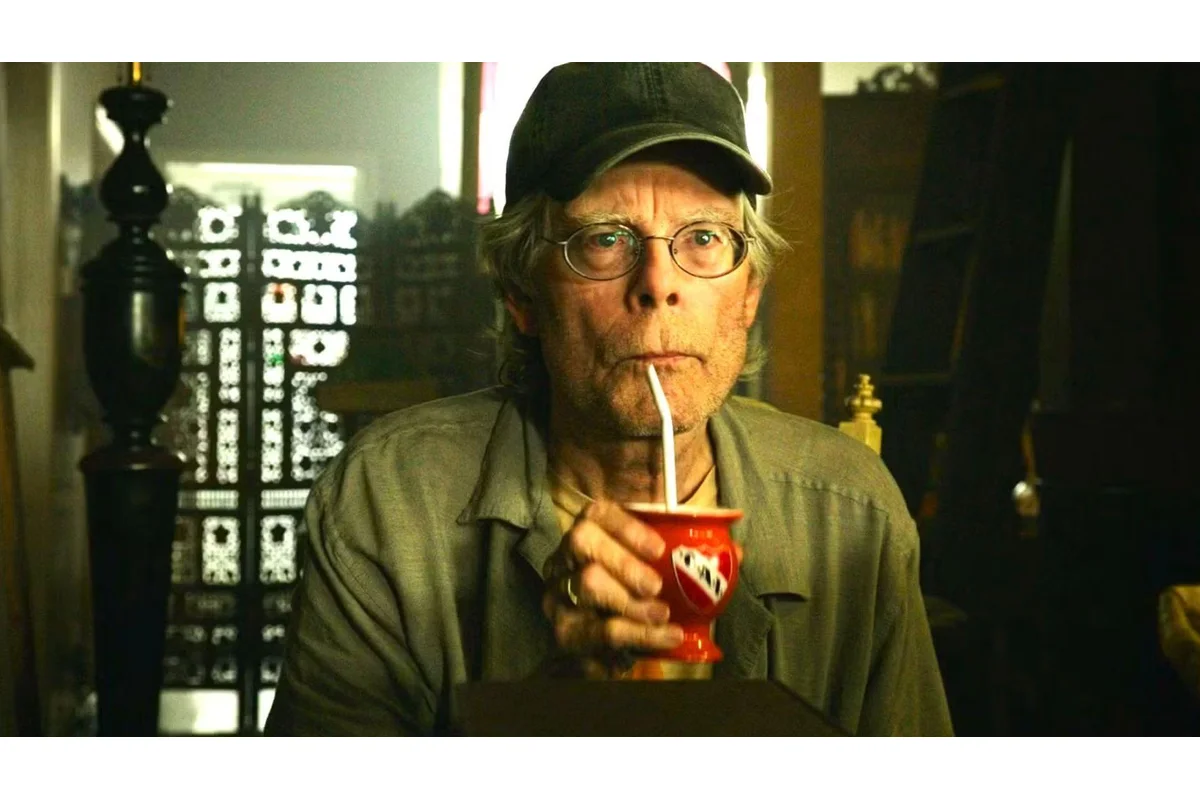
Despite King’s exposure, the name Richard Bachman endured, with the character taking on its own identity among fans. While Rage was pulled from circulation due to its association with a school shooting, Bachman’s other works continued to be published, and King returned to the pseudonym for additional releases, including The Regulators in 1996 and Blaze, a novel finished and published in 2007 as a posthumous discovery attributed to Bachman. Bachman has become synonymous with King’s grittier, concept-driven works, attracting a devoted section of King’s audience. King even portrayed “Richard Bachman” in a 2010 episode of the television series Sons of Anarchy, demonstrating the alter ego’s foothold in popular culture.

The Creation of ‘The End Times’ and Its Connection to King
This enduring legacy will take on new life when independent horror publisher Bad Hand Books launches the serial story The End Times, beginning November 19. The series comprises twelve issues, each representing an edition of a community newspaper in the post-apocalyptic North End. The story is written by Benjamin Percy, who cited inspiration from King’s own serialized works, such as The Green Mile and The Plant, as well as the apocalyptic world-building found in The Stand.
“I was thinking about big swings that King had taken with Riding the Bullet and The Plant, and I was thinking especially of The Stand, which is essentially the world in which The End Times takes place,”
— Benjamin Percy, Writer
Motivated by King’s precedent and his literary voice, Percy decided to contact King directly to propose a collaborative effort, leading to King’s involvement with the project. Percy’s outreach paid off and brought a dream partnership into reality.
“I finally got the guts to shoot him an email, thinking the worst he can say is no,”
— Benjamin Percy, Writer
“He said yes, because he’s an incredibly generous guy, and it’s been such a pleasure and honor to be able to collaborate with a hero of mine. I am that Constant Reader. I grew up worshiping at the altar of King, and it’s amazing to be in conversation with him.”
— Benjamin Percy, Writer
Bringing Claudia Inez Bachman into the Spotlight
The link between The End Times and the Stephen King Richard Bachman legacy becomes tangible through the introduction of a character tied directly to Bachman. According to reports, an early issue of The End Times brings Bachman’s surname back into the narrative, giving prominence to his fictional wife, Claudia Inez Bachman, who has been credited consistently in Bachman’s books. This marks her first time as an active character in any of King’s or Bachman’s universes, signifying a notable extension of the Bachman mythology.
“When I talked to King, I was like, ‘My name’s not going to appear in the newspaper. Your name’s not going to appear in the newspaper,’”
— Benjamin Percy, Writer
Percy further described how King himself suggested the introduction of Claudia Inez Bachman. Faithful readers will recognize her name from the dedications in each of Bachman’s novels. As the narrative unfolds, Claudia emerges not as a background figure, but as an author and character with agency reflecting parallels to King’s real-life spouse, novelist Tabitha King. In the multiverse established in King’s The Dark Tower series, Claudia (credited as Claudia y Inez Bachman) is known as the author of Charlie the Choo-Choo, suggesting unseen links between King’s works. Percy remains secretive about exactly how much Claudia’s background will connect across these books, leaving room for discovery throughout the serial.
Claudia Bachman’s Role and Backstory in the Serial
Claudia Bachman enters the fictional town’s narrative as more than a marital appendage, offering insight into her own history and connections. Percy notes that Claudia’s character introduces herself within the story’s community paper, outlining her origins, her ties to New England, and her experiences spanning the preceding twelve years of societal reconstruction. This context frames The End Times, situating its story as being about rebirth after destruction rather than immediate collapse. Claudia’s presence preserves the continuity of Bachman’s world while simultaneously advancing it.
“She writes an introduction to herself in the paper, and she introduces herself as coming from New England,”
— Benjamin Percy, Writer
Through this medium, Claudia discusses her husband and cryptically hints at both unrest in her marriage and personal secrets yet to be revealed. The narrative suggests her experiences are shaped not only by her partner’s legacy but by her independent agency.
“She talks about her husband. She talks about what she’s been up to over the past 12 years, because this is a time of reconstruction. Our story doesn’t take place as the world is falling apart. It takes place as the world is building itself back up. So, I don’t want to get too much into it for the reasons of spoilers, but there’s a whole established backstory there, and she also has some secrets which she carries with her.”
— Benjamin Percy, Writer
Richard Bachman’s Tone and Its Modern Resonance
The renewed focus on Richard Bachman comes at a time when the themes underpinning his novels echo present-day anxieties. Percy reflects on the acerbic, often critical edge of Bachman’s writing and its relevance to contemporary society. The Running Man, with its depiction of authoritarian control and public cruelty, and The Long Walk, a narrative dissecting societal sacrifice, both demonstrate Bachman’s enduring resonance in a climate charged by misinformation, disinformation, and the struggle for journalistic truth.
“If you look at the, let’s say, the acerbic quality of a Richard Bachman novel, look at it with the backdrop of 2025,”
— Benjamin Percy, Writer
Percy describes how these stories anticipate and comment on real-world events, stating that The End Times carries similar urgency and edge but is distinguished by its underlying hope. Claudia’s voice is defined as distinct from Richard’s, with her introduction highlighting difficulties in her marriage and suggesting a narrative journey separate from her husband’s sharp perspective.
“So The End Times has that knife’s edge to it, but ultimately, this is a story that’s hopeful. It’s important to note that Claudia Bachman is not Richard Bachman. I mentioned that she carries secrets with her. I’ll also say that she speaks, in her introductory letter, about how her marriage was not a happy one. So, their voices are distinct and their outlook is distinct. And again, I won’t say too much about her arc over the course of this story, but we’re both channeling Bachman and reinventing things.”
— Benjamin Percy, Writer
A Fresh Chapter in the Stephen King Richard Bachman Legacy
Claudia Bachman’s emergence in The End Times not only deepens the Stephen King Richard Bachman legacy but also offers a space for exploration of relationships, agency, and the ways in which fictional identities can evolve. As the story unfolds through Bad Hand Books starting November 19, both longtime Constant Readers and new fans will witness the blending of King’s influences with fresh voices, layered characters, and narratives that reflect and challenge the world around them.
This revival affirms that Richard Bachman’s shadow over the horror and suspense genres remains potent, especially as contemporary writers and publishers revisit and reinterpret the themes he once explored under King’s guidance. Through collaborative storytelling and character development, The End Times marks a continuation and transformation of a legacy that continues to intrigue and inspire readers, indicating that the resonance of these literary creations is far from over.
