
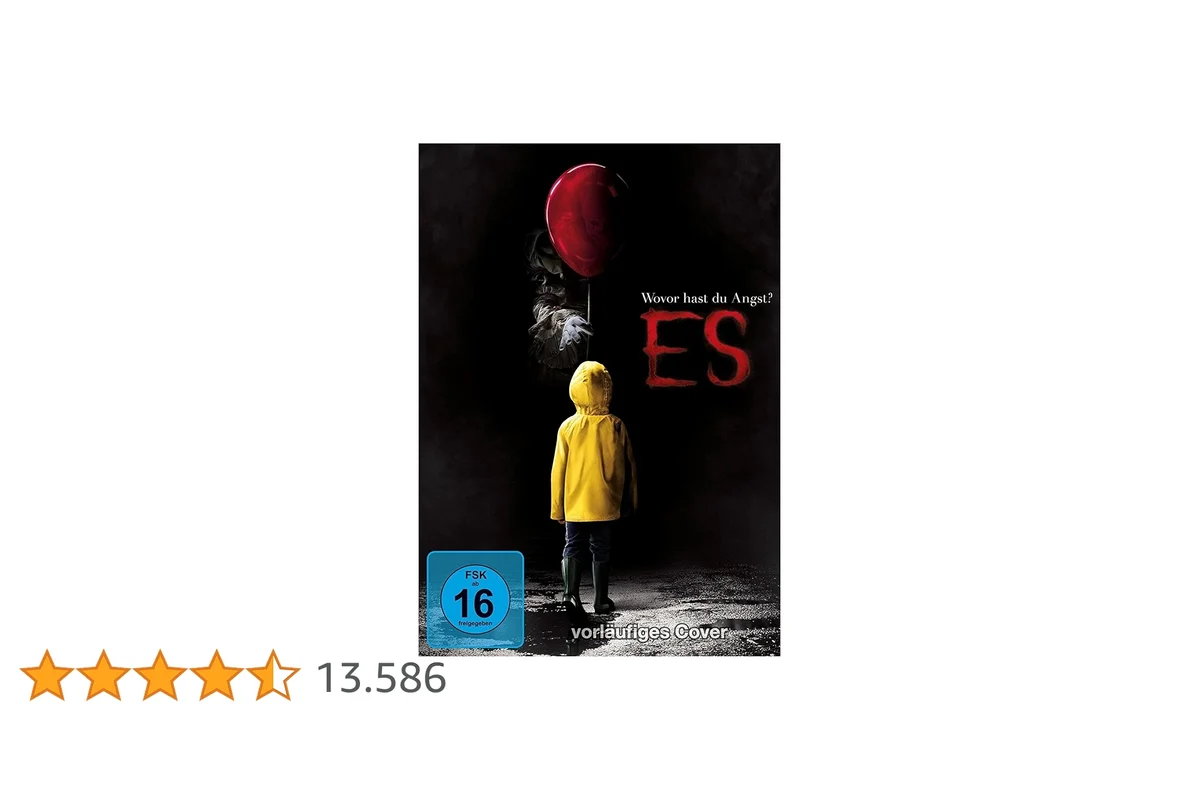
The fourth episode of Welcome to Derry’s first season has provided clarity for fans regarding the Stephen King Pennywise Wendigo theory, offering new insight into the origins of the entity haunting Derry, Maine. As viewers sifted through the clues, episode four finally substantiated a long-running suspicion about Pennywise’s mythological background and how it shapes the show’s chilling events.
Pennywise’s True Form Explored in Welcome to Derry
The opening season of Welcome to Derry wasted no time in establishing Pennywise as far more than a killer clown. Early scenes displayed his capability for grotesque transformations, most notably when he morphed into an entire car full of people to terrorize one individual, leaving no doubt about his supernatural status. Throughout the season, hints accumulated that Pennywise is an ancient force, existing beyond human history and logic, marking its arrival on earth in a distant age.
A pivotal moment arrives in the fourth episode, during which young Dick Halloran employs his psychic talent—known as the Shining—to probe into Taniel’s thoughts. In this psychic landscape, Dick uncovers a terrifying folktale: the legend of the Galloo from Taniel’s childhood. As the vision unfolds, it becomes increasingly apparent that the Galloo is a direct representation of Pennywise, cementing listeners’ suspicions about his connection to Native American mythology.

Galloo’s Ties to the Wendigo Myth
Delving deeper, the Galloo’s depiction aligns closely with the traditional Wendigo from Native American folklore—a monstrous spirit notorious for its insatiable hunger and capacity to possess individuals, driving them to commit heinous acts. Pennywise’s attacks in Welcome to Derry reinforce this connection, as he not only kills and maims his victims but manipulates the psychological state of bystanders, generating a toxic cycle of fear and trauma that the adults in town routinely ignore.
This pattern of destruction involves both consuming the dead and amplifying the suffering of the living, a modus operandi that mirrors the classic Wendigo mythos, where the entity thrives on pain, chaos, and moral decay. The recurring theme is clear: children are scarred, adults remain indifferent, and the community as a whole becomes fertile ground for Pennywise’s growing strength, echoing how the Wendigo is often used as a symbol of unchecked greed and callous self-interest.
The shared narrative is further bolstered by Taniel’s memory of Galloo, who hunts European settlers, feeds on their emotions and suffering, and draws power from the very worst of humanity. In these retellings, the Galloo/Wendigo’s strength is rooted in the fear, greed, and animosity of newcomers, giving discerning fans and readers of Stephen King’s novels ample ground for comparison.
Connections Between the Galloo and Pet Sematary
Pennywise’s reliance on an environment saturated with pain and loss is a common thread that binds Welcome to Derry with Stephen King’s earlier work, Pet Sematary. In both stories, a supernatural entity preys on the devastation of families and communities stricken by death and grief. In Welcome to Derry, Pennywise’s power flourishes as the town’s citizens grow more selfish and isolated, a scenario mirrored in Pet Sematary where an unseen Wendigo influences characters to make catastrophic choices.
While indigenous residents once restrained the Galloo by respecting the boundaries of its forest lair, European settlers disregarded those traditions and inadvertently strengthened the entity’s hold, making themselves both prey and conduits for horror. The narrative technique of having the Galloo adopt the appearance of undead invaders for a Native woman further solidifies the parallel with the invisible but ever-present Wendigo of Pet Sematary, whose manipulation drives families to repeatedly make decisions that only intensify their suffering and tragedy.
The exploitation of ongoing prejudice and hardship in Derry, especially against minority characters such as Hank Grogan, mirrors the emotional torment wrought on families in Pet Sematary. Both iteration of the myth suggest that those new to Derry or Ludlow are, tragically, primed to fall victim to the ancient evil by succumbing to despair and manipulation.
The Implications of Pennywise’s Possible Wendigo Origin
This new perspective also offers an explanation for one of the most scrutinized elements from King’s It adaptations: the means by which Pennywise is eventually bested. The conclusion of It: Chapter 2 drew criticism for its emotional approach, in which the Losers’ Club overcomes Pennywise by collectively refusing to fear him and undermining his authority. If Pennywise, like the Wendigo, is empowered only as long as his victims remain vulnerable to terror and negative emotion, then their defiance drains him of his influence.
This revelation reframes the monster’s capacity for harm and the apparent limitations inherent to Derry itself. The town’s bigoted culture—marked by racism, homophobia, misogyny, and corruption—creates the perfect storm for Pennywise’s predations, making residents especially susceptible to feelings of hopelessness. Once the core group of heroes, the Losers’ Club, dares to leave Derry and reject its poisonous mindset, they find freedom not just from the physical presence of Pennywise, but from his psychic grip as well.
The analogy extends to Pet Sematary, with a protagonist whose tragedy is deepened by repeated, impulsive decisions to confront supernatural evil head-on, leading only to further heartbreak. In contrast, resistance to Pennywise or the Wendigo—whether by leaving, resisting, or refusing to succumb to emotional manipulation—offers the only real hope for breaking the cycle of suffering.
Significance of the Theory for Stephen King’s Universe
The confirmation of the Stephen King Pennywise Wendigo theory through Welcome to Derry draws a direct line between the folkloric horror underpinning several of King’s stories and the unique, multifaceted evil embodied by Pennywise. It positions the monster not merely as a supernatural threat, but as an enduring symbol of society’s darkest impulses—one that grows stronger in the midst of isolation, cruelty, and emotional neglect.
As the series moves forward, this connection enriches both the mythology of Derry and its impact on the wider King multiverse. The narrative thread of ancient evil thriving on communal suffering speaks directly to the themes explored in both It and Pet Sematary, offering a nuanced understanding of the entity’s origins and the devastating legacy it leaves behind.
The strong resonance with Native American legend and the interconnected fates of newcomers, settlers, and outcasts underscore why Pennywise remains a uniquely frightening figure in horror, as well as an enduring allegory for societal decay and the personal costs of unchecked distress.
