
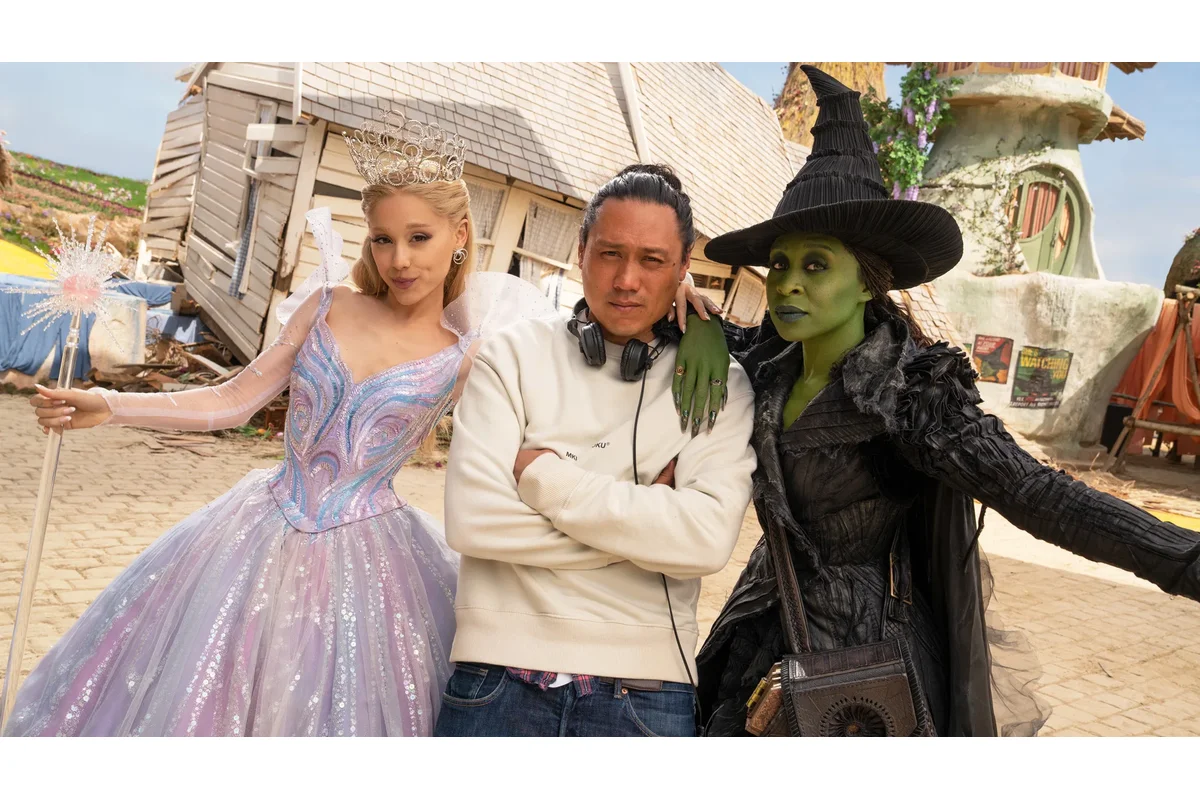
The Jon M. Chu filmmaking process reached a turning point during the production of Wicked: For Good when an unscripted, emotional rehearsal between Ariana Grande and Cynthia Erivo inspired a groundbreaking sequence. The pivotal split-door scene, which became an emotional highlight of the film, emerged entirely from improvisation and a willingness to reshape the set to match authentic performances.
Improvisation Leads to Major Creative Shifts
Director Jon M. Chu, known for his innovative approach, found the defining moment for the film long before the cameras rolled. In an early rehearsal, Cynthia Erivo and Ariana Grande exchanged a raw, unscripted goodbye, moving beyond scripted lines and immersing themselves in their characters. Their connection was so compelling that Chu was moved to tears just watching them interact across an imaginary barrier in the rehearsal room.
“It was in rehearsals that we found it,”
Jon M. Chu reveals.
“Cynthia grabs her and says, ‘Come here.’ And I’m like, where are they going? And they go to this corner, and she puts her in a box or a closet.”
— Jon M. Chu, Director
This spontaneous moment led Chu to make an unusual decision: he committed to physically demolishing part of the set to capture the authenticity of Erivo and Grande’s farewell. He went so far as to ignore warnings that tearing down the wall would permanently alter the set, choosing heartfelt storytelling over logistical concerns.
“We had to knock down that wall,”
Chu says.
“They told me, ‘If you knock down that wall, you can’t use the set anymore.’ But I didn’t care. It was the moment. Knock down the effing wall.”
— Jon M. Chu, Director
The split-frame result, showing the two stars pressed against opposite sides of a real, broken barrier, became the heart of the film. Chu identifies this unscripted sequence as his personal favorite across the entire saga, remarking on the realness and emotional gravity that improvisation brought.
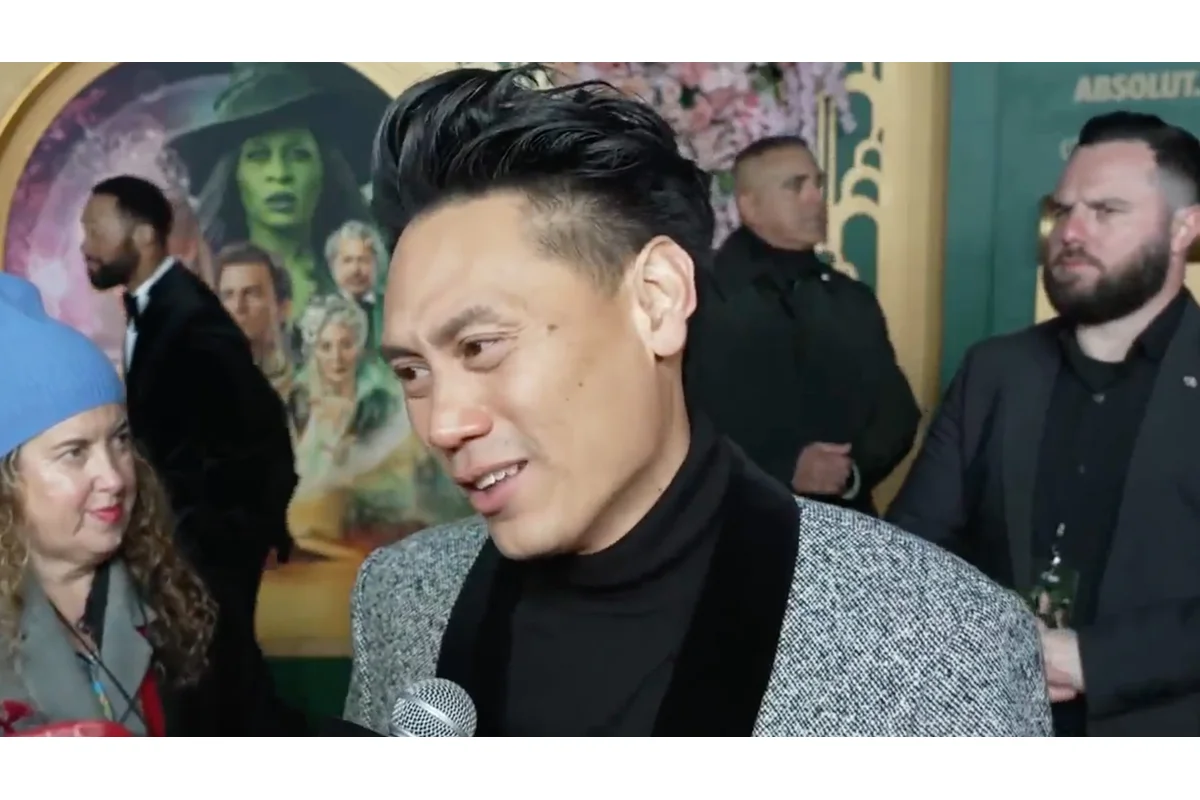
“That’s when I knew the second movie had to be called ‘For Good.’”
— Jon M. Chu, Director
Changing the Rules: Dialogue Breaks Oz’s Tradition
The influential scene also challenged existing boundaries within the world of Oz. The stage musical’s composer, Stephen Schwartz, had maintained strict language rules for the film—certain expressions, including “I love you,” were not allowed in dialogue. However, during filming, Cynthia Erivo delivered the forbidden line to Ariana Grande. Jon M. Chu, affected by the depth of emotion, argued passionately for its inclusion, stating that the moment transcended Oz’s fictional laws due to its humanity.
“You’re not allowed to say ‘I love you’ in Oz,”
Chu says.
“No God, no okay, no I love you.”
— Jon M. Chu, Director
“It crossed over a boundary of Oz into our world.”
— Jon M. Chu, Director
Exploring Loss and Transformation in the Story
Jon M. Chu casts the new film as a dramatic shift from its predecessor. While Wicked provided a lighter, more comedic view of the universe, Wicked: For Good is described as a darker, more political tragedy. The story’s emotional complexity intensifies through side characters as well. Chu describes Boq’s transformation, portrayed by Ethan Slater, as the true “birth of a monster.” The process of turning into the Tin Man represented more than physical change—it was an emotional and communal rupture.
“Boq is someone who’s ignored. Someone who wants acknowledgement that he exists,”
Chu says. — Jon M. Chu, Director
“When he’s making his speech in front of that crowd on the steps of the capital of Oz, and there’s fire, and he’s telling his grievances. He changes in that moment even more than he changed when he turned into the tin man,”
Chu explains. — Jon M. Chu, Director
Led by Ethan Slater’s portrayal, Boq’s pivotal moment comes as he recognizes the validation he receives from the crowd rather than his former longing for Glinda, signaling a profound personal shift.
“That’s when he really loses his heart. Not when his body turns to tin — but when he finds community in hate.”
— Jon M. Chu, Director
The Ambiguous Fate of Elphaba and Glinda’s Journey
For years, fans have speculated whether Glinda knows that Elphaba survives at the end of the story. In this adaptation, Jon M. Chu holds a distinct perspective but prefers to let audiences draw their own conclusions.
“I definitely have a definitive idea in my head,”
he says.
“But I prefer everyone to be able to interpret it how they want to.”
— Jon M. Chu, Director
Chu emphasizes the power in both characters moving into uncharted territory: Glinda striving to embody goodness and Elphaba leaving the shadows behind, suggesting that the true conclusion lies in the characters’ acceptance of uncertainty and growth from deep human emotion.
“It was never a buttoned-up fairy tale,”
he says.
“It was born of raw human nature, and something beautiful emerges from that.”
— Jon M. Chu, Director
Timelessness and Political Resonance in Chu’s Vision
Current audiences have noted the film’s striking parallels to contemporary political themes, including misinformation, community divides, and collective belief shaping reality. Jon M. Chu maintains that any relevance to modern politics was unintended, emphasizing the enduring nature of the story’s core ideas.
“The line ‘the truth is not a thing of fact or reason, it’s just what we all agree on’ was written 20 years ago,”
he says.
“That’s the power of a timeless story. It always feels timely.”
— Jon M. Chu, Director
Still, Chu cannot ignore that the culture continues to reflect back the film’s narrative, admitting,
“Every week it gets more relevant.”
— Jon M. Chu, Director
Wicked: For Good is currently in theaters, bringing Jon M. Chu’s unique filmmaking process and an unexpected moment of improvisation to life for viewers everywhere. With the contributions of stars like Ariana Grande, Cynthia Erivo, and Ethan Slater, and the endorsement of Stephen Schwartz, the film stands as a contemporary reflection on timeless themes of transformation, love, and the power of collective belief.
