
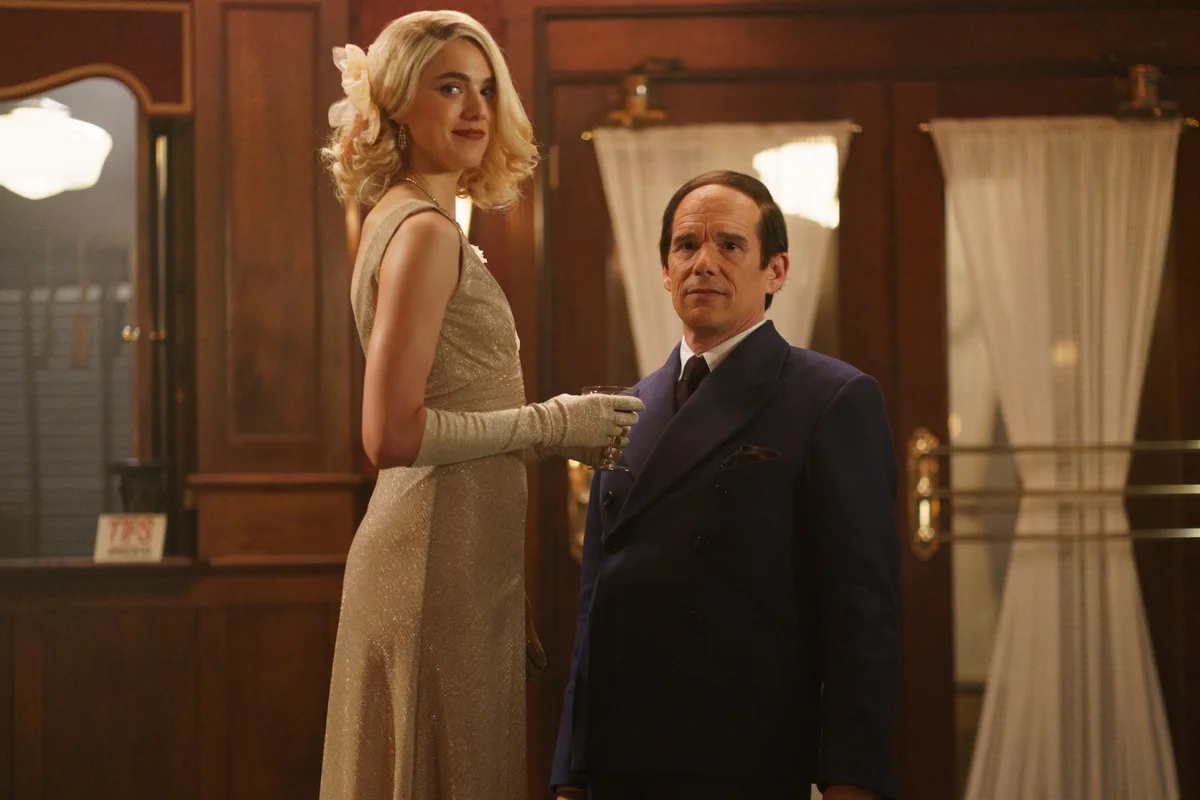
Ethan Hawke’s transformation for the film Blue Moon, directed by Richard Linklater, has captured widespread attention following its debut at the BFI London Film Festival and subsequent US release. The eagerly anticipated portrayal of Lorenz ‘Larry’ Hart, a renowned Broadway lyricist, marks a significant chapter in both their decades-long collaboration and further cements the Ethan Hawke Blue Moon transformation as a point of discussion for film audiences and critics alike.
Patience Behind an Actor’s Evolution
Richard Linklater is renowned for his willingness to let time shape his stories, having filmed projects such as Boyhood over twelve years and dedicating decades to other works. His latest commitment involved waiting more than a decade for Hawke to mature into the role of Hart, with Blue Moon filmed over a record-setting 15-day shoot in Dublin. The story is anchored around the night Rodgers and Hammerstein’s Oklahoma! premiered on Broadway in 1943, an evening that signaled both a celebrated collaboration’s beginning and an iconic one’s end.
The film unfolds inside Sardi’s Bar, a beloved Broadway locale. Within its portrait-lined walls, Hawke’s Hart steels himself to meet with Richard Rodgers, portrayed by Andrew Scott. This emotionally charged encounter sees Hart oscillate between humor, vulnerability, and confession, confronting unresolved feelings about his creative partnership with Rodgers and his own internal struggles, including his sexuality and sense of loss as Rodgers moves forward successfully without him. Margaret Qualley appears as Elizabeth, further complicating Hart’s self-reflection.
A Landmark Collaboration Rekindled
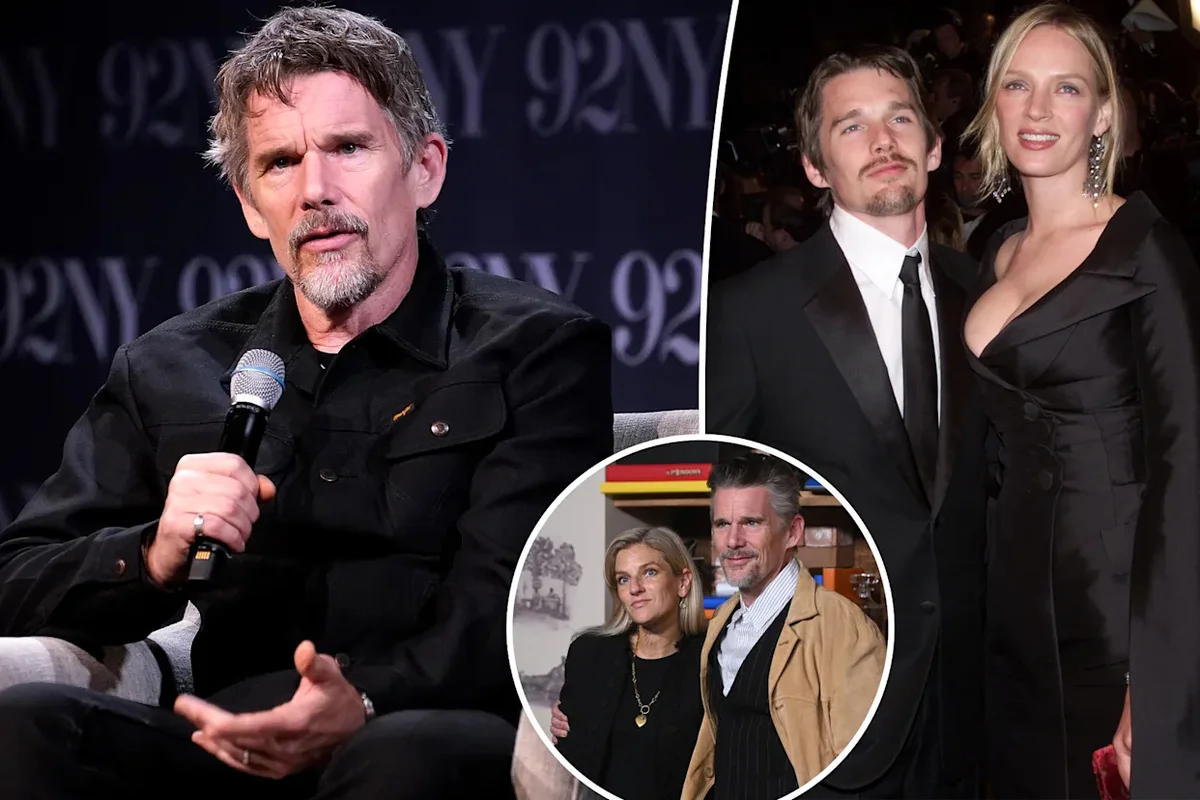
Hawke and Linklater’s creative partnership spans over twenty-five years, a meaningful parallel to Hart and Rodgers’ own collaboration. Blue Moon is the ninth joint endeavor between the two, adding to their shared legacy that includes the Before trilogy, Boyhood, Waking Life, Tape, Fast Food Nation, and The Newton Boys. The film picks up as Hawke’s character, at age 53, faces the mounting fears Hart confronted in the last chapters of his life—a motif present both in the script and the actors’ commitment to their craft.
Speaking about confronting professional fears, Richard Linklater shared,
“The only way to be less scared is to work hard. You have to chase your own fear, but you can outrun it by outworking it.”
– Richard Linklater, Director. Giles Surridge, a newcomer to the set who portrays Sven, expressed admiration for the seasoned director’s approach:
“Having been a fan of Richard’s for so long, you kind of build up this idea in your head that there are going to be all sorts of things, but he completely blew my expectations out of the water. He made me feel so comfortable in there.”
– Giles Surridge, Actor.
Hawke’s Preparation and Commitment to Hart
Ethan Hawke himself admitted the immense challenge Hart’s role posed, describing it as his most daunting to date. When asked about the experience, Hawke revealed,
“This one. I really wanted to do this part, but in the days leading up to actually doing it, it was absolutely terrifying.”
– Ethan Hawke, Actor.
Blue Moon is a tightly focused bottle film, largely set within a single space and relying almost entirely on dialogue. Hawke’s performance is at the heart of the production, requiring him to carry extended monologues encompassing themes from art and desire to existential musings. To master the role, Hawke meticulously handwrote his lines in thirteen mini notebooks, dedicating himself to authenticity. Giles Surridge remarked on Hawke’s dedication,
“[Hawke] was very much in the zone”
– Giles Surridge, Actor.
Physical and Emotional Transformation
The Ethan Hawke Blue Moon transformation is not limited to the emotional journey. To capture Lorenz Hart’s appearance and physicality, Hawke adopted a balding wig, brown contact lenses, and a special device to shorten his tall frame. He also adjusted his gait and speech, internalizing Hart’s battles with arthritis and alcoholism. This commitment marks one of Hawke’s most dramatic on-screen changes, setting aside his familiar heartthrob persona to become nearly unrecognizable as Hart.
The burden of doing Hart justice weighed heavily on Hawke, who confided,
“One of the things people don’t think about when you collaborate with somebody for a long time is how important the friendship is. I didn’t want to let [Richard] down – his belief in me. I wanted to be the actor he thought I was. And that’s scary.”
– Ethan Hawke, Actor.
Friendship and the Importance of Connection
Their exploration of friendship forms a central tenet of Blue Moon’s narrative. During screenings, one of Hart’s reflections on relationships carried particular resonance:
“Beware of romantic stories; friendship stories are the ones that endure.”
– Lorenz Hart (as portrayed by Ethan Hawke). Recognizing its impact, Hawke later elaborated on the subject,
“Friendship is such a valuable part of our life and the history of film and novels,”
– Ethan Hawke, Actor, adding,
“We make a really big deal out of romance, as we should, but friendship often seems to be the real stuff that roots our life, and it needs to be paid attention to.”
– Ethan Hawke, Actor.
The perennial theme of friendship recalls the enduring rapport between Linklater and Hawke, who together have defined a genre of their own. While their Before trilogy is often lauded as the epitome of romance in cinema, Linklater shared that audiences most frequently cite Before Sunset as a favorite, although he has no personal preference.
Anticipating What Comes Next
Speculation continues regarding whether Blue Moon marks the last collaboration between Linklater and Hawke. Hawke, however, left the door open, stating,
“I’d be surprised if [Blue Moon] was our last dance.”
– Ethan Hawke, Actor. When pressed about the genre of any future work, Hawke responded with wit,
“The Richard Linklater genre – he’s his own genre!”
– Ethan Hawke, Actor.
Though Linklater characterizes Blue Moon as “a breakup movie” between collaborators, his bond with Hawke remains evident, both in the creative process and in their mutual admiration. The cast is rounded out by Andrew Scott as Richard Rodgers, whose dynamic with Hawke’s Hart fluctuates between false adulation and bitter rivalry. During their tense encounters, Hart delivers pointed criticisms such as,
“Who wants inoffensive art? Oklahoma!’s going to be in high schools forever because it’s not offensive.”
– Lorenz Hart (as portrayed by Ethan Hawke).
Reflections on Cinema and Personal Connections
The emotional undercurrents in Blue Moon resonated not just with the on-screen characters but also with the cast. When asked about media that recently moved them, Andrew Scott said,
“Oh, I just watched Sentimental Value, which is a really beautiful film that people will see that has so many beautiful things in it,”
– Andrew Scott, Actor, admitting,
“It’s easy to make me cry. I cry at commercials.”
– Andrew Scott, Actor.
Richard Linklater revealed his own vulnerability, sharing,
“I saw my friend Matthew McConaughey in The Lost Bus the other day. I don’t know if you’ve seen that. He drives a bus, saves these kids. It was kind of reuniting – something about it teared me up. But I think the last one I really kind of teared up… I saw The Elephant Man recently, David Lynch’s second film.”
– Richard Linklater, Director.
Linklater’s long-standing rapport with fellow Austinite Matthew McConaughey continues, as seen in projects like Dazed and Confused, Bernie, and The Newton Boys. When asked if another collaboration might be on the horizon, Linklater confirmed their ongoing friendship and creative synergy.
Blue Moon’s Impact and Theatrical Release
Blue Moon finds laughter and heartbreak in equal measure, prompting audiences to engage both emotionally and intellectually. Its release in theaters across the US and Canada, following its London festival premiere, brings renewed visibility to Lorenz Hart’s troubled legacy, creative partnerships, and the enduring bond between director and star. A UK release is scheduled for November 28th.
The Ethan Hawke Blue Moon transformation stands as a testament to the lengths actors go to inhabit historical figures, the discipline of powerful collaborations, and the continued relevance of stories rooted in friendship and creative courage. With its single-location intimacy and emotionally charged performances, Blue Moon is set to become a touchstone for audiences drawn to stories that balance nostalgia, passion, and personal evolution on and off the stage.
Related semantic context: related coverage · external reference.
