

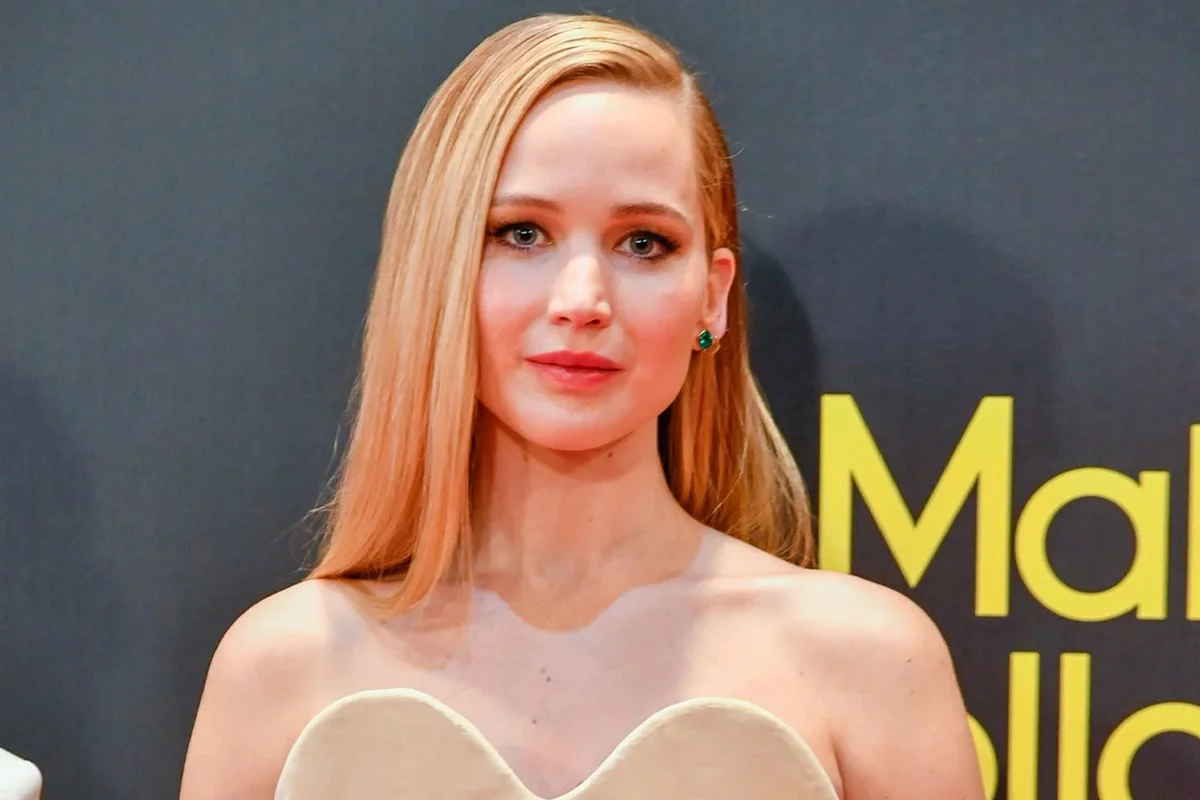
Jennifer Lawrence’s new film, “Die My Love,” premieres with a gripping exploration of motherhood and postpartum depression, marking a significant shift from her previous roles. Debuting at the San Sebastian International Film Festival, the Oscar-winning actress takes on perhaps her most intense and layered character yet in a project that places the theme of identity crisis and maternal struggles at its core, cementing “Jennifer Lawrence new film” as a critical exploration of female experience.
Lawrence’s Journey From Early Stardom to Acclaimed Roles
Jennifer Lawrence, hailing from Kentucky, started acting as a teenager, quickly rising to prominence with initial television parts before gaining critical recognition for her performance in “Winter’s Bone” in 2010. She solidified her standing in Hollywood through versatile projects, becoming a global sensation as Katniss Everdeen in The Hunger Games series. Her capacity for dramatic expression was showcased in collaborations with director David O. Russell, including “Silver Linings Playbook,” which earned her an Academy Award for Best Actress, as well as “American Hustle” and “Joy.”
A Dramatic Shift: Exploring Motherhood in “Die My Love”
In her latest film, directed by Lynne Ramsay and based on Ariana Harwicz’s novel, Lawrence steps into the role of Grace, a new mother grappling with severe postpartum depression. Starring alongside Robert Pattinson, who plays her husband Jackson, the story follows the couple as they relocate from New York to a rural inherited home. Isolated with their baby, Grace faces an identity crisis, especially as her husband’s prolonged absences intensify her struggles. The cast also features Nick Nolte, Sissy Spacek, and LaKeith Stanfield, adding further depth to the adaptation.
The journey toward this film began unexpectedly when Martin Scorsese, known for his acclaimed filmography and influence in the industry, recommended Harwicz’s book to Lawrence, suggesting she was the right fit for this challenging role. She quickly involved her producing partner, Justine Ciarrocchi, at Excellent Cadaver, and together, they secured Lynne Ramsay, known for her emotionally charged direction in works like “You Were Never Really Here” and
“We Need to Talk About Kevin.”
The alignment of creative voices set the stage for a distinctly intense film.
Bringing Personal Experience and Emotional Depth to the Screen
Lawrence, who married Cooke Maroney in 2019 and is a mother of two sons, found the film’s themes of postpartum depression and maternal identity deeply resonant. Her own experiences as a mother informed her performance, with her reflection on the emotional challenges she faced after the birth of both children. She first read Harwicz’s source material during a period of positive postpartum adjustment, but following the arrival of her second child, she personally encountered the difficulties the film depicts so vividly.
It’s a huge honour, and so it’s really surprising and touching,
— Jennifer Lawrence, Oscar-winning actress
I got a call from Martin Scorsese. He had read this book in his book club and said: ‘I think this is a role that you should play’. And I was just like, hello!
— Jennifer Lawrence, Oscar-winning actress
I’d like to know who the other members of his club are.
— Jennifer Lawrence, Oscar-winning actress
And then Justine and I both immediately thought of Lynne Ramsay [You Were Never Really Here, We Need to Talk About Kevin]. We’ve both been fans of her work for so long, but I don’t think that anything has ever landed in my lap that I just thought, this is her realm. This is her world. And I was so elated that she agreed to do it, and she was beyond perfect and incredible at bringing this story to life,
— Jennifer Lawrence, Oscar-winning actress
There was a lot that I identified with in terms of the kind of identity crisis that you have when you first become a mother. It changes everything. It changes who you are, and changes your everyday,
— Jennifer Lawrence, Oscar-winning actress
But after giving birth to my second, I did experience really hard postpartum. So, it’s really bizarre watching the movie now and seeing everything in retrospect, after feeling like I’ve been through that forest. I think she really nailed it,
— Jennifer Lawrence, Oscar-winning actress
I think that now mothers are being seen as humans – humans, who are enduring a great deal of work daily. This is somebody who’s taking care of a household and raising a child and dealing with the pressure, and the energy that takes and how hard it is.
— Jennifer Lawrence, Oscar-winning actress
It was a lot of discussion about the head space. Neither of us are very technical people or artists, so it was very conversational and emotionally led.
— Jennifer Lawrence, Oscar-winning actress
It’s certainly a general experience – wanting to be exciting to your husband, wanting to feel that connection and wanting to feel the dopamine hit of sex,
— Jennifer Lawrence, Oscar-winning actress
And also, how your body and your mind and your relationship changes after you have a baby. But I don’t think that you have to have had a baby or gone through postpartum to understand or be a part of this film and everything we’re speaking towards,
— Jennifer Lawrence, Oscar-winning actress
Intentions for Female-Driven Stories and Industry Change
Outside her acting roles, Lawrence is committed to amplifying women’s voices in cinema. Her production company, Excellent Cadaver, founded in 2018, has already produced the drama “Causeway” and the comedy “No Hard Feelings.” She’s collaborated with notable figures like Chelsea Clinton and Hillary Clinton, executive producing the documentary “Zurawski v Texas,” which digs into questions of reproductive rights. This ongoing commitment underlines her intention to foster more opportunities for women creators.
Women deserve the platform and the spotlight. I mean, look at Greta Gerwig, she’s one of my favourite directors and Zoe Kravitz just directed an amazing movie. When we’re given the opportunities, the world benefits and artistic integrity benefits, and there’s more perspective in storytelling,
— Jennifer Lawrence, Oscar-winning actress
Impact and Reception of “Die My Love”
“Die My Love” is anticipated to provoke conversation due to its unflinching look at the complexities of motherhood and the often-overlooked emotional toll it can take. Lawrence’s portrayal of Grace delves into the feelings of isolation, changes in relationships, and the battle for self-identity that many women encounter. The film also stands out for Ramsay’s directorial style, which blends psychological intensity with moments that approach horror, shaping the narrative into a raw and haunting experience.
We knew the book would require such an ambitious adaptation because it is so unorthodox in the way that it’s structured. It’s such a fever dream. It really needed a singular voice, which is why Lynne was the only person that could have possibly done it.
— Justine Ciarrocchi, Excellent Cadaver Partner
Set to release in cinemas on November 6, 2025, “Die My Love” adds to the ongoing conversation about women’s mental health, identity, and the realities of parenthood. As Jennifer Lawrence, Lynne Ramsay, and their talented cast help bring Ariana Harwicz’s darkly poetic novel to life, the film is poised to resonate with viewers and possibly set new standards in storytelling about motherhood.

