
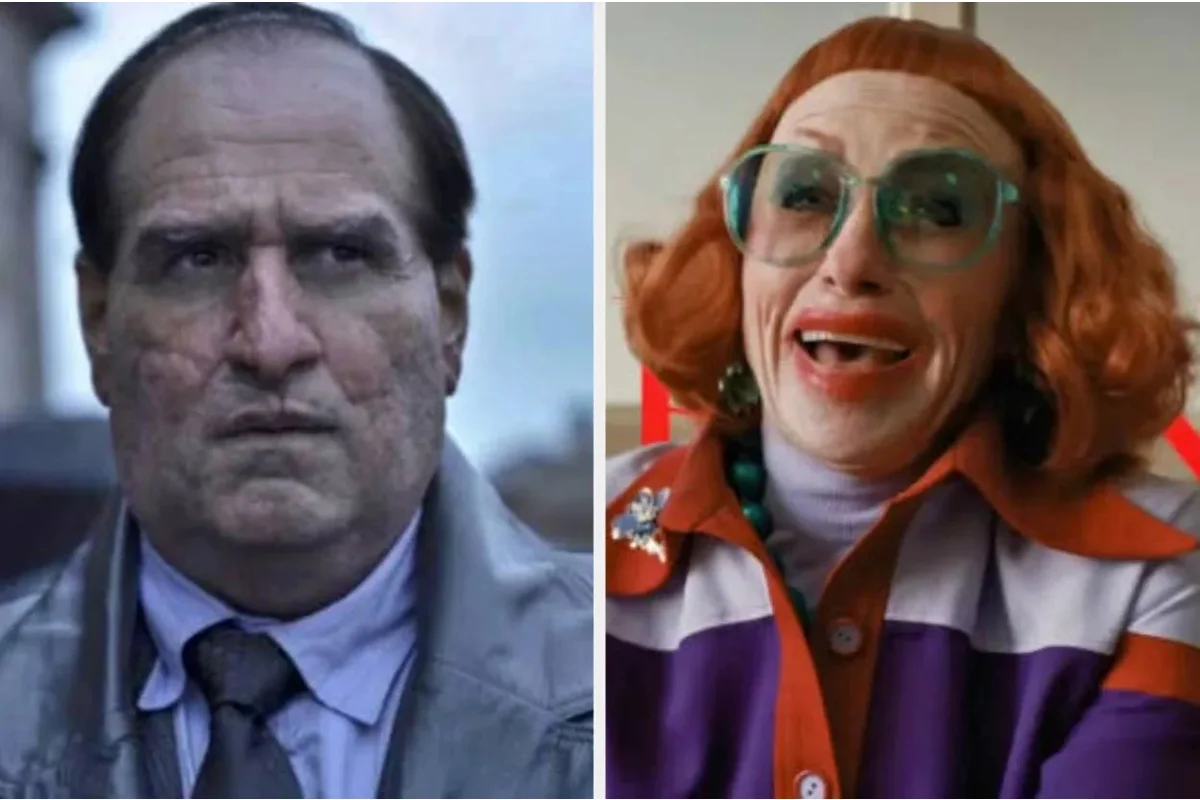
Ethan Hawke’s Blue Moon transformation, which involved a dramatic combover and physical changes for his role as Broadway lyricist Lorenz Hart, left his wife, Ryan Shawhughes, startled when she visited the set in late November 2025. The actor’s intense commitment to authentically portraying Hart, as part of the Richard Linklater-directed film, not only altered his appearance but also led to some revealing and emotional reactions from those closest to him.
Radical Preparation for Playing Lorenz Hart
For his portrayal in Blue Moon, Hawke, aged 55, shaved his head to closely embody Lorenz Hart, and spent the majority of filming standing in a trench—an effort by the production to adjust for Hart’s notably short stature, since the lyricist was five feet tall. The actor revealed that the physical transformation extended beyond hair and height, impacting his internal perspective as well.
“Because the world is heightist. It’s ingrained in our culture, it’s in our language. Tall and handsome. Proud and strong. It’s tough when people don’t want to flirt with you. It changes how you see yourself.”
— Ethan Hawke, Actor
The process gave Hawke firsthand insight into societal biases and challenged how he viewed his own identity. He recounted that an actor friend, curious about the process, tried standing in Hawke’s trench—which prompted a strong reaction from the friend’s wife.
Unexpected Responses on Set
Hawke described how the actor friend’s wife was shocked by how his appearance changed during filming, remarking, according to Hawke, that a superficial change to height and baldness altered her perception of him immediately. Hawke reflected on how appearances tend to overshadow deeper qualities like talent and character in society’s eyes.
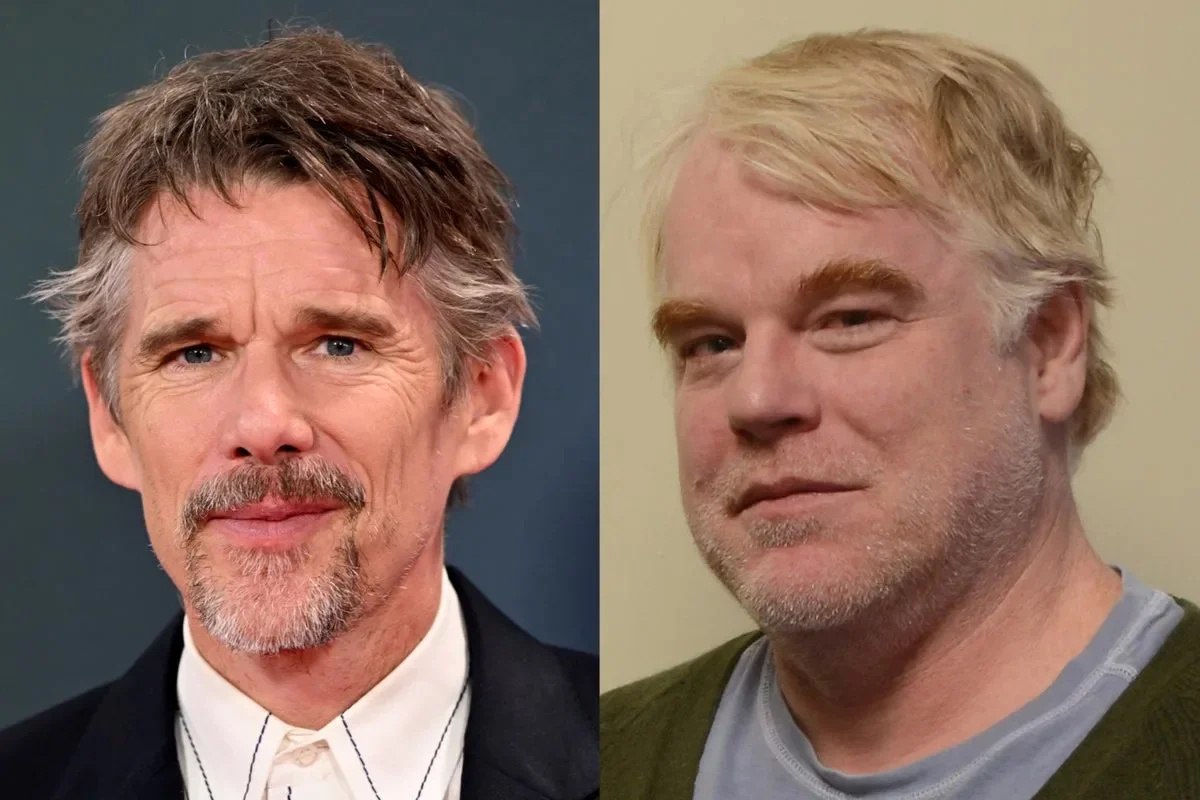
“That this woman who he’s been married to for 20 years should be put off by something so superficial. Not his brain, not his talent, not his looks, not his essence. You’re short and you’re bald. That’s not masculine to me.”
— Ethan Hawke, Actor
Director Richard Linklater then pointed out that even Hawke’s own wife, Ryan Shawhughes, reacted similarly. However, Hawke clarified that what unsettled Shawhughes was not the recreated height or baldness, but rather his striking combover.
He admitted,
“Yeah, OK, she did. It wasn’t the height or the balding that bothered my wife. It was the combover.”
Hawke went on to detail how he dyed his hair and styled it for the role, embracing the disguise fully in service to the character.
“And Ryan came to visit the set one day, and she looked at me and said: ‘You know what, I’m leaving. I didn’t marry Larry Hart’.”
— Ethan Hawke, Actor
Challenges of Bringing Blue Moon to Life
Set in 1943, Blue Moon explores Lorenz Hart’s battle with alcoholism and depression during a pivotal moment—the premiere of Richard Rodgers’ partnership with Oscar Hammerstein in Oklahoma!. The depth and intensity of Hart’s turmoil required Hawke to dig deep, both mentally and physically, making the experience particularly taxing.
Speaking at the BFI London Film Festival premiere, Hawke was asked to share his on-set highlights, to which he said, “Highlight day on set? Wrap!”
“It was so exhausting playing this part and trying to get inside this world. I remember when we wrapped I felt amazing.”
— Ethan Hawke, Actor
Hawke expressed gratitude to director Richard Linklater for his steady support through the emotionally complex shoot, describing the character’s arc as a constant confrontation with fear of being forgotten.
“He is absolutely terrified that the world is leaving him behind. It’s such a complex part and I don’t think I could have done it without Richard. It’s his passion, his intelligence, his grace and his care. That’s how you do it.”
— Ethan Hawke, Actor
What Hawke’s Transformation Means for Blue Moon
Ethan Hawke’s immersive approach to the role of Lorenz Hart for Blue Moon has sparked conversations not only about appearance and identity but also about the unseen toll artistic commitment can take on an actor and their loved ones. The reactions from both his own spouse, Ryan Shawhughes, and from those witnessing his transformation on-set, underscore how personal and public perceptions often center on appearances, even as talent and character are tested behind the scenes.
With Blue Moon delving into deep emotional territory and reviving the legacy of Broadway legends like Hart, Richard Rodgers, and Oscar Hammerstein, Hawke’s transformation draws attention to how powerful and sometimes jarring authenticity in performance can be—affecting not just audiences, but also the artists and families at its heart.
