
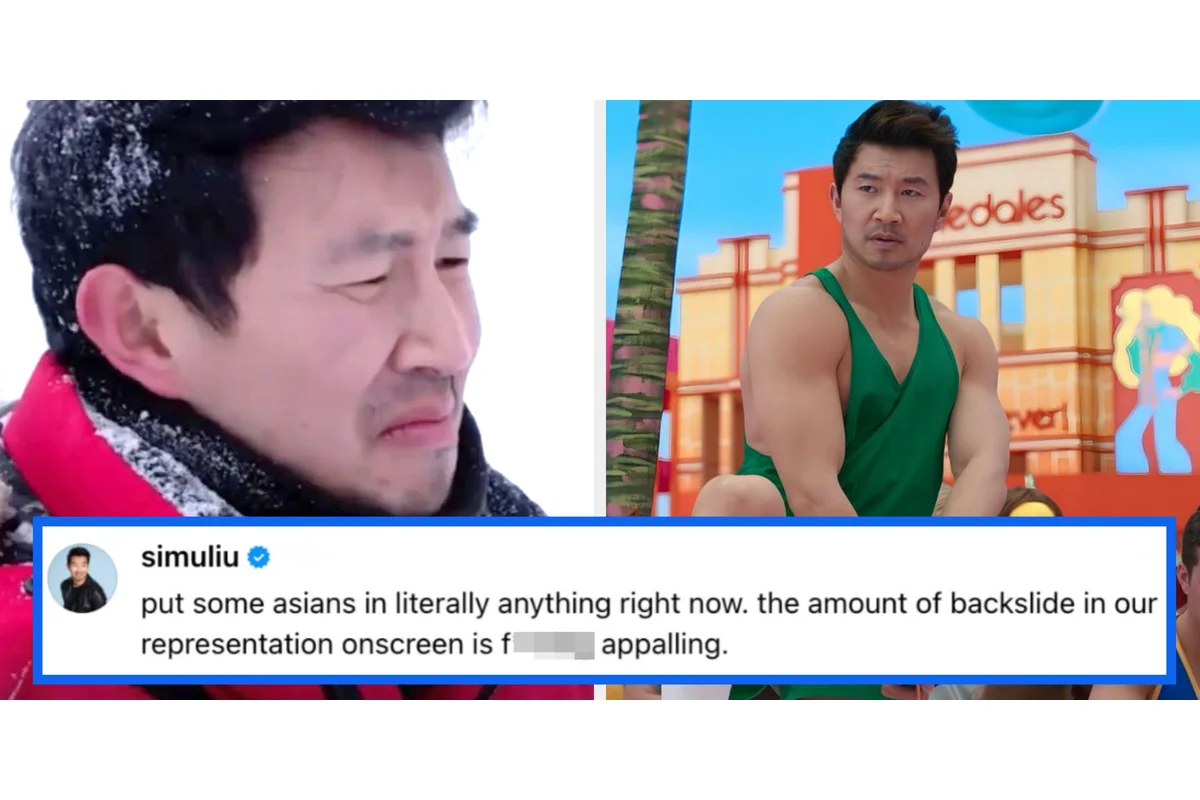
Simu Liu, known for his leading role in Shang-Chi and the Avengers franchise, has spoken out about what he perceives as a disturbing retreat in on-screen representation for Asian actors in Hollywood. The recent controversy emerged after Liu responded to a social media discussion on November 23, emphasizing that the industry’s depiction of Asian talent, particularly in leading romantic roles, is at risk of deteriorating despite prior gains. The issue of Simu Liu Hollywood representation has resurfaced as a focus of heated conversation within the entertainment world.
Liu’s Recent Commentary and Social Media Uproar
Simu Liu’s frustration was sparked by a Threads post advocating for more Asian men to be cast as romantic leads, illustrated through several prominent examples. Manny Jacinto, noted for his work on Freakier Friday, revealed that his recent Disney film success led primarily to offers for paternal characters rather than romantic protagonists. John Cho, star of Cowboy Bebop, voiced disappointment in 2023 to the Television Critics Association, pointing out that starring in Selfie did not translate into roles as a romantic leading man. Daniel Dae Kim, from Avatar: The Last Airbender, also openly criticized the ongoing wait to play a romantic lead. Producer Rachel Tan expressed her own dismay, stating,
“gave me a list of white guys we could cast”
and relayed being told,
“if we could give one of the roles to them, we could get funded.”
— Rachel Tan, Producer.
On seeing this debate, Liu amplified the call for change, writing directly to his followers:
“put more Asian men in romantic lead roles.”
— Threads Post, Originator. He continued his critique by stating,
“put some asians in literally anything right now. The amount of backslide in our representation onscreen is f**king [sic] appalling.”
— Simu Liu, Actor. Liu further argued that
“[s]tudios think we’re ‘risky’. Minari, Farewell, Past Lives, Everything Everywhere All At Once, Crazy Rich Asians, Shang-Chi. Every single one a financial success. No Asian actor has ever lost a studio even close to 100 million dollars, but a white dude will lose 200 million TWICE, and roll right into the next tentpole lead. We’re fighting a deeply prejudiced system. And most days it SUCKS.”
— Simu Liu, Actor.
Tracing Hollywood’s Record on Asian Leads
Liu’s frustrations echo his previous public statements about the status of Asian actors in Hollywood. In earlier comments, he recalled,
“thought playing a guy that gets beaten up by a main character was the pinnacle”
— Simu Liu, Actor, until he was given the opportunity to lead in Shang-Chi. Liu previously referenced a comment from Disney CEO Bob Chapek, who referred to the 45-day theater release window for Shang-Chi as an “interesting experiment”—a remark Liu interpreted as being loaded due to the film’s Asian-led cast. Additionally, he has publicly called out non-Asian founders of a Canadian bubble tea company for cultural appropriation.
While some observers question the hyperbolic tone Liu adopts, many acknowledge the kernel of truth in his criticisms: the persistent difficulty Asian, particularly Asian male, actors have faced when vying for romantic leading roles in American films. The pattern stretches back decades and remains a glaring gap in Hollywood’s track record of representation.
Reflecting on the lack of these roles, one perspective offered is that before the success of Crazy Rich Asians in 2018, only a handful of Asian performers had led traditional romantic films—Michelle Krusiec in Saving Face and Vincent Rodriguez III in Crazy Ex-Girlfriend being two rare examples. These anecdotes highlight the entrenched obstacles in place for those attempting to change the casting landscape.
Evidence of Shifting Dynamics and Progress
Despite the criticism, some industry voices suggest that progress—however incremental—continues to unfold. Manny Jacinto, for example, recently played a significant antagonist in the Star Wars spin-off The Acolyte and is set to lead the upcoming romantic comedy Love Language, signaling increased opportunities.
Lana Condor, recognized for roles as Lara Jean in the To All the Boys I’ve Loved Before series and Jubilee in X-Men: Apocalypse, sees her star rising with lead roles in new thriller projects and as the protagonist in the romantic comedy Whodunnit. Meanwhile, Steven Yeun, though not primarily cast in romantic storylines, has maintained a strong presence across American entertainment with credits in Love Me, Beef, Mickey 17, Nope, The Humans, and as the lead voice in Amazon’s adaptation of Invincible.
These examples underscore that even if challenges remain, Asian actors are expanding their influence and diversifying the types of roles they occupy in Hollywood productions. The efforts of entities like Disney and Amazon in casting Asian talent for high-profile projects also gauge a slow but tangible shift.
Looking Ahead: Ongoing Debate and What’s at Stake
The debate simmering around Simu Liu Hollywood representation is far from resolved. Acknowledging historical unfairness and the need for continual improvement, the trajectory for Asian actors has undeniably moved in a more positive direction. Yet, the discord between perceptions of progress and claims of persistent backsliding continues to stir impassioned discussion, both within industry circles and among general audiences.
How Hollywood responds to voices like Liu’s could influence future casting trends and the opportunities available to actors of all backgrounds. For now, the stakes remain high, as the fight for more equitable on-screen narratives and balanced representation presses forward in America’s film landscape.
John Cho says that despite the amazing SELFIE (RIP!)—where he proved he's the perfect rom-com lead—he did not get many offers in this genre.
Hollywood, wyd?? #TCA23
— saloni gajjar (@saloni_g) January 19, 2023
