
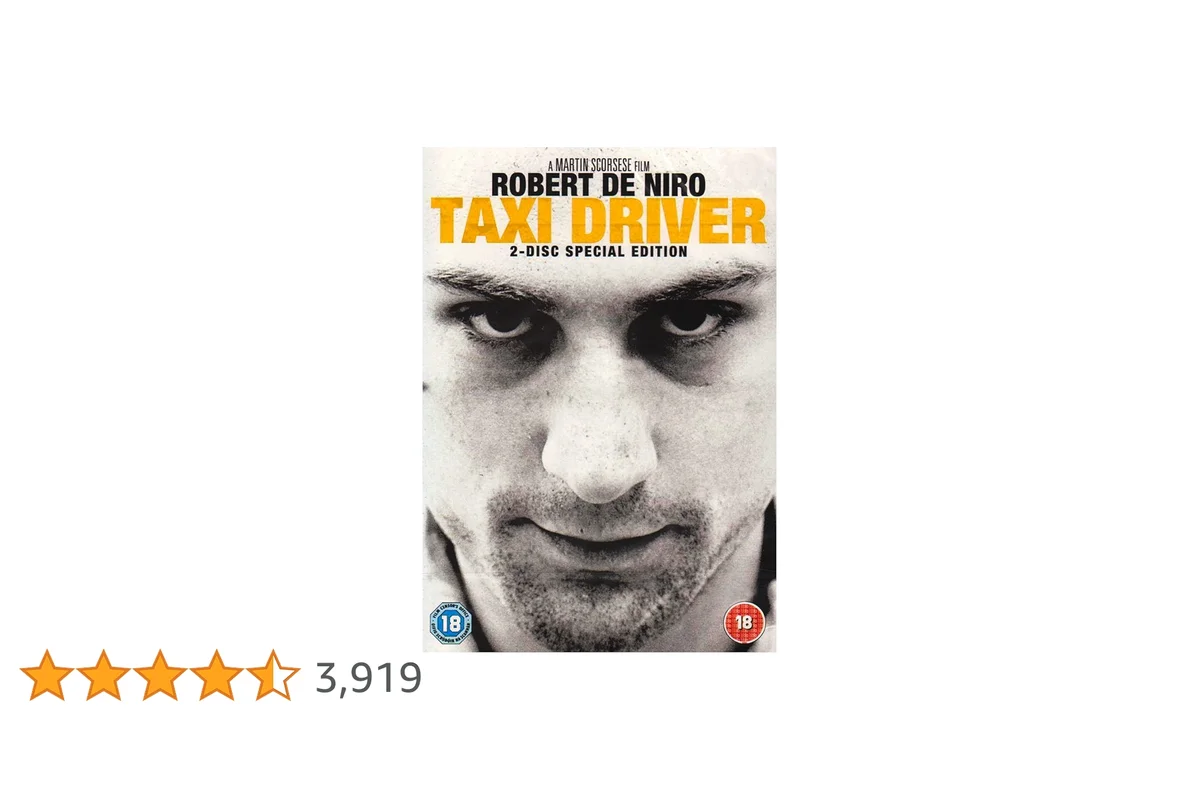
At the Marrakech Film Festival, Jodie Foster reflected on her experience working alongside Robert De Niro on Martin Scorsese’s iconic film Taxi Driver. The encounter, which took place when Foster was just 12, revealed surprising insights into De Niro’s method acting and its impact on their interactions, adding a new perspective to the enduring legacy of Robert De Niro Taxi Driver.
Foster recounted how, despite De Niro’s esteemed status in Hollywood, her initial impression of him was underwhelming. Throughout their time running lines together in coffee shops, De Niro maintained his strict method approach — staying in character, which Foster said made him seem distant and unengaging. This left the young actress struggling to connect, as their lunches often felt awkward and dull.
A Breakthrough in the Acting Process
It wasn’t until several meetings later that Foster experienced a shift in her understanding of acting and her dynamic with De Niro. She remembered a specific moment when he introduced her to improvisational techniques, providing her with a new outlook on character development and performance.
We’d run the lines and run the lines a second and third time. And I’m sure maybe some of you have been here when Robert De Niro was here. One of our greatest American actors, so proud to have worked with him — not the most interesting person on earth,
— Jodie Foster, Actor
And at that time, he was very much in character, the way he was in those days. So he was really uninteresting and I remember having these lunches with him and being like, ‘What is happening? When can I go home?’ And he wouldn’t really be able to talk to me, so I would talk to the waiters and the people in the restaurants.
— Jodie Foster, Actor
He finally walked me through improvisation by the time we had our third lunch together, and it opened my eyes to what acting could be,
— Jodie Foster, Actor
And I realized at 12, ‘Oh, it’s my fault because I haven’t brought enough to the table.’ I’ve just been saying lines and waiting for my next line and acting naturally, but building a character is something different. And I remember how excited I was, I remember being kind of sweaty and excited and giggly and coming back up into the hotel room to meet my mom and saying, ‘I’ve had this epiphany.’ And I think from there, everything changed.
— Jodie Foster, Actor
These revelations had a lasting influence on Foster, who embraced a deeper commitment to her craft as a result of this early challenge with De Niro. The experience ultimately transformed her approach to acting, setting the tone for her future roles.

The Cannes Journey and Challenges for a Young Star
Following the completion of Taxi Driver, Foster’s career took a significant leap when she attended the prestigious Cannes Film Festival. However, financial reluctance from the film’s backers nearly prevented her attendance. Her mother, who also managed her career and valued Foster’s French education in Los Angeles, insisted on the importance of her presence at Cannes and arranged for them to cover the travel costs themselves.
nobody wanted to bring me because they didn’t want to spend money on me.
— Jodie Foster, Actor
My mom said, ‘No, it’s really important. She speaks French. This is Cannes!’
— Jodie Foster, Actor
And so we paid for our own flights.
— Jodie Foster, Actor
During the festival, De Niro, Harvey Keitel, and Scorsese became increasingly anxious amid concerns that the film’s violence could result in censorship or an X rating. Their fears left Foster to handle the media responsibilities nearly alone.
We all did the press conference together, but then after the press conference, they all got too scared, and they wouldn’t leave their rooms at the Hotel du Cap,
— Jodie Foster, Actor
So I ended up doing all the interviews in French for the entire team of ‘Taxi Driver’!
— Jodie Foster, Actor
Reflections on an Unconventional Acting Career
Foster discussed her unique path into acting, which began at an early age and was not of her own choosing. Despite her remarkable achievements, she described a sense of distance from the profession, explaining that the decision to pursue acting was made for her, not by her.
I would never have chosen to be an actor, I don’t have the personality of an actor. I’m not somebody that wants to dance on a table and, you know, sing songs for people,
— Jodie Foster, Actor
It’s actually just a cruel job that was chosen for me as a young person that I don’t remember starting. So right there, it makes my work a little bit different because I am not interested in acting just for the sake of acting. If I was on a desert island, I think probably the last thing I would ever do is act. So I was just trying to survive.
— Jodie Foster, Actor
Because of these early experiences, Foster recognizes the unique pressures faced by child actors and feels a responsibility to mentor those entering the industry today.
reaching out to the young child actors of this era,
— Jodie Foster, Actor
I feel like, wait, where are their parents? And why is nobody telling them that they should stop doing so many movies or maybe not be so drunk on the red carpet? I want to take care of them because I know how dangerous it is.
— Jodie Foster, Actor
I don’t know why anyone would want to be an actor now, if they knew that in order to be excellent they would have to contend with being robbed of their life in a way. I don’t know how you make sense of that except to have what my mom helped me do, which is to have this very firm delineation between your private life and your public life.
— Jodie Foster, Actor
Pursuing Empowerment and Representation in Film
Throughout her career, Foster gravitated toward playing strong, central characters, rejecting the idea of being relegated to supporting roles defined by relationships to male leads. She credits the influence of second-wave feminism and her own drive to have meaningful impact through her work.
I didn’t want to be the sister of, the wife of, the daughter of, the girlfriend of. I just wanted the movie to be about me,
— Jodie Foster, Actor
reacting to a second wave feminist interest of saying, ‘I want to matter. I want to make movies that matter.’
— Jodie Foster, Actor
Foster also addressed the underrepresentation of female directors during much of her career, noting a recent positive turn as several of her latest projects have been helmed by women.
Then in the last four films, they’ve all been women!
— Jodie Foster, Actor
I mean, really up until 15 years ago, when you look at the list for mainstream movies and you go down the director’s list, I never saw a female name,
— Jodie Foster, Actor
If you’re making a movie that has a certain risk attached to it … they would say, ‘Wow, there’s no woman that’s directed a movie that cost $125 million,’
— Jodie Foster, Actor
the idea was not to give women these huge mega movies if they had not had any experience. How about giving women the experience first?
— Jodie Foster, Actor
The Changing Landscape of Film and Streaming’s Impact
After earning critical acclaim on television with HBO’s True Detective: Night Country, which brought Foster an Emmy and a Golden Globe, she praised modern streaming platforms for allowing more expansive storytelling, especially for marginalized communities such as Native Americans. Foster cited recent projects like Martin Scorsese’s Killers of the Flower Moon as examples of how longer-form storytelling could do more justice to complex narratives.
I’m embracing this idea of there being these two opposite ends of the industry — one which is mainstream Hollywood, mainstream distributor films and more independent films on the other end … and then streaming, which has really taken up the mantle of narrative. You’re able to take up eight-hour stories or five-season stories where you can explore every angle in a way that you could never in a feature.
— Jodie Foster, Actor
what we had was a very interesting movie about two guys who go back and forth and they talk to each other.
— Jodie Foster, Actor
I think everybody was excited that the Native story was going to be told. And what they found was like, ‘Wow, all the Native women are dead,’
— Jodie Foster, Actor
What they said was, ‘Well, it’s a feature, we didn’t have time!’ But there was time. There was an eight-hour limited series that was not made, that could have been made, where if you really needed to explore all of that male toxic masculinity, you could have done that, but you could have had Episode 2 actually center the Native story.
— Jodie Foster, Actor
New Projects and Looking Forward
Currently at the Moroccan festival to present Rebecca Zlotowski’s French comedy-thriller A Private Life, Foster revealed her ambition to undertake more projects in French, reflecting her bicultural upbringing and love of global filmmaking.
Of course, because I do feel like it’s a part of my personality that I just never get to use, and half my culture, because I went to a French school,
— Jodie Foster, Actor
I love the global family of making films. It feels like they’re the same people wearing the same jeans and complaining about coffee at 3 in the morning. But it also allows me to open up and learn a new culture, too.
— Jodie Foster, Actor
As the conversation wrapped up, Foster expressed her continued passion for cinema and her determination to stay active creatively for years to come.
I’ll be making films until I die,
— Jodie Foster, Actor
You can’t get rid of me that fast.
— Jodie Foster, Actor
Significance of Foster’s Reflections for Hollywood
Foster’s candid stories from the set of Robert De Niro Taxi Driver illustrate the intense pressures young actors can face, as well as the challenges of connecting with industry legends like Robert De Niro, especially when method acting creates emotional distance. Her experiences at events such as the Cannes Film Festival, shaped by the actions of her mother, highlight both the difficulties and resilience required in the film world.
Her insights into the evolution of female representation, the obstacles for women directors, and the expanding opportunity offered by streaming platforms provide a passionate critique of Hollywood’s past and present. As the Marrakech Film Festival continues, with stars like Bong Joon Ho, Celine Song, Jenna Ortega, and Anya Taylor-Joy in attendance, Foster’s words contribute meaningfully to ongoing discussions about inclusivity, mentorship, and the power of storytelling in shaping the industry’s future.
