
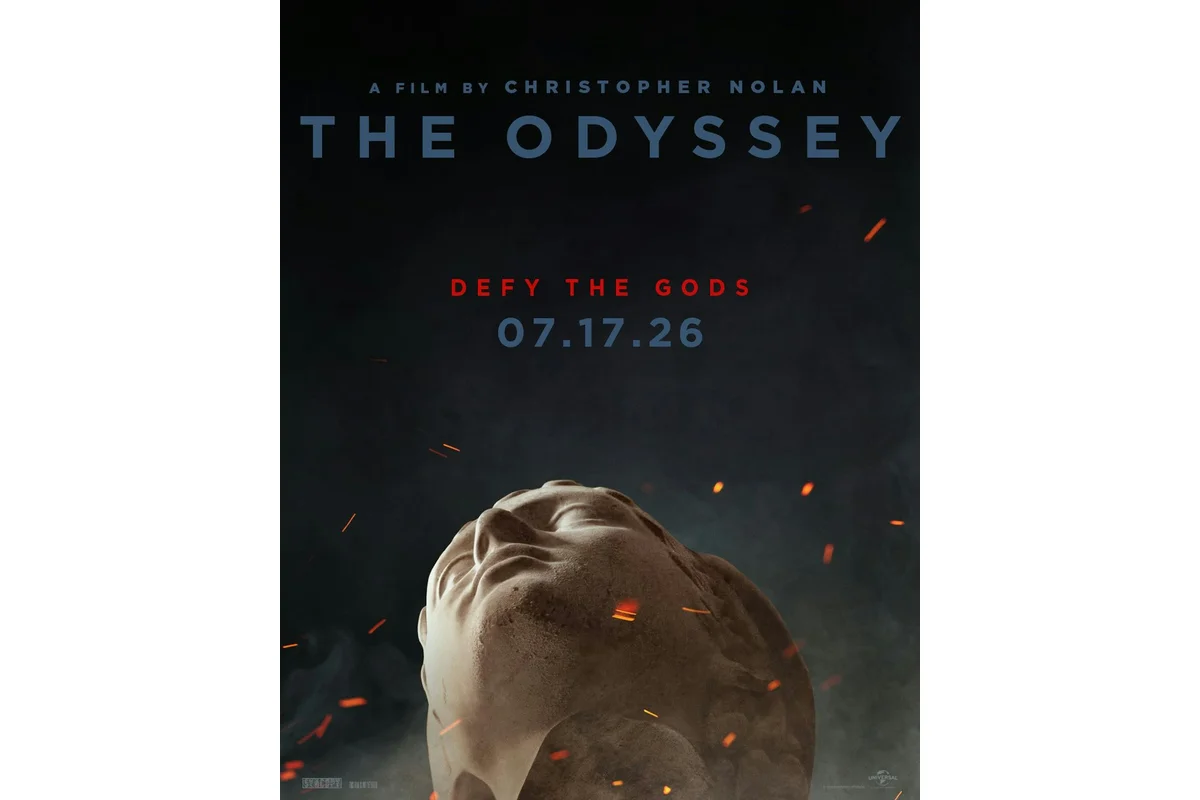
Christopher Nolan The Odyssey movie is set to reimagine Homer’s legendary tale with a distinct cinematic vision, drawing global attention as Nolan embarks on one of his most ambitious adaptations yet. The film casts Matt Damon as Odysseus, plunging audiences into a sweeping narrative marked by mythology, war, and the search for identity, while firmly rooted in Nolan’s celebrated filmmaking style.
Nolan’s Reputation and Shift to Greek Mythology
Christopher Nolan, widely renowned for his envelope-pushing approach to practical effects and his intricate storylines, has long captivated moviegoers and critics. After the overwhelming acclaim for Oppenheimer, his focus now shifts from scientific history to mythic epic, with The Odyssey becoming his latest canvas. Following the complex origin stories found in Gotham City, Nolan is poised to explore a very different world—one filled with legendary gods, haunted warriors, and the enduring scars of war.
The anticipation surrounding Christopher Nolan The Odyssey movie is heightened by the film’s connection to foundational Western literature. The Odyssey, Homer’s sequel to The Iliad, turns the spotlight from the ferocity of battle to the struggles of returning home. Set against the backdrop of a shattered Greece, the poem—and now Nolan’s adaptation—delves into the aftermath of the Trojan War, where Odysseus must navigate supernatural trials and wrestle with the trauma that lingers after conflict subsides. This journey is not just physical; it’s also an exploration of homecoming, identity, and recovery, layered with themes that have resonated across generations.

Nolan’s Unfinished History With Troy
Christopher Nolan’s relationship with Homeric epics dates back more than two decades. In the early 2000s, after earning critical praise for Memento and Insomnia, Warner Bros. eyed Nolan for a cinematic adaptation of The Iliad, intending him to direct the sword-and-sandals blockbuster Troy. Rather than stepping into Troy’s ancient realm, Nolan pivoted to present Batman’s evolution with Batman Begins, ultimately creating The Dark Knight Trilogy. This move redefined the superhero genre, with its realistic tone and complex characters influencing a generation of storytellers and audiences.
Wolfgang Petersen ultimately helmed the 2004 Troy, casting Brad Pitt as Achilles, Eric Bana as Hector, and Orlando Bloom as Paris. The movie drew huge crowds and nearly half a billion dollars at the global box office but sparked discussion for deviating from its mythological origins. Critics admired its sweeping battle scenes and production values but lamented the omission of the gods from the narrative, seeing the film as a more grounded retelling rather than a faithful adaptation of Homer’s text.
Despite divided reviews, Troy became emblematic of big-budget, early-2000s blockbusters—a visual spectacle that many felt left deeper mythological elements behind for the sake of mass-market appeal. Now, by taking up The Odyssey, Christopher Nolan circles back to Homer’s stories, intent on embracing the very mystery and scale that his earlier opportunity left unexplored.
Embracing the Divine: Gods Take Center Stage
One of the most notable departures for Christopher Nolan The Odyssey movie compared to Troy lies in Nolan’s embrace of the supernatural. Where the earlier adaptation stripped away the interference and involvement of gods, Nolan’s version restores them to dramatic prominence. The film features Charlize Theron as Circe, the sorceress who famously ensnares Odysseus and transforms his followers. Zendaya is slated to play Athena, Odysseus’s guiding patron deity, adding further star power and a divine presence to the cast. Additionally, Robert Pattinson is reportedly cast as Poseidon, the sea god responsible for many of Odysseus’s tribulations and delays on his quest home.
This return to the myth’s supernatural roots gives Nolan’s Odyssey a distinctive identity, staying truer to Homer’s original vision. In Homer’s poem, it is the gods who drive much of the action, acting as both tormentors and saviors for Odysseus. By directly including these celestial forces, Nolan’s adaptation signals a commitment to the scope and wonder of ancient storytelling. For fans of both classic literature and inventive cinema, the interplay between these immortal characters and the human struggles of Odysseus promises a film rich with drama and spectacle.
A Star-Studded Cast Reimagines Classics
Central to Christopher Nolan The Odyssey movie is Matt Damon’s transformation into Odysseus, the hero whose cunning and endurance fuel his pursuit of home. Damon’s past collaborations with Nolan, combined with his own experience navigating complex roles, position him to explore the psyche of a soldier battered by war’s psychological toll. The dynamic between Damon’s Odysseus and Charlize Theron’s enigmatic Circe will be pivotal, drawing on deep mythological roots and offering the chance for dazzling screen confrontations.
Beyond Damon, the cast is energized by Zendaya, whose portrayal of Athena is poised to bring gravitas and strategic brilliance to the goddess’s interactions with humanity. Robert Pattinson’s Poseidon is expected to be a formidable antagonist, challenging Odysseus at every turn as he navigates both natural and emotional storms. This lineup hints at a film that not only puts gods and mortals side by side but uses their conflicts to probe themes of fate, suffering, and redemption.
Production and Release Details
Christopher Nolan’s Odyssey has finished principal photography and is currently in post-production, with an official theatrical release scheduled for July 17, 2026. The announcement has sparked considerable excitement in both cinema and literary communities, with many eager to see how Nolan’s unique approach transforms myth into visual storytelling.
The film’s use of practical effects, sweeping landscapes, and innovative soundscapes is expected to echo the director’s previous works, offering a cinematic journey that aims for immersion as much as spectacle. As theaters prepare for another major release from Nolan, the anticipation grows not just for a retelling of a classic, but for an interpretation that blends blockbuster appeal with the philosophical questions lying at the center of Homer’s writing.
The Impact of Nolan’s Mythological Vision
With The Odyssey, Christopher Nolan is set to rekindle interest in ancient epics while contributing a distinct voice to the lineage of Homeric adaptations. The movie’s commitment to honoring the original with divine intervention, combined with its contemporary sensibility and star-driven cast, situates it as a high-profile, emotionally charged cinematic event. Audiences and critics alike will look to Nolan, Matt Damon, Charlize Theron, Zendaya, and Robert Pattinson to bring this story about war, homecoming, and identity into the modern moviegoing experience.
As the July 2026 premiere approaches, questions remain about the full creative vision Nolan has for The Odyssey. The film’s legacy will depend on its ability to capture both the grandeur and the human heart of Homer’s work while setting a new standard for mythological storytelling on screen. In a landscape filled with superhero sagas and reboots, Nolan’s foray into the realm of gods and mortals marks a bold chapter in modern cinema—a journey that will be watched with intense emotion by a global audience.
