
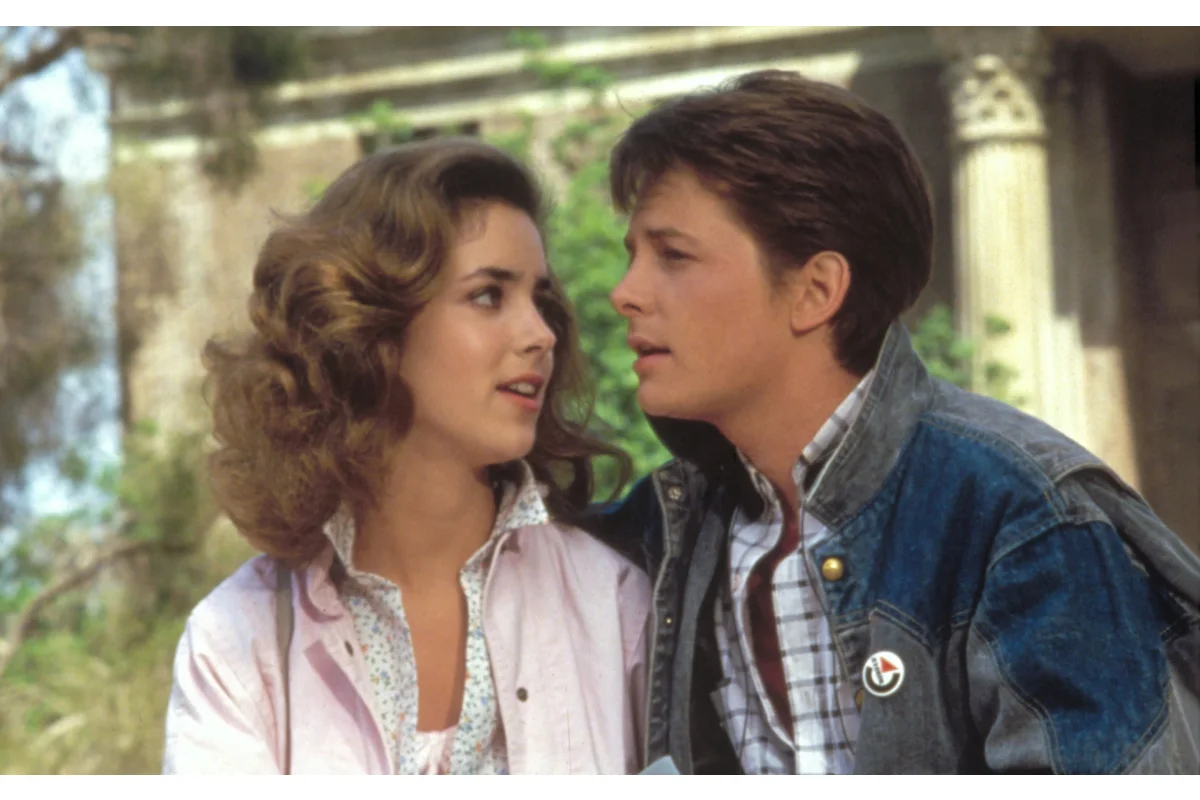
Michael J. Fox has opened up about the unforeseen effects his casting had on others in the making of Back to the Future, highlighting the broader Michael J. Fox casting impact that went beyond just changing out lead actors. Fox’s transition into the iconic role resulted in a dramatic reshuffling, notably leading to the recasting of the character Jennifer, Marty McFly’s girlfriend, due to industry prejudices regarding appearance and suitability on-screen.
After weeks of filming with Eric Stoltz and Melora Hardin as Marty and Jennifer, Fox stepped into the main role, splitting his time between Back to the Future and his television series Family Ties. In his new memoir, Future Boy, Fox shares how past experiences with bullying over his height later translated into barriers in his movie career as he began to compete for leading-man roles next to taller actresses. He stated:
Worked in my favor when I was a teenage actor playing a younger kid, but it turned against me as an adult, when I went up for romantic leads opposite taller actresses.
This underlying bias resurfaced on the Back to the Future set. When Fox replaced Stoltz, Melora Hardin, who had been cast as Jennifer, was let go because she was taller than Fox. Film executives decided that audiences might not accept an on-screen couple where the male lead was shorter than his romantic partner. Fox discussed how this decision reverberated on the production and for Hardin, sharing:
I regret that this prejudice inadvertently affected another cast member in Back to the Future – Melora Hardin, the talented actress who had played Marty’s girlfriend, Jennifer, opposite the perfectly tall Eric Stoltz. Melora, several inches taller than me, was replaced in the movie after I took over as Marty. Initially, Bob Zemeckis thought perhaps the audience could look past our height difference, but when he quickly surveyed the female members of the crew, they assured him that the tall pretty girl in high school rarely picks the cute short guy.
No one asked for my opinion, but I would have risen to Melora’s defense.
The candid admission shines light on how decisions driven by perception and bias not only changed the trajectory for Fox but also impacted actors like Hardin who lost significant roles because of casting traditions.
How Melora Hardin’s Career Moved Forward After Losing the Role
Following these changes, Claudia Wells was chosen to portray Jennifer alongside Fox, in part because her height closely matched his. Even so, her stint as Jennifer was short-lived, as Elisabeth Shue later took over the part for the sequels. The character itself suffered a diminishing role in subsequent entries, and much of Jennifer’s presence in the sequels was minimized as the writers did not develop her storyline, at times rendering the character unconscious for large segments of the plot.
Despite this early setback, Melora Hardin went on to achieve significant success without Back to the Future. She became well known for her role as Jan Levinson, the complex boss and love interest of Michael Scott, in The Office. Hardin’s career continued to grow, with appearances in projects such as Disney’s Tower of Terror, romantic comedies like 27 Dresses, and movies such as 17 Again with Zac Efron. Television audiences also recognize Hardin from her roles in Monk, where she played Trudy Monk, as well as appearances in the series Transparent and The Bold Type.
Hardin’s broad filmography illustrates that, although she lost the chance to be part of Back to the Future due to casting practices tied to physical appearance, she maintained her professional momentum, securing a range of prominent and diverse roles over the years.
Casting Standards and Changing Perspectives in Hollywood
The questions raised by Fox’s account expose long-standing habits within the entertainment industry, where executive decisions often give priority to widely held beliefs about what makes an on-screen couple seem believable. This tendency, marked by a focus on image and convention, has led to missed opportunities for actors whose only barrier was not fitting a perceived norm—something highlighted in the cases of both Melora Hardin and the various actresses who played Jennifer.
As Fox’s memoir points out, the entertainment world’s approach to casting has been shaped by factors unrelated to talent, skill, or on-screen chemistry. While there is ongoing debate about whether Hardin’s casting as Jennifer would have truly affected the film’s success, the industry is gradually moving toward increased representation and diversity. Many actors, filmmakers, and advocates are urging studios and producers to shift away from rigid standards, making stories more inclusive and less constrained by historical biases.
Back to the Future’s recasting decisions remain a telling example of how deeply-rooted perceptions influence even the most iconic projects. The legacy of decisions influenced by height, image, and other superficial considerations remains a topic of conversation and, thanks to high-profile revelations from stars like Michael J. Fox, continues to prompt re-examination of casting choices across Hollywood. Moving forward, the Michael J. Fox casting impact story stands as both a cautionary tale and a marker of evolving priorities in the entertainment industry.
