
Sinners, written and directed by Ryan Coogler, emerged as both a critical favorite and a box office success in its spring release, captivating audiences with its story of twins Smoke and Stack, played by Michael B. Jordan, who establish a juke joint in 1932’s deep South, inadvertently challenging racial boundaries and triggering dangerous consequences. The film’s innovative style, a deliberate choice for impactful storytelling, was shaped in part by Christopher Nolan filmmaking advice, elevating Sinners into a distinctive cinematic experience.
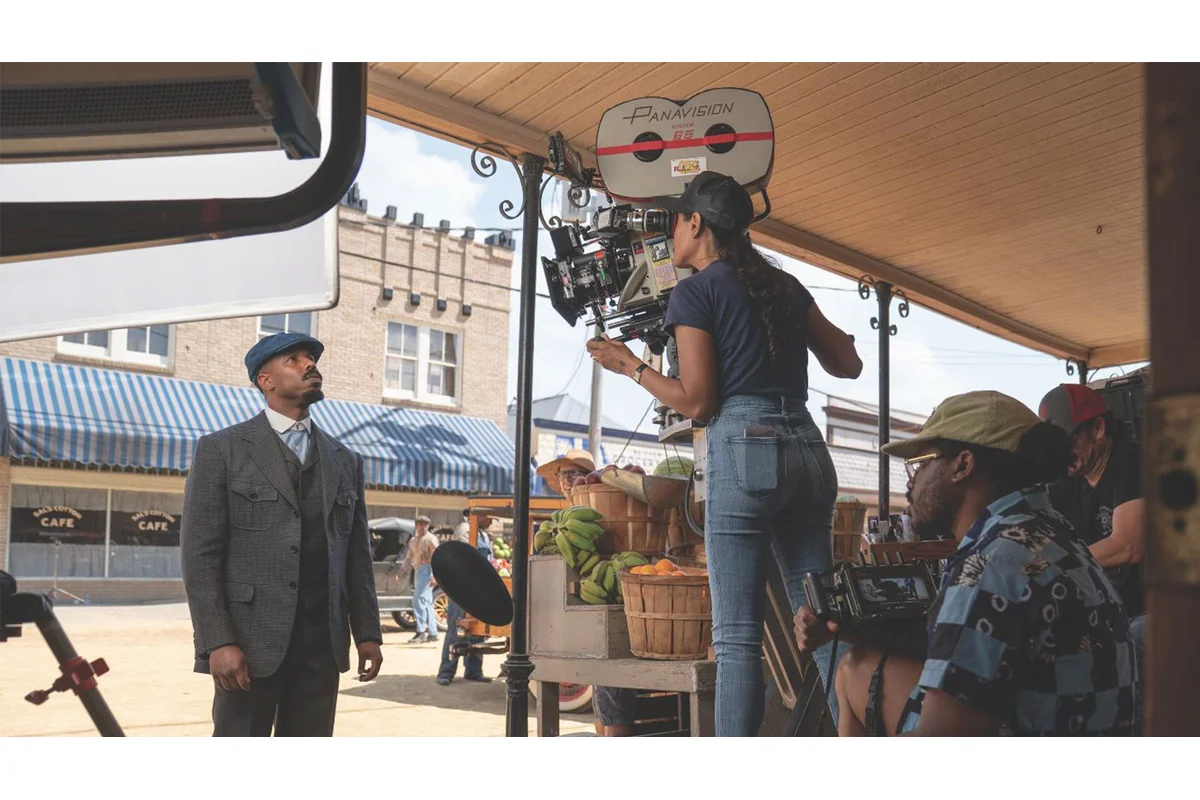
Cinematographer Autumn Durald Arkapaw, who previously collaborated with Coogler on Black Panther: Wakanda Forever, played a pivotal role in realizing the film’s visual ambition. Together, they employed both IMAX 15-perf and Ultra Panavision 70 formats, with Arkapaw becoming the first woman to shoot a large-format IMAX feature. Her extensive background, including projects like Loki and collaborations with Gia Coppola, equipped her for Sinners’ demanding technical and artistic requirements.
Harnessing Dual Formats to Enrich Storytelling
One defining aspect of Sinners is its seamless transition between the 1.43:1 IMAX and the 2.76:1 widescreen Ultra Panavision formats. As Arkapaw explained at the EnergaCAMERIMAGE festival in Toruń, Poland, this bold approach allows the film to communicate on multiple visual levels. Few films—Sinners being only the eleventh—have utilized Ultra Panavision 70, making its use a rare technical feat. The complexity is heightened by the need to preserve extreme aspect ratios across different theaters.

Reflecting on these production decisions, Arkapaw shared that the technical team assembled a test reel to view at IMAX headquarters, ensuring the chosen formats genuinely served the story. The format changes are not arbitrary; rather, the transitions are planned to heighten emotional impact within scenes, with each choice discussed meticulously during editing alongside editor Michael Shawver. For most viewers seeing the widescreen version, the changes are seamless, but in IMAX, some will notice montages that intentionally jump back and forth to convey emotional shifts.
In the film’s narrative, the first appearance of Jack O’Connell’s character Remmick is an IMAX shot distinguished by its unique composition and disorienting movement, immersing audiences in a different visual world. The vastness of the IMAX format requires viewers to actively engage with the frame, exploring foreground and background details in a way that fosters a new kind of relationship between the viewer and the cinematic experience.
The Art and Intention Behind Camera Movement
Unlike some IMAX cinematographers who prefer minimal camera movement, Coogler and Arkapaw embraced dynamism, inspired by a pivotal piece of Christopher Nolan filmmaking advice. As recounted by Arkapaw, Nolan recommended treating the camera as though it were a Super 8: moving it freely and telling the story confidently, rather than being intimidated by the format or its scale. This sense of freedom led the team to employ Steadicam and cranes frequently, demanding precise focus-pulling and exceptional teamwork from the entire camera crew.
Um, I didn’t light over there, so I need more time.
– Autumn Durald Arkapaw, Cinematographer
The Role of Music and the Challenges of Extended Shots
Music, composed by Ludwig Göransson, significantly influenced production, particularly for musical sequences. While not all tracks were known ahead of filming, key sequences were shot with the actual music playing, aligning camera movement with the rhythm. This process culminated in the film’s renowned one-shot exploration of world music within the juke joint, a sequence that drew acclaim at festivals and among peers. According to Arkapaw, technical limitations like IMAX magazine length required careful planning, with transitions between locations meticulously synchronized to the music.
This extended shot, achieved with Steadicam, is the result of extensive pre-production meetings and on-set adaptability. The success of such scenes, Arkapaw noted, depends on every department—from lighting to sound—working in harmony to support the director’s vision. The immersive sound mix in IMAX further enhances the impact, enveloping viewers in atmosphere and emotion.
Collaborative Shot Composition and On-Set Flexibility
Arkapaw typically operated the camera herself, standing shoulder to shoulder with Coogler during takes to maintain creative alignment. Shot plans were discussed following rehearsals, informed by extensive prior collaboration on projects like Wakanda Forever. While storyboarding provided a structural framework, both Arkapaw and Coogler valued remaining responsive to the evolving needs of the scene and the performers. This allowed for emotional authenticity, with adjustments made as the scene demanded.
Pre-visualization and storyboards played a vital logistical role, especially for elaborate action sequences involving visual effects or precise timing with music. Despite this planning, Arkapaw stressed the importance of reacting to the real-time energy of the set—whether adapting to changes in actor movement, shifting the camera’s position, or capturing an unforeseen moment of synergy between the actor and the camera. This approach fostered naturally powerful and emotionally honest images throughout the film.
Lighting Philosophy and Production Design Integration
Lighting for flexibility was a core principle on Sinners’ set. Arkapaw favored lighting entire spaces to grant Coogler maximum freedom of movement with the camera, a crucial strategy for responsive filmmaking. Obstructive floor equipment was minimized to keep the actors and director unencumbered, enabling spontaneous changes in blocking or focus. Arkapaw maintained a close creative partnership with production designer Hannah Beachler, planning for practical motivates lights on set to anticipate narrative needs and allow for seamless visual transitions.
Bringing Dual Performances to Life
Sinners featured Michael B. Jordan portraying both Smoke and Stack, each with distinct personalities. Achieving believable interactions between the twins required a broad toolkit—programmable camera heads, the TechnoDolly, body doubles—all of which supported Jordan in delivering nuanced dual performances. The technical proficiency, while important, was ultimately in service of Jordan’s ability to embody both roles credibly and distinctively, impressing audiences and industry professionals alike.
Formatting for Theatrical and Home Releases
Adapting Sinners for various distribution channels required careful management of multiple aspect ratios. While the theatrical version in 2.76:1 served as the primary reference for visual grading, a separate IMAX pass was created to optimize the larger frame, with compositions often ‘center punched’ for consistent visual balance. The later Blu-ray release, operating in a 1.78 container, presented its own set of adjustments, ensuring the cinematic intent translated across home viewing formats.
Despite the logistical complexity, Arkapaw emphasized that technical concerns remain secondary to storytelling. The ultimate goal for the operator and cinematographer is always to serve the story’s emotional resonance, not simply to accommodate deliverables or technical constraints.
Anticipating the Film’s Continuing Impact
Sinners’ forthcoming limited IMAX 70mm re-release, beginning December 12, offers another opportunity for audiences to experience the film’s groundbreaking visuals and immersive sound on the grandest scale. With availability on disc, digital platforms, and streaming through HBO Max, the film’s influence on cinematic technique and visual storytelling continues to spread, setting a new standard for filmmakers inspired by Christopher Nolan filmmaking advice and the collaborative efforts of artists like Coogler and Arkapaw.
This dedication to innovation and creative risk has not only elevated Sinners within a crowded field of releases but has set new expectations for visual storytelling in major motion pictures. The success of Sinners reinforces the power of artistic collaboration and the benefits of guidance from visionary filmmakers, inspiring the next generation to blend technical mastery with bold storytelling.
