
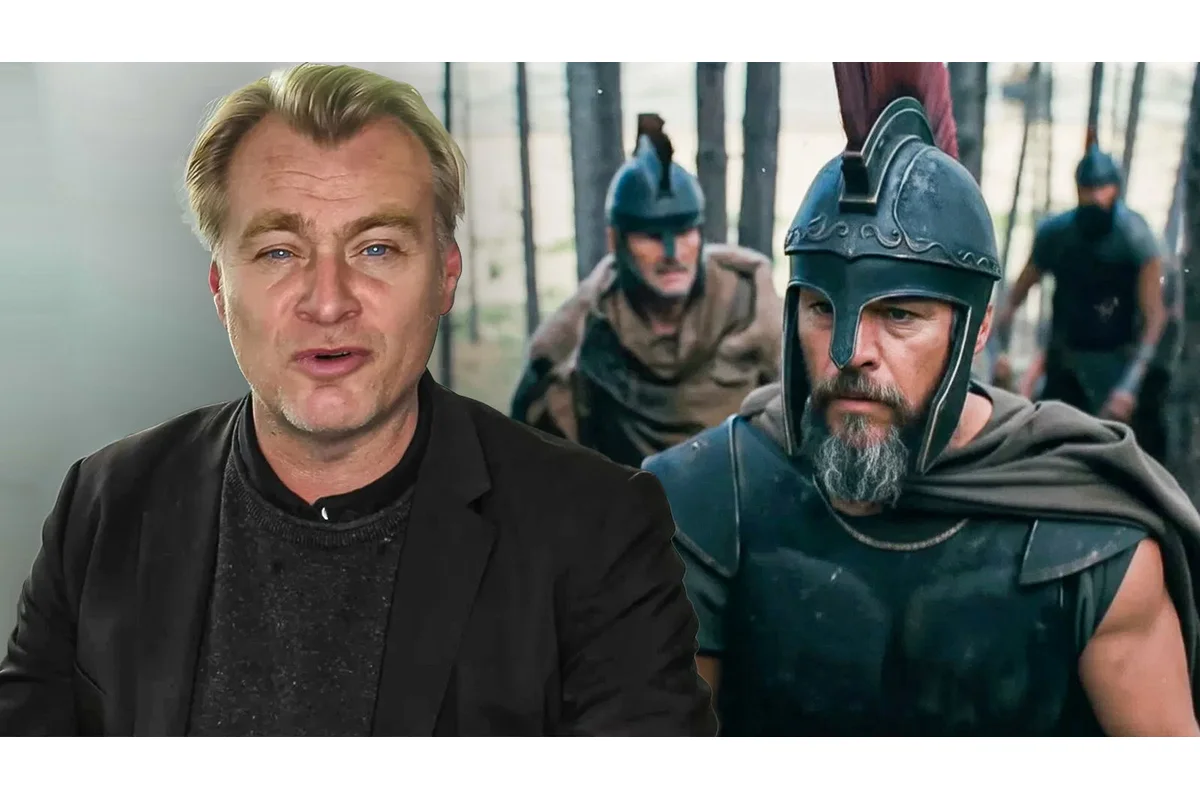
Christopher Nolan, acclaimed for his serious and reality-driven films, has shared his top two choices for favorite musical scenes in cinema, highlighting his appreciation for how music can transform storytelling. Discussing his selections publicly, Nolan provides insight into what marks a standout moment, offering a new perspective on the intersection of musicals and grounded filmmaking—a surprising revelation for those familiar with his work.
Nolan’s Surprising Appreciation for Musical Moments
Known for films like “Oppenheimer,” which explores the complexities of J. Robert Oppenheimer’s life and his role as the “father of the atomic bomb,” Nolan is not often associated with musicals. His films typically depict grounded themes and intense psychological drama, featuring historical figures such as Albert Einstein with an unflinching realism. The idea of characters suddenly breaking into song, especially in a Nolan film, seems almost unthinkable, given his signature style.
However, Nolan’s interest in musical scenes suggests that he recognizes the potential for music to deepen cinematic impact without veering into what he calls “theatre-kid territory,” where abrupt musical transitions can remind viewers that they are watching a constructed reality. He has previously expressed admiration for “La La Land,” the acclaimed 2016 musical featuring performances by Ryan Gosling and Emma Stone. Still, one of his favorite moments actually comes from a film released after that celebrated romantic drama.
The Haunting Irish Folk Scene in “Sinners”
During a recent special screening, Nolan discussed “Sinners,” one of the most talked-about movies of 2025, in conversation with director Ryan Coogler. He focused on a memorable scene in which the antagonist Remmick and his crew of vampires perform the traditional Irish folk song “Rocky Road to Dublin.” This unsettling musical number stands out for blending horror, history, and music into a tense, emotionally charged sequence.
Nolan commented,
“It’s a wonderful film in a lot of ways, but it deals in very stereotypical tropes of Voodoo about what constitutes the darkness of the human soul – how it’s expressed in anthropological terms. When I saw your film, the Irish River Dance, it was so chilling.”
– Christopher Nolan, Director
This haunting moment effectively uses music to evoke a deep sense of unease, as the performance draws on cultural heritage while amplifying the horror elements present in the story. Nolan’s reaction shows a deep respect for the filmmakers’ ability to merge musical traditions with narrative intensity.
Kubrick’s “Singin’ in the Rain” Scene: Nolan’s Second Pick
Nolan’s second favorite musical moment arrives from Stanley Kubrick’s notorious adaptation of “A Clockwork Orange,” based on Anthony Burgess’s novel. He described the musical number as,
“It’s really the most spectacular musical inversion since Kubrick’s ‘Singin’ in the Rain,’ [from A Clockwork Orange.] I mean, what did we [Irish] ever do to you?”
– Christopher Nolan, Director
The 1971 scene is far removed from the feel-good musical routines the song usually conjures. Instead, it features a group of bandits, led by Alex, breaking into a couple’s peaceful home. As chaos unfolds, the bandits break into a disturbing and twisted rendition of “Singin’ in the Rain,” a song originally associated with Gene Kelly’s exuberant performance in the 1952 film of the same name. The contrast between the joyous song and the disturbing actions on screen intensifies the violence and the psychological impact on the viewer, confirming Nolan’s appreciation for musical sequences that subvert expectations.
Musical Scenes That Redefine the Genre
Both of Nolan’s picks showcase the way music, when used thoughtfully, can intensify emotional resonance and narrative tension, even in films far removed from the traditional musical genre. The choices reflect Nolan’s unique perspective on cinema, demonstrating that musical storytelling can thrive in even the darkest or most unconventional settings. As a director renowned for his realistic approach, Christopher Nolan’s favorite musical scenes challenge assumptions about what musicals can achieve, broadening the possibilities for the genre and inspiring filmmakers who might normally avoid using song as a narrative device.

