
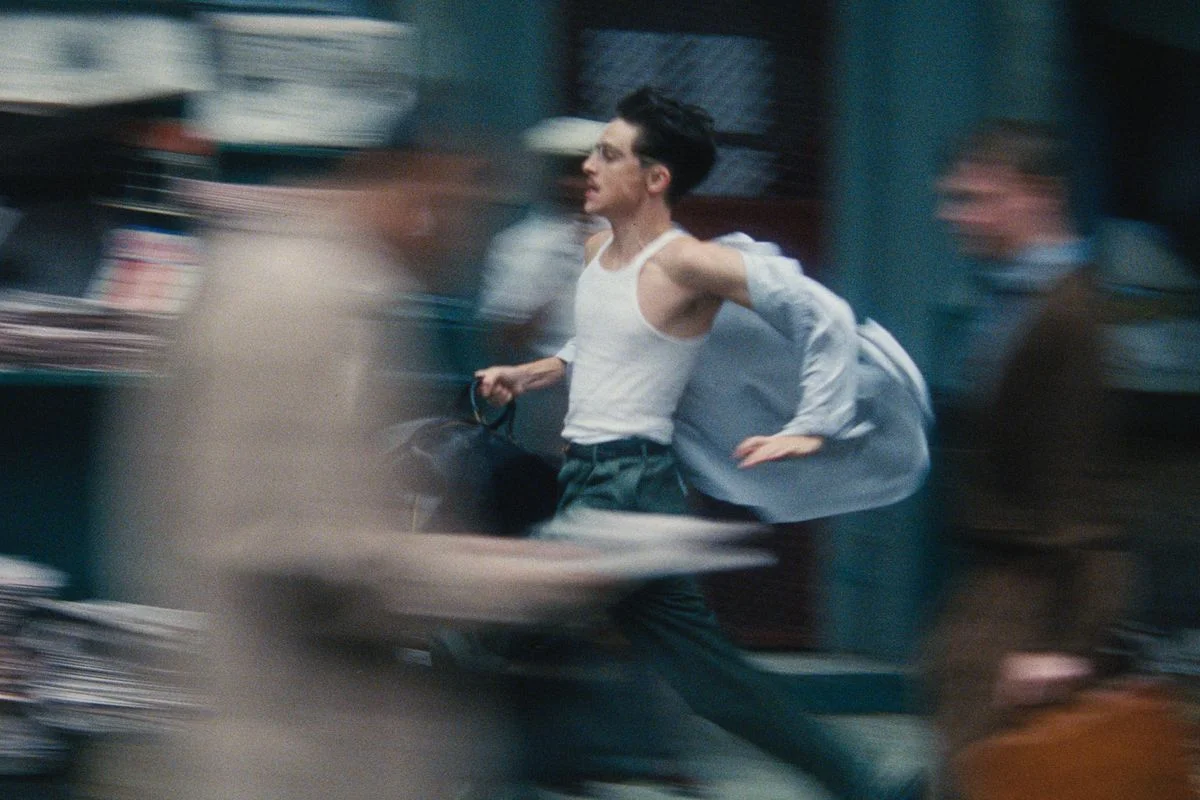
Timothée Chalamet’s career-defining performance in Marty Supreme has positioned him at a remarkable crossroads, demonstrating the unique blend of ambition, vulnerability, and eccentricity that has set him apart in Hollywood. Released this year, Josh Safdie’s Marty Supreme offers Chalamet a role that feels singularly suited to his dual nature, challenging the actor to inhabit extremes while forging a new, indelible chapter in his growing legacy.
Unlike the standard path pursued by many of his peers, Chalamet’s journey to this pinnacle has been anything but conventional. From his high school rap days as “Lil’ Timmy Tim” to self-funded performance art stunts and a willingness to mock his own image in widely seen Apple TV ads, the actor has consistently chosen roles and projects that defy typecasting. Obsessed with becoming “one of the greats” as expressed during his memorable SAG Awards speech, Chalamet has consciously steered away from being simply another matinee idol or method actor, instead leaning into a nervy, self-aware presence that resonates with younger audiences and critics alike.
Distinct Identity Drives Chalamet’s Most Unforgettable Roles
This willingness to embrace peculiarity has underscored Chalamet’s most powerful and popular roles—from playing an alien space prince to a winsome boy next door in a 19th-century romance, and even reimagining Willy Wonka, all of which have contributed to his reputation as a fashion-forward face of his generation. However, these qualities did not always translate when applied to traditional, prestige-seeking projects. Films such as Beautiful Boy, The King, or his recent turn as Bob Dylan in A Complete Unknown offered Chalamet exposure but rarely allowed his full spectrum of charm and complexity to shine.
Marty Supreme changes everything. For the first time, Chalamet’s talents are not only matched by the role but elevated by it, in ways reminiscent of Russell Crowe’s famed turn in Gladiator or George Clooney’s iconic Vegas heist movies. Now, Chalamet has ping pong—and a character whose highs, lows, and intensity seem crafted with him alone in mind.
Exploring the Dual Sides of a Modern Movie Star
To understand Marty Supreme’s explosive impact, it helps to recognize the duality at Chalamet’s core. His wide-eyed earnestness and emotional transparency—first widely displayed in 2017’s Call Me By Your Name—launched him as a sweetly tormented artist with depth beyond his years, earning him an Oscar nomination at just 22 and establishing the template for his continued appeal.
Yet, just as defining was his simultaneous appearance in Greta Gerwig’s Lady Bird, where his portrayal of a smirking, insular character hinted at a very different energy—the self-absorbed philosopher whose magnetic detachment could be interpreted as intellectual arrogance. As Denis Villeneuve, director of Dune, once observed of Chalamet,
“There’s something of a romantic beauty to him. A cross of aristocracy and being a bum at the same time.”
—Denis Villeneuve, Director
Chalamet and Gerwig’s next collaboration, Little Women, refined this contrast further, with his Theodore Laurence balancing endearing vulnerability and unwitting entitlement in near-equal measure.
Josh Safdie Pushes Chalamet into Riskier Territory
In Marty Supreme, director Josh Safdie amplifies these contrasts, pushing Chalamet further than ever before. His character Marty Mauser is a brash, often selfish 1950s shoe salesman turned ping pong champion, a man whose obsession with personal greatness blinds him to the effects his actions have on everyone around him. The role leverages Chalamet’s offbeat screen presence, allowing him to inhabit a character who is a magnetic mix of arrogance and impulsiveness, but also capable of fleeting moments of kindness.
This is reflected in his interactions with other key characters: his unapologetic boasts, poignant confrontations, and unconventional chemistry with figures like Gwyneth Paltrow’s Kay Stone. The character’s audacity is on full display when he shocks journalists with the line,
“I’m gonna do to Kletzki what Auschwitz couldn’t,”
only to diffuse the moment with,
“It’s alright, I’m Jewish, I can say that. In fact, if you think about it, I’m like Hitler’s worst nightmare. Look at me, I’m here, I did it. I’m on top. I’m the ultimate product of Hitler’s defeat.”
These bold moments highlight both Marty’s brazenness and Chalamet’s willingness to take risks few in his position would attempt.
Marty’s complex layers, from his tender declarations to family during arguments to his open flirting style, paint a portrait of a man whose swelling ambition is almost endearing in its transparency.
Demonstrating Versatility Across Comedy and Drama
Chalamet’s ability to oscillate between comedic timing and dramatic intensity adds another dimension to his portrayal. Parallels have been drawn not only to leading men like Tom Holland and Paul Mescal, but also to quirky character actors such as Sam Rockwell and Steve Buscemi. This multifaceted skill set is on display throughout the film, where, under Safdie’s guidance, Chalamet embodies both the soulful vulnerability of a “white boy of the month” and the unpredictable energy of a character actor. In fact, Safdie even altered Chalamet’s appearance—pockmarked skin, beady eyes achieved with contacts and glasses—to further destabilize any preconceived notions of movie stardom.
Moreover, Chalamet’s talent for subtle comedy, often overlooked, becomes a driving force in Marty Supreme. From his satirical performance as a revolutionary in The French Dispatch to the heartbreaking comedic moments in Little Women, and even in promotional stunts for the new film, Chalamet proves that humor is integral to his approach. The authenticity of his comedy instinct ensures that the audience is aware he recognizes the absurdity of his own character’s actions.
Finding the Heart of Marty Supreme
Rather than tipping into pure thriller or whimsical fantasy, Chalamet stakes out new territory with a tragicomic performance that feels both earnest and knowing. Safdie’s movie, and Chalamet’s performance, acknowledge that Marty Supreme is, as Chalamet himself puts it,
“a movie about being an idiot and making bad decisions.”
Yet, at the same time, it is,
“honoring your ambition and recognizing your talent in the mirror and being singularly focused.”
—Timothée Chalamet, Actor
The film becomes a meditation on youthful striving and self-realization, themes that echo Chalamet’s own early days. The role’s origins date to a chance meeting between Chalamet and Safdie at a party, where the seed of collaborating on such a project was first planted. Chalamet, who has been honing his table tennis skills since 2018 in preparation, describes the experience as deeply personal, stating,
“In spirit, this is the most who I was that I’ve had to play a role. This is who I was before I had a career.”
—Timothée Chalamet, Actor
Luca Guadagnino, director of Call Me By Your Name, once remarked,
“he had the most intoxicating ambition to be a great actor.”
—Luca Guadagnino, Director, recognizing an energy that now finds its fullest expression in Marty Supreme.
Capturing Youthful Obsession—and Its Consequences
Marty Mauser’s fierce ambition is matched only by his brash self-belief, propelling him into both triumphs and disasters. Chalamet deftly embodies this manic desire for greatness, a quality reflective of an early 20-something barely removed from adolescence yet desperate to leave an indelible mark. His win-at-all-costs attitude is complex; Marty is gracious in victory, allowing rivals like Kletzki their own moments, yet a sore loser when the tables turn—revealing deeper insecurities. In a candid admission late in the story, Marty says,
“It’s every man for himself where I come from,”
and
“And sometimes I feel like I don’t even have control over it.”
—Marty Mauser, Character, capturing the chaos that defines his journey.
Chalamet’s physicality—twitching, nervy, and unpredictable—underscores a character constantly off-balance, his words tumbling faster than his thoughts. The result is a portrait of someone so consumed by immediate goals he struggles to comprehend the broader world. In some of Marty’s most memorable scenes, he is awestruck by his own blunders, highlighting not just his flaws but the energy that fuels them.
Emotional Growth Anchors a Daring Performance
Marty Supreme takes a step away from the pessimism of Safdie’s previous collaborations with his brother Benny, hinting instead at the possibility of personal growth. Where earlier Safdie protagonists were driven to collapse under the weight of their compulsions, there is, in Marty’s story, a glimmer of hope that he can reorient his priorities. In the film’s closing moments, Chalamet dials down the mania, exposing notes of vulnerability, need, and even something like humility. The audience witnesses a potential trajectory from unchecked ambition toward a more reflective maturity.
For much of the film, Chalamet’s Marty is consumed by immediate schemes, yet by the denouement he appears to gain some perspective on his place in the world. Appropriately, Safdie closes the movie with a lingering shot of Chalamet in tears—a subtle call back to his breakthrough in Call Me By Your Name, but with an adult’s self-awareness replacing youthful heartbreak. The difference underscores the growth both actor and character have experienced.
Marty Supreme: A Defining Mark in Chalamet’s Career
Ultimately, Marty Supreme represents the culmination of Timothée Chalamet’s career-defining performance, channeling his singular blend of anxiety, eccentricity, humor, and depth. The film leverages the young star’s willingness to subvert expectations, his self-awareness, and his insight into the peculiar self-delusion of youth, transforming these qualities into a role that will shape public perception of Chalamet for years to come.
As with cinematic milestones like Gladiator for Russell Crowe and iconic heist films for George Clooney, Marty Supreme gives Chalamet a legendary cinematic identity—etched in the lexicon of characters as singular as Marty Mauser himself. For audiences and critics alike, Chalamet’s work in Marty Supreme stands as both a testament to his talents and as a pivotal moment in his ongoing evolution as an actor.

