
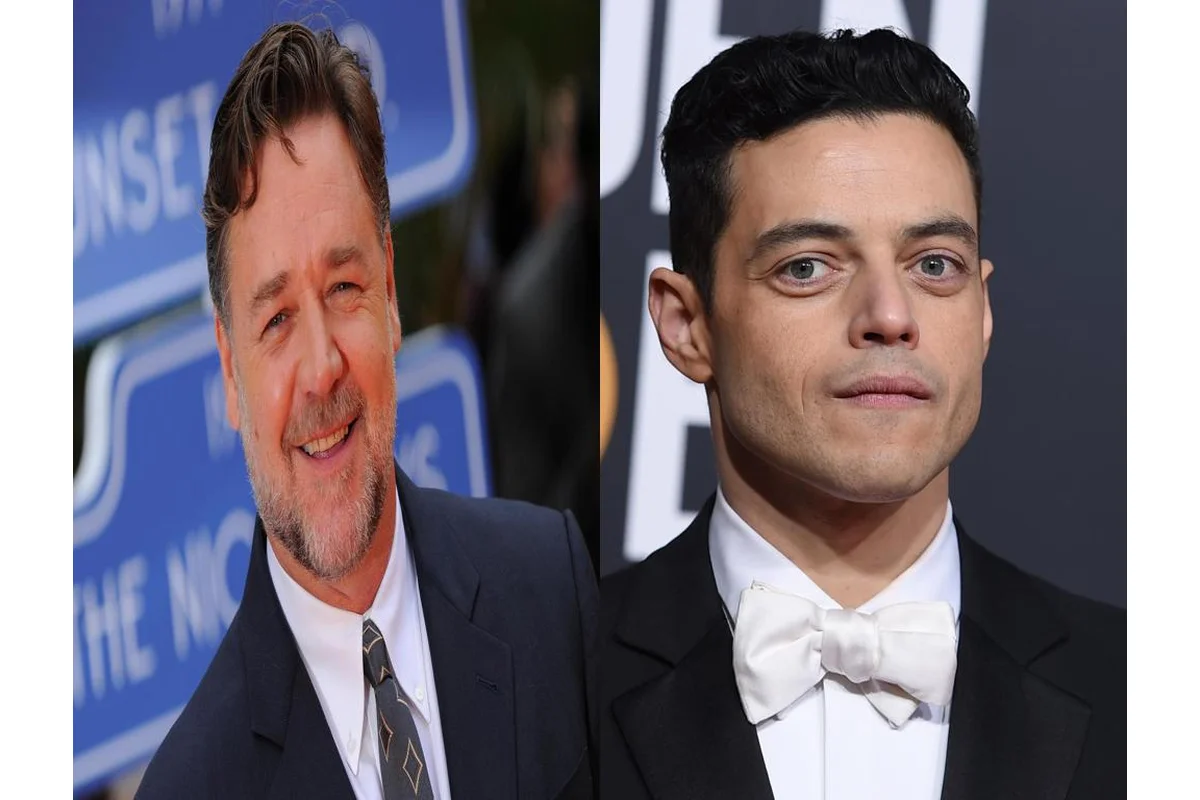
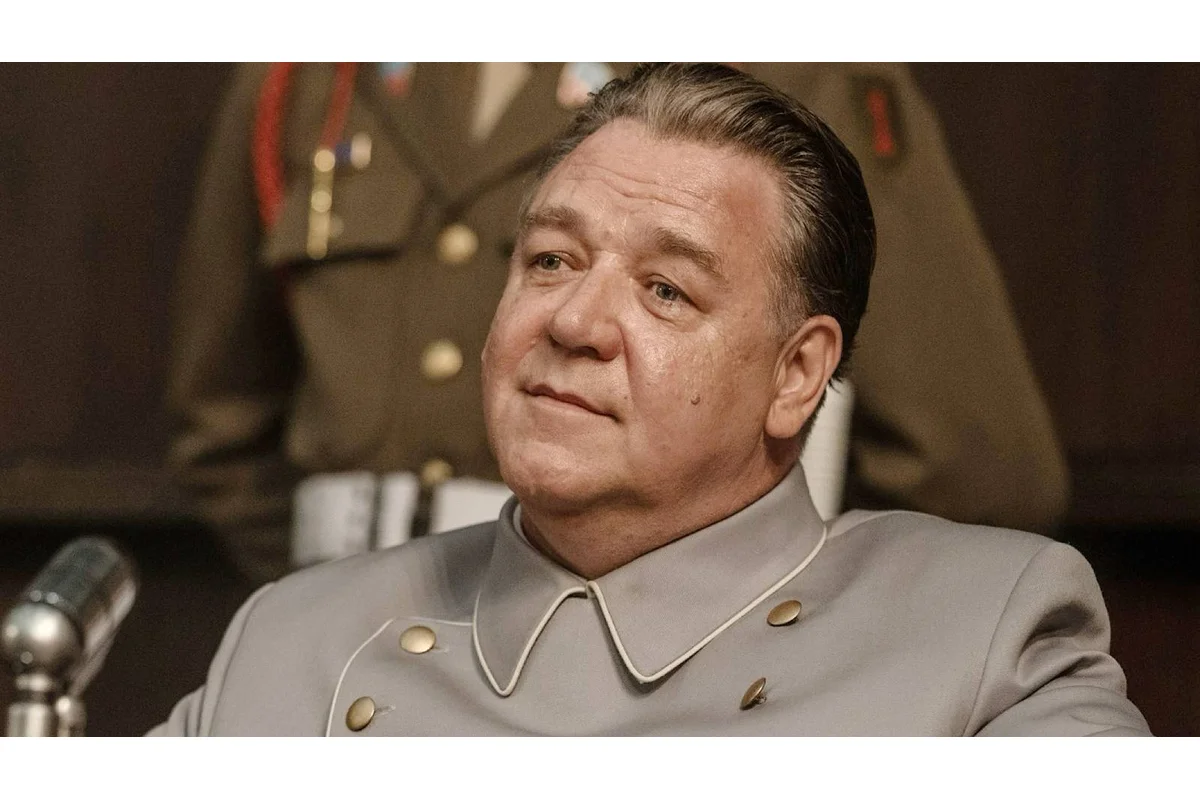
In an ambitious feat of acting and filmmaking, Russell Crowe delivered a commanding performance during a pivotal 25-minute unbroken courtroom scene in the historical drama “Nuremberg,” bringing to life a compelling moment that anchors the film. This Russell Crowe Nuremberg courtroom scene, crafted under the direction of James Vanderbilt, took place over a single day despite the original three-day plan, marking a standout accomplishment in the retelling of the Nuremberg trials.
Behind the Scenes: Assembling a Stellar Cast for a Historic Drama
Director James Vanderbilt’s film sets out to explore the legendary Nuremberg trials, focusing notably on the perspective of the psychologist interacting with accused Nazis and the United States Supreme Court Justice, who led the prosecution. The project assembled a formidable ensemble including Rami Malek portraying Douglas Kelley, Michael Shannon as Justice Robert H. Jackson, Russell Crowe as Hermann Göring, as well as Richard E. Grant, John Slattery, Mark O’Brien, and Leo Woodall. The cast’s collective experience in dramatic roles was central to the film’s positive critical response and its ability to maintain suspense while staying true to historical events.
Filming the Legendary 25-Minute Courtroom Sequence
James Vanderbilt offered insights at a press conference about how the demanding courtroom sequence was made. The centerpiece: a tense, dialogue-driven exchange running some 20 pages between Michael Shannon and Russell Crowe. Vanderbilt had prepared to shoot the sequence over three days with four cameras, but his lead actors requested to condense the work into one day. Vanderbilt and his team rose to the challenge, executing long, uninterrupted 25-minute takes with no cuts in order to capture every nuance and to preserve historical authenticity.
“I said, Michael Shannon and Russell Crowe won’t want to do that. They’re going to want to do it in one day. And she said, ‘It’s 20 pages of dialogue. That’s a terrible idea.’ So I went to both of them and I said, ‘You know, we’re supposed to shoot this over three days.’ They’re both like, ‘No. We’re going to do this in one. What are you talking about?’
Usually, you have the lawyers that will walk around, but the way that courtroom is set up, the prosecutor never moves. It’s just shot, shot, shot, shot, shot. We set up, and we were doing 25-minute takes with no cuts and they were word-perfect every time because we took all the real transcripts.
After the first take, the entire courtroom of extras applauded Michael and Russell. Just watching those two gentlemen put on a master class…. I’ve never shot a 25-minute take in a movie in my life. I don’t think I ever will again. That, I think, was one of the most amazing [experiences].”
– James Vanderbilt, Director
The Pursuit of Historical Accuracy and Acting Excellence
Maintaining truthfulness to the actual events was a major focus for Vanderbilt and his creative team. The courtroom’s fixed layout meant Michael Shannon’s character, the chief prosecutor, remained stationary throughout the scene, lending a unique intensity and realism to the lengthy verbal exchange with Crowe’s portrayal of Hermann Göring. The filmmakers referenced the original trial transcripts exclusively, which required the actors to deliver lines with precise accuracy, as diverging from the text would disrupt both the take and the film’s commitment to history.
As a result, each take required complete focus and discipline from the cast, specifically the two leads. Any mistake would not only necessitate a redo of the lengthy scene but could also compromise the film’s reputation for historical rigor. Fortunately, both Crowe and Shannon’s experience and preparation enabled them to rise to this demanding situation, earning spontaneous applause from background performers after their efforts.
The Experience and Credentials Behind the Cast
The film’s success in capturing such a challenging sequence was due in no small part to the backgrounds of its stars. Russell Crowe has received three Academy Award nominations, claiming the trophy once for “Gladiator.” Michael Shannon’s career also boasts two Oscar nominations. Both are known for embracing intricate, dialogue-heavy roles. Their involvement in this project was essential, given that much of the film’s dramatic weight rested upon the believability and prowess evident in this courtroom exchange.
The rest of the cast, including Rami Malek, Mark O’Brien, Richard E. Grant, Leo Woodall, and John Slattery, provided robust support, contributing depth and realism to the film’s multifaceted portrayal of the historic trials. The combination of seasoned performances and a commitment to accuracy allowed “Nuremberg” to earn praise as one of the most stirring dramas based on true events in recent years.
Significance of the Nuremberg Courtroom Performance
The 25-minute, uninterrupted Russell Crowe Nuremberg courtroom scene stands out as a monumental achievement in cinematic storytelling. By choosing to perform lengthy takes using real trial transcripts, the production underscored the gravity of the historical moment and spotlighted the skills of its principal actors. Director James Vanderbilt’s willingness to meet the demands of his cast and trust their abilities paid off, resulting in a sequence described as a master class in acting and filmmaking. As the film continues to garner attention, this ambitious approach to dramatizing history will likely influence both future historical dramas and the expectations for actors tasked with embodying such pivotal roles.
