
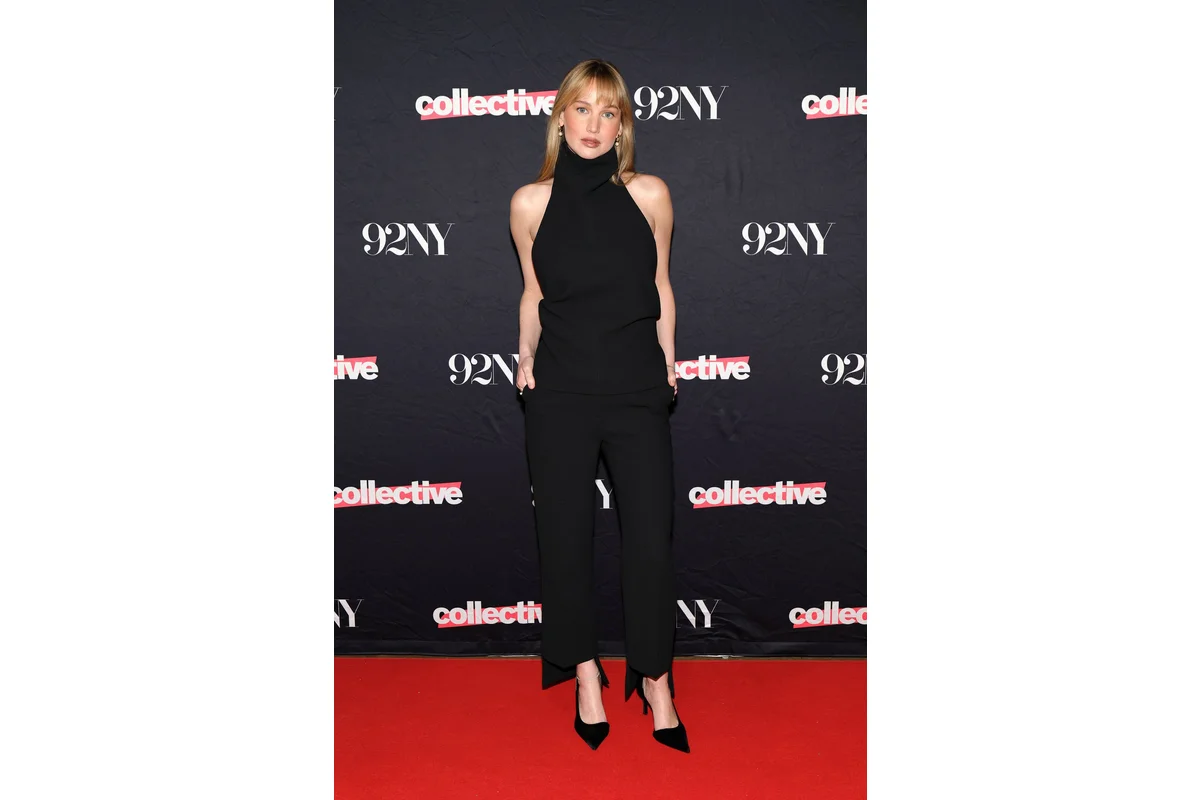
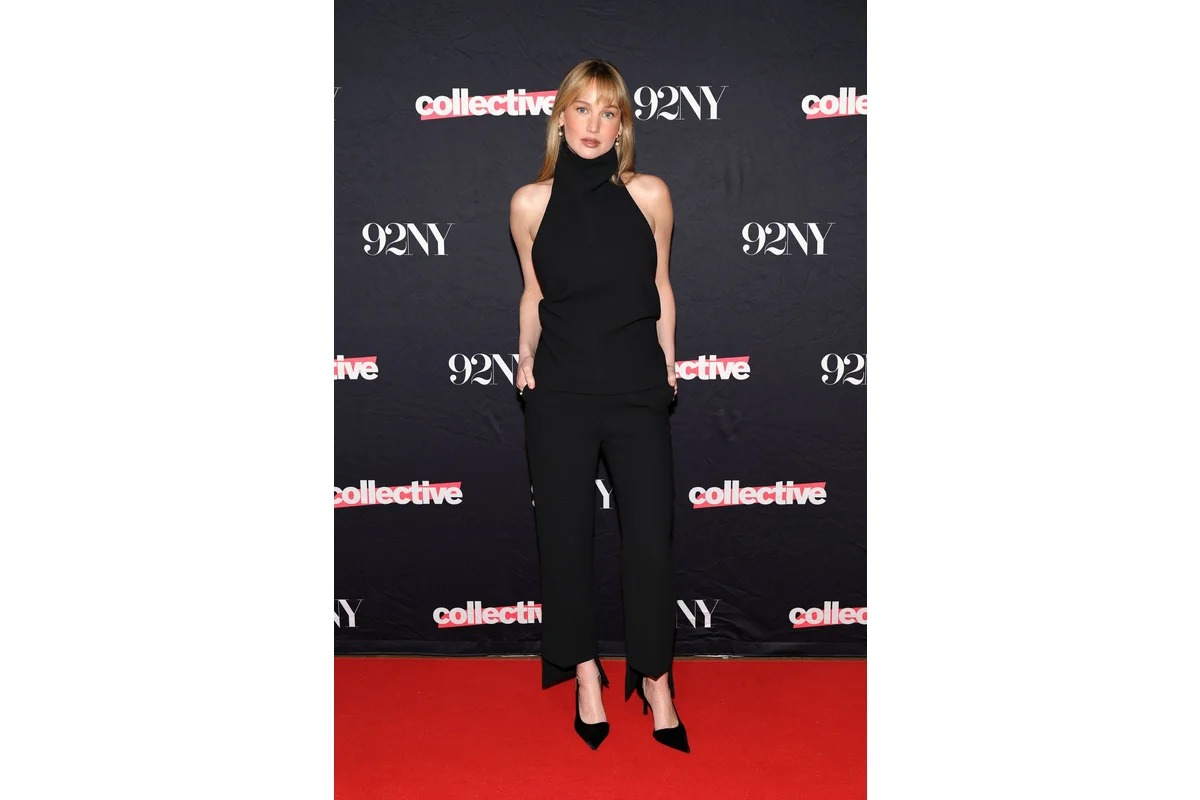
Jennifer Lawrence shared deep insights into the process of filming intimate scenes, discussing her experiences during the making of the psychodrama Die My Love and comparing them to previous roles. During a candid discussion with Josh Horowitz at New York City’s 92nd Street Y, Lawrence explained how filming sex scenes with co-stars who are not close friends, such as Robert Pattinson, can be less daunting than with those she’s developed a friendship with, highlighting her unique perspective on comfort and performance in these moments. This article delves into her journey filming these scenes, the challenges faced by fellow stars, and the broader subject of body positivity within Hollywood.
Lawrence Reflects on Filming Sex Scenes with Robert Pattinson
Jennifer Lawrence, known for her role in Die My Love, described her initial experience shooting a sexual scene with co-star Robert Pattinson as surprisingly manageable. The actors were virtual strangers at the start of filming, which Lawrence admitted eased the tension that typically comes with such vulnerable performances.
“It was actually easier that way because Rob and I did not know each other,”
Jennifer said during her conversation with Josh Horowitz at the 92nd Street Y in New York City, per People,
“which is kind of better, you know?”
– Jennifer Lawrence, Actor
This detachment, according to Lawrence, provided a layer of emotional protection. She reflected on how the lack of personal history made it easier to separate her real self from the fictional character during the scene. The actress’s remarks offer a window into the psychological aspects of acting, where unfamiliarity can sometimes serve as a buffer in highly charged, on-screen moments.
Comparisons with Previous Co-Stars and Franchise Experiences
Lawrence has had a variety of on-screen romantic partners, none more notable than Josh Hutcherson in the Hunger Games franchise. Their evolving friendship across the series added layers of complexity to their scripted kisses and romantic exchanges.
“Like in Hunger Games, me and Josh Hutcherson would have to kiss and that’s like… Imagine it,”
she continued.
“It’s weirder and so yeah, doing it with a stranger is preferable.”
– Jennifer Lawrence, Actor
The familiarity and history built over years of working closely together created a different kind of challenge for Lawrence. She suggested that physical intimacy with established friends could make acting feel awkward or artificial, whereas scenes with relative strangers, like Pattinson, avoided these complications. This insight underscores the nuanced dynamic actors face when portraying romance on screen, depending on the strength and length of real-life bonds.
Unique Preparation Methods and Embarrassing Moments
Jennifer Lawrence didn’t just encounter psychological hurdles but also physical ones. In preparation for their roles in Die My Love, she and Robert Pattinson attended interpretive dance lessons in Calgary, well before cameras rolled.
“We got to Calgary like three weeks before we started shooting,”
she explained.
“Rob and I both [are] embarrassed very easily, and that was mortifying. I mean, I’m not…a dancer, Rob’s [the] worst dancer.”
– Jennifer Lawrence, Actor
The discomfort from dance rehearsals almost made the naked scenes feel like a relief for Lawrence. Working with director Lynne Ramsay, she found that by the time the provocative scenes arrived, the embarrassment from dancing had overshadowed any concerns about nudity.
“By the time she was like, ‘Yeah, get naked,’ we were just kind of like, ‘OK, at least it’s not interpretive dance.’”
– Jennifer Lawrence, Actor
This candid anecdote illuminates the unusual, sometimes humorous aspects of film preparation, and how overcoming one kind of vulnerability can make another seem less significant.
Lawrence on Nudity, Artistic Freedom, and Confidence
The Oscar-winning actress has often spoken with candor about her approach to nudity for films. While some actors might express reservations, Lawrence has explained that she is more concerned with the creative vision of the project than her own self-consciousness.
“I wanted Lynne to have total freedom artistically.”
– Jennifer Lawrence, Actor
Lawrence’s support for director Lynne Ramsay’s creative choices in Die My Love extended to granting complete trust regarding nude scenes. Her openness reflects confidence and a focus on delivering authentic performances, rather than indulging in vanity or insecurity. She emphasized at a screening of the film that nudity does not trouble her, as her priority remains the story and the director’s vision.
Pregnancy’s Influence on Self-Image and Professional Choices
Motherhood and pregnancy have played significant roles in shaping Lawrence’s perspective on body image, both personally and professionally. The time leading up to her work on No Hard Feelings brought a change in how she approached both diet and her own appearance.
“I remember before [the 2023 film] No Hard Feelings, I was dieting and not eating carbs and working out,”
she continued, noting that, this time,
“I was pregnant. What was I gonna do? Like, not eat? I was working 15 hours a day. I was just tired.”
– Jennifer Lawrence, Actor
Her experiences highlight the demands actors face balancing intense work schedules and industry expectations about physical appearance, and how pregnancy added a new, practical dimension to her thinking. Rather than pursuing unreachable ideals, Lawrence chose to prioritize health, comfort, and well-being during a demanding production period.
“I remember them sending over a close-up of cellulite being like, ‘Do you want us to touch this up?’ And I was like, ‘No. That’s an ass.’”
– Jennifer Lawrence, Actor
This exchange underscores her resistance to unrealistic standards of beauty in film, advocating for realism and acceptance on screen.
Other Celebrities Share Personal Stories About Body Image and Self-Acceptance
Lawrence is just one of many high-profile figures challenging body image expectations in media and entertainment. Several notable actors, athletes, and performers have stepped forward to openly discuss struggles, insecurities, and the journey to self-acceptance, offering a powerful counter-narrative to Hollywood’s often rigid standards.
Chrissy Teigen on Embracing Postpartum Change
“I think, in a way, we’ve forgotten what a regular body looks like. There are people out there who are struggling, and I’m struggling, and it’s okay to come to terms with realizing it’s going to be a bit of a journey. I’m not blind: I see my body, I see the difference in shape, I see that I gained weight. But I also see with those same eyes that I have a beautiful baby boy, and an amazing little girl, and I am very happy.”
– Chrissy Teigen, Model and Author
Teigen’s openness about her postpartum body highlights the importance of honesty and compassion toward oneself, especially after childbirth. Her remarks reflect a broader shift toward normalizing bodies that change with major life events, challenging the illusionary standards often presented in the media.
Jonah Hill’s Journey to Self-Acceptance
“I don’t think I ever took my shirt off in a pool until I was in my mid 30s even in front of family and friends,”
he wrote.
“Probably would have happened sooner if my childhood insecurities weren’t exacerbated by years of public mockery about my body by press and interviewers. So the idea that the media tries to play me by stalking me while surfing and printing photos like this and it can’t phase me anymore is dope. I’m 37 and finally love and accept myself.”
– Jonah Hill, Actor
Hill’s reflection on overcoming public scrutiny is emblematic of challenges faced by many in the spotlight, where body shaming is perpetuated by both media and fans. His decision to get a “Body Love” tattoo serves as a public declaration of acceptance, and his story resonates with anyone contending with external criticism and learning to love themselves regardless of societal pressures.
Demi Lovato’s Message Beneath the Surface
“Stretch marks and extra fat…And yet I still love myself,”
the singer wrote on Instagram in 2018.
“Cellulite…and yet I still love myself.”
– Demi Lovato, Singer
Lovato later told E! News,
“I was on Instagram and I started comparing myself to these Instagram models and I just thought to myself, someone needs to show my fans and anybody that’s looking at my account that what you see isn’t always what’s real. And so, I decided to embrace my flaws and—I don’t even like to call them flaws, it’s just a part of who I am—and show the world that I’m imperfect, but that’s what makes me beautiful.”
– Demi Lovato, Singer
Her candid narrative about confronting comparison and unrealistic expectations illustrates the pervasive impact of social media on self-perception and the effort required to embrace authenticity.
Cindy Crawford Dispels Myths of Flawlessness
“See? Even I don’t wake up looking like Cindy Crawford.”
– Cindy Crawford, Model
Crawford’s famous quip expresses a universal truth that even icons benefit from makeup artists and styling teams. Her remarks demystify celebrity images, reminding audiences that what is seen in the media seldom reflects reality.
Kate Winslet Instills Body Positivity in the Next Generation
“As a child, I never heard one woman say to me, ‘I love my body.’ Not my mother, my elder sister, my best friend. No one woman has ever said, ‘I am so proud of my body.’ I make sure to say it to [my daughter] Mia, because a positive physical outlook has to start at an early age.”
– Kate Winslet, Actor
Winslet’s focus on modeling a positive self-image for her daughter echoes a growing movement among parents to foster self-esteem and confidence from childhood, breaking cycles that devalue appearance.
Mindy Kaling on Defying Conventional Beauty Norms
“IDK who needs to hear this but…WEAR A BIKINI IF YOU WANT TO WEAR A BIKINI. You don’t have to be a size 0.”
– Mindy Kaling, Actor and Writer
Kaling’s embrace of personal freedom in dress and self-presentation voices a broader call for inclusivity, illustrating how confidence does not require conformity to traditional standards.
Gabourey Sidibe’s Perspective on Self-Defined Beauty
“People always ask me, ‘You have so much confidence. Where did that come from?’ It came from me. One day I decided that I was beautiful, and so I carried out my life as if I was a beautiful girl. I wear colors that I really like, I wear makeup that makes me feel pretty, and it really helps. It doesn’t have anything to do with how the world perceives you. What matters is what you see. Your body is your temple, it’s your home, and you must decorate it.”
– Gabourey Sidibe, Actor
Sidibe’s philosophy underscores the importance of self-acceptance, personal agency, and the separation of self-worth from societal validation.
Lena Dunham on Navigating Changes and Authenticity
“I feel I’ve made it pretty clear over the years that I don’t give even the tiniest of s–ts what anyone else feels about my body. I’ve gone on red carpets in couture as a size 14. I’ve done sex scenes days after surgery, mottled with scars. I’ve accepted that my body is an ever changing organism, not a fixed entity—what goes up must come down and vice versa. I smile just as wide no matter my current size because I’m proud of what this body has seen and done and represented.”
– Lena Dunham, Writer and Actor
Dunham’s honesty about her physical realities challenges audiences to accept that bodies are inherently variable, resilient, and not to be defined by restrictive standards.
Emma Stone on Practicing Self-Kindness
“No matter how things look from the outside, we can all be super critical of ourselves and of our image in the mirror. I’ve seen articles or comments that have addressed my weight, or ‘caving to pressure to be thin.’ Keeping weight on is a struggle for me—especially when I’m under stress, and especially as I’ve gotten older….I remind myself to be kind to myself, and as slightly ridiculous as it may sound, to treat myself in the same gentle way I’d want to treat a daughter of mine. It really helps.”
– Emma Stone, Actor
Her remarks stress self-compassion as a remedy for internal criticism and anxiety, encouraging others to show themselves the same understanding they would offer loved ones.
Meryl Streep Encourages Young People to Embrace Uniqueness
“For young women, I would say, don’t worry so much about your weight. Girls spend way too much time thinking about that, and there are better things. For young men, and women, too, what makes you different or weird, that’s your strength. Everyone tries to look a cookie-cutter kind of way and actually the people who look different are the ones who get picked up. I used to hate my nose. Now I don’t. It’s okay.”
– Meryl Streep, Actor
Streep’s perspective positions individuality as a strength, not a liability, pushing back against the pressure for uniformity in appearance and personality.
Viola Davis on Owning Her Identity
“You know, when I was handed Annalise Keating, I said, ‘She’s sexy, she’s mysterious, you know?’ I’m used to playing women who gotta gain 40 pounds and have to wear an apron. So I said, ‘Oh God, I’ve got to lose weight, I’ve got to learn how to walk like Kerry Washington in heels, you know, I’ve got to lose my belly.’ And then I asked myself, ‘Well, why do I have to do all that?’ I truly believe that the privilege of a lifetime is being who you are, and I just recently embraced that at 51. I think my strongest power is that at ten o’clock every Thursday night, I want you to come into my world. I am not going to come into yours. You come into my world and you sit with me, my size, my hue, my age, and you sit, and you experience.”
– Viola Davis, Actor
Davis’s journey to owning her full identity is a powerful endorsement of self-acceptance and authenticity, regardless of industry pressures.
Lizzo’s Rejection of Double Standards
“When people look at my body and be like, ‘Oh my God, she’s so brave,’ it’s like, ‘No, I’m not.’ I’m just fine. I’m just me. I’m just sexy. If you saw Anne Hathaway in a bikini on a billboard, you wouldn’t call her brave. I just think there’s a double standard when it comes to women….I don’t like it when people think it’s hard for me to see myself as beautiful. I don’t like it when people are shocked that I’m doing it.”
– Lizzo, Musician
Lizzo’s statement challenges the notion of “bravery” tied specifically to body positivity from women like her, calling for normalization rather than separation, and demanding a consistent standard for all.
Zendaya Stands Up for Honest Representation
“Do you find this funny? I will write another paragraph to educate you aswell #youreallywannabenext?”
she tweeted, later adding,
“Now….everyone go look in the mirror at their beautiful body, and love that s–t #thickgirlswinning #skinnygirlswinning #weallwinning.”
– Zendaya, Actor
Also in 2016, Zendaya called out a magazine for photoshopping her, writing on Instagram,
“These are the things that make women self conscious, that create the unrealistic ideals of beauty that we have. Anyone who knows who I am knows I stand for honest and pure self love. So I took it upon myself to release the real pic (right side) and I love it.”
– Zendaya, Actor
The star later said this about excessive photoshopping in a New You interview:
“There is no such thing as ugly. That’s a word that doesn’t really enter my vocabulary. If there’s any definition to being perfect, you’re perfect at being yourself. No other person can be you 100 percent; no one has your fingerprint; no one has your DNA. You are you 120 percent, through and through. Whether it is through my social media or whatever, I want anyone who looks up to me to know that I go through the same problems. I have to be confident in who I am.”
– Zendaya, Actor
Zendaya’s advocacy for genuine images and self-love speaks to a generation of people exposed to heightened digital alteration, inviting them to celebrate their authenticity.
Jennifer Lawrence Advocates for Self-Compassion Over Industry Demand
“You have to look past it—you look how you look, and be comfortable. What are you going to do? Be hungry every single day to make other people happy? That’s just dumb.”
– Jennifer Lawrence, Actor
Lawrence’s words serve as a direct challenge to actors and audiences alike, dismissing the idea that self-sacrifice and discomfort are necessary for approval or happiness. Her career is a testament to prioritizing mental and physical health over superficial expectations.
Serena Williams on Strength, Beauty, and Positive Focus
“I love that I’m a full woman and I am strong, and I’m powerful, and I’m beautiful at the same time. And there’s nothing wrong like that. It’s so important to look at the positives; if I get caught up looking at the negatives, it can really bring you down. I don’t have time to be brought down, I’ve got too many things to do. I have Grand Slams to win, I have people to inspire, and that’s what I’m here for.”
– Serena Williams, Athlete
Williams reminds people that celebrating positives and accomplishments should outweigh any fixation on perceived imperfections.
Isla Fisher Demonstrates The Power of Acceptance
“I don’t even own a scale. I have two young girls, and I wouldn’t want them to see me weighing myself all the time. I don’t think it sends the right message….For me, so much about life is acceptance. You can look in the mirror and find a million things wrong with yourself. Or you can look in the mirror and think, I feel good, I have my health, and I’m so blessed. That’s the way I choose to look at it. I don’t need to be perfect. I’m doing just fine.”
– Isla Fisher, Actor
Her philosophy advocates for influencing children by modeling acceptance, further embedding the value of mental and emotional health over appearances.
Amy Adams Shares How Pregnancy Changed Her Relationship with Her Body
“Being pregnant finally helped me understand what my true relationship was with my body—meaning that it wasn’t put on this earth to look good in a swimsuit. I was like, ‘Look, I can carry a baby! I’m gaining weight right, everything’s going well.’ And I’ve had that relationship ever since.”
– Amy Adams, Actor
Adams’s story reveals how experiencing pregnancy can fundamentally transform one’s sense of self-worth, shifting focus from aesthetics to the body’s capabilities and resilience.
Camila Mendes Questions the Value of Thinness Over Health
“When did being thin become more important than being healthy? I recently went to a naturopath for the first time in my life. I told her about my anxiety around food and my obsession with dieting. She phrased a pivotal question in such a way that struck a chord with me: what other things could you be thinking about if you didn’t spend all your time thinking about your diet? I suddenly remembered all the activities I love that used to occupy my time. At some point in my life, I allowed my obsession with being thin to consume me, and I refused to make room in my mind for any other concerns….I’m done believing in the idea that there’s a thinner, happier version of me on the other side of all the tireless effort. Your body type is subject to genetics, and while eating nutrient-dense foods and exercising regularly will make you healthier, it will not necessarily make you thinner.”
– Camila Mendes, Actor
Mendes’s reflection spotlights the mental toll of constant dieting, advocating for a holistic approach to health that prioritizes joy and a fuller life over relentless pursuit of slenderness.
Lady Gaga Urges Fans to Be Unapologetically Themselves
“I heard my body is a topic of conversation so I wanted to say, I’m proud of my body and you should be proud of yours too. No matter who you are or what you do. I could give you a million reasons why you don’t need to cater to anyone or anything to succeed. Be you, and be relentlessly you. That’s the stuff of champions.”
– Lady Gaga, Musician
In her response to public scrutiny following her Super Bowl appearance, Lady Gaga encouraged authenticity and individuality, signaling to fans that self-worth is measured by substance, not surface.
Sam Smith Publicly Reclaims Confidence
“In the past if I have ever done a photo shoot with so much as a t-shirt on, I have starved myself for weeks in advance and then picked and prodded at every picture and then normally taken the picture down,”
they shared about a photoshoot, in which they bared their body.
“Yesterday I decided to fight the f–k back, reclaim my body and stop trying to change this chest and these hips and these curves that my mum and dad made and love so unconditionally. Some may take this as narcissistic and showing off but if you knew how much courage it took to do this and the body trauma I have experienced as a kid you wouldn’t think those things.”
– Sam Smith, Musician
Sam Smith’s openness about reclaiming ownership of their body, despite years of self-doubt and trauma, signifies how personal transformation can arise from confronting societal judgments head-on.
Ashley Graham’s Powerful Daily Affirmation
“I look at myself naked in the mirror and say, ‘You know what, awkward butt shape? You’re not gonna get higher or rounder but it’s OK, because I’ve got Spanx for you.’ Your words have so much power. Every day, if you tell yourself ‘I love you,’ if you give yourself one word of validation, it will change your mind.”
– Ashley Graham, Model
Graham’s practical approach to self-love centers on the power of language and internal dialogue, serving as a reminder that positive self-talk can be transformative.
The Broader Impact: Evolving Conversations on Body Image and Self-Expression
The collective experiences shared by Jennifer Lawrence, Robert Pattinson, Lynne Ramsay, and numerous other actors and public figures reflect a transformative shift within entertainment and society at large. Discussions about body image, artistic freedom, and living authentically are gaining momentum. High-profile voices now champion self-acceptance and call for the representation of genuine, diverse bodies and stories in media.
Lawrence’s view that sex scenes are easier to film with unfamiliar co-stars, and her confidence in prioritizing artistic vision over industry pressure, frames a wider dialogue about honesty in creative professions. As more stars join the conversation, audiences are increasingly exposed to role models embracing vulnerability and encouraging fans to accept and celebrate their real selves.
The advocacy from stars such as Lady Gaga, Zendaya, Jonah Hill, Serena Williams, Amy Adams, Gabourey Sidibe, and others continues to shape a narrative of acceptance that resists past norms. This ongoing evolution is changing the landscape of media portrayal, marking a possible future where diversity, self-love, and truthfulness are regarded as central values both on and off screen.
As these messages gain traction, they influence not just film and television, but the self-esteem and self-perceptions of millions, making stories like Jennifer Lawrence’s reflections on filming sex scenes an important contribution to an increasingly accepting and empathetic cultural conversation.
