

Bill Murray’s near death experience alongside Hunter S. Thompson unfolded in Aspen, Colorado, when an outrageous dare during movie preparation nearly ended in tragedy. The intense incident highlights the perilous reality behind creative collaborations, as Murray tried to emulate Thompson’s notorious wildness, only to find himself in real danger.
The Unpredictable Persona Behind Hunter S. Thompson
Hunter S. Thompson was known for his eccentric lifestyle and refusal to conform to expectations, often observed sitting on deck chairs, defying conventional comfort. His personal myth and reality blurred, leading many, including Bill Murray, to see a man incapable of separating himself from the chaos he projected. This unpredictability was as present in his everyday existence as it was in his writing—Thompson’s life was as uncontrollable as the stories he created, leaving lasting impressions on those who interacted with him. Bill Murray, recognizing this persistent madness, maintained that Thompson was not simply performing for an audience but was truly a unique and wild spirit.
A Dangerous Encounter During Film Preparation
In the late 1970s, as Murray prepared to portray the famed gonzo journalist in the 1980 film “Where the Buffalo Roam,” an unusual bond developed. Thompson became an unofficial advisor, roaming the set, and making his presence impossible to ignore. He was vocal in his displeasure with the film’s script, labeling it as poor quality from the outset; instead of stepping back, he involved himself more as production neared, inserting himself into both the creative and actual environment of the movie’s development.
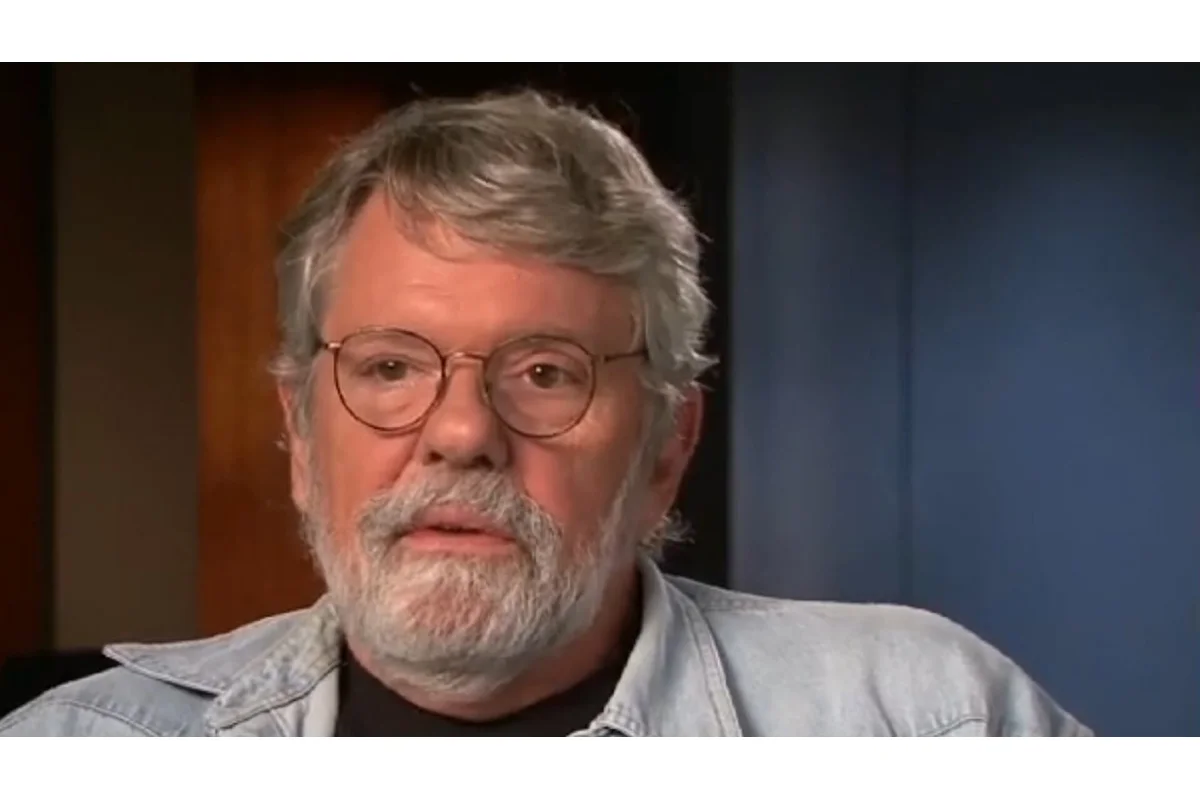
Thompson’s involvement, however, led to far more than script debates. According to Saturday Night Live associate Doug Hill,
“One day at Thompson’s Aspen, Colorado home, after many drinks and after much arguing over who could out-Houdini whom, Thompson tied Billy to a chair and threw him into the swimming pool,”
Doug Hill, Saturday Night Live associate, recounted. What started as heavy drinking and the competitive bravado of two men wanting to best each other quickly turned into a terrifying trial. Murray, with no background in escapology and well under the influence, wagered that luck would see him through. Thompson, ever the gambler, agreed to the risky stunt.
The Near-Fatal Stunt: Duct Tape, Deep Water, and Delay
Without access to rope, the two men resorted to using duct tape to bind Murray to a chair—a detail that adds to the recklessness of the act. As the actor was submerged in the pool, Thompson appeared indifferent, pouring himself another drink rather than watching out for his friend’s wellbeing. Whether absorbed by his own bravado, intoxication, or his unwavering faith that Murray would escape, Thompson let time pass, while the actor struggled beneath the surface. This hazardous moment dragged on until, for reasons unclear, Thompson finally dove in to rescue Murray, pulling both him and the chair—still bound—from the water, ending the ordeal.
Doug Hill summed up the gravity of the situation bluntly:
“Billy nearly drowned before Thompson pulled him out”
Doug Hill, Saturday Night Live associate, recalled. This sequence left a lasting mark, not only on Bill Murray but among those who witnessed or later learned about the dangerous lengths these artists sometimes go to in pursuit of authenticity and camaraderie.
The Lingering Influence of Thompson’s Madness
After the incident, Murray returned to “Saturday Night Live,” transformed by both the film’s lengthy production and his immersion in Thompson’s chaotic world. He adopted Thompson’s affectations, from the distinct cigarette holder to a new air of unpredictability, essentially becoming a living copy of the gonzo legend. Despite nearly losing his life thanks to a drunken misadventure, Murray remained seemingly oblivious to the physical danger he had so recently faced, caught under the spell of Thompson’s enduring influence.
The consequences rippled beyond the personal. The film, which resulted from this tumultuous collaboration, did not escape Thompson’s harsh judgment. After all of Murray’s work—risking life and sanity to channel Thompson’s life onscreen—the writer’s opinion was not softened:
“horrible pile of crap. And while he did add that “Murray did a good job,”
Hunter S. Thompson, Writer. His condemnation was emphatic, continuing with:
“You can’t beat a bad script. It was just a horrible movie. A cartoon.”
Hunter S. Thompson, Writer. Despite Murray’s commitment, Thompson’s dissatisfaction with the final product overshadowed even the life-or-death experiences behind the scenes.
The Meaning of a Brush With Death in Creative Work
Bill Murray’s near death experience with Hunter S. Thompson stands as a dramatic illustration of the perils that can accompany creative work, particularly when collaboration occurs with outsized personalities. The sheer chaos of their partnership not only shaped Murray’s performance and approach to the role, but also serves as a stark reminder of the dangers inherent in blurring the lines between character and reality. The harrowing swimming pool incident and its aftermath demonstrate how creative ambition and reckless bravado intertwine, sometimes pushing artists beyond safety and reason. While the movie itself may have been panned—even by Thompson himself—the memory of that fateful night in Colorado remains emblematic of the working relationship and legacy of two of pop culture’s wildest figures.

