
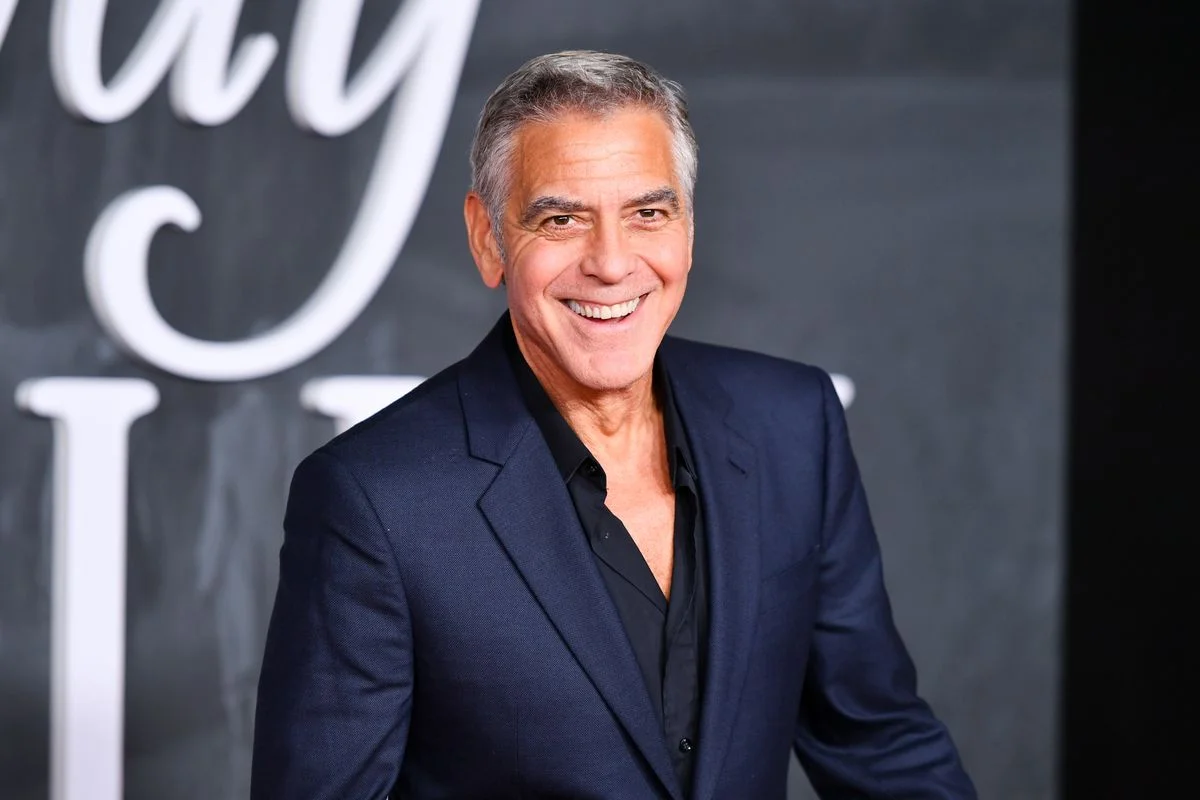
George Clooney has taken a public stand to support his fellow actors after filmmaker Quentin Tarantino sharply criticized Paul Dano, Owen Wilson, and Matthew Lillard during a recent interview. The defense unfolded in the wake of Tarantino’s controversial comments on the Bret Easton Ellis Podcast, bringing heated debate to Hollywood about respect and professional conduct.
Clooney Responds to Tarantino’s Harsh Remarks
Tensions mounted in the film industry after Quentin Tarantino, while discussing his top 20 films since 2000, singled out actors Paul Dano, Owen Wilson, and Matthew Lillard. Tarantino, the director of Once Upon a Time in Hollywood, offered blunt opinions about their performances, focusing particularly on Paul Dano’s role in the acclaimed Paul Thomas Anderson film There Will Be Blood, and voicing similar disapproval of Wilson and Lillard. His remarks drew strong reactions from many in the entertainment community.
Quentin Tarantino’s opinion on Paul Dano was explicit:
“There Will Be Blood would stand a good chance at being 1 or 2 if it didn’t have a big, giant flaw in it… Paul Dano. Obviously, it’s supposed to be a two-hander, but it’s also drastically obvious that it’s not a two-hander. [Dano] is weak sauce, man. He is the weak sister. Austin Butler would have been wonderful in that role. He’s just such a weak, weak, uninteresting guy. The weakest f****** actor in [the Screen Actors Guild].”
— Quentin Tarantino, Director
George Clooney, who shares a history with Tarantino from starring together as brothers in the 1996 thriller From Dusk till Dawn, was quick to express his disagreement. During the AARP’s Movies for Grownups Awards, where he accepted the Best Actor award for his performance in the Netflix film Jay Kelly, Clooney made it clear that he disagreed with Tarantino’s assessments. He told the audience that he would feel honored to work with actors like Dano, Wilson, and Lillard, pushing back on Tarantino’s criticism.
He continued to emphasize the importance of respect within the industry, referencing his ties to many performers.
“Made by people who love actors — that’s an important part. People I’ve known most of my life… actually, most of them are actors. I have a great affinity [for them], and I don’t enjoy watching people be cruel. We are living in a time of cruelty. We don’t need to be adding to it.”
— George Clooney, Actor
Matthew Lillard Reacts to the Criticism
The fallout from Tarantino’s remarks did not go unnoticed by those targeted. News of the criticisms soon reached Matthew Lillard, best known for his role in Scream, prompting him to address the issue at GalaxyCon in Columbus, Ohio. Lillard, visibly affected, spoke candidly to fans about the impact of Tarantino’s words, highlighting the difference between public popularity and acceptance within Hollywood’s inner circles.
“Quentin Tarantino this week said he didn’t like me as an actor. Eh, whatever. Who gives a s***. It hurts your feelings. It f****** sucks. And you wouldn’t say that to Tom Cruise. You wouldn’t say that to somebody who’s a top-line actor in Hollywood. I’m very popular in this room. I’m not very popular in Hollywood. Two totally different microcosms, right? And so, you know, it’s humbling, and it hurts.”
— Matthew Lillard, Actor
His response underscored how public criticisms from influential figures can have a personal and professional impact, especially when comparing the experiences of widely known talents like Tom Cruise with others whose careers follow different trajectories.
Tarantino’s Wider Critique of the Industry
Quentin Tarantino’s comments extended beyond individual actors and reflected his frustration with trends and perceived lack of originality in the entertainment world. He also singled out author Suzanne Collins and the popular Hunger Games franchise, accusing them of drawing too heavily from Koushun Takami’s novel Battle Royale, a controversy that has been discussed in literary and film circles for years.
“I do not understand how the Japanese writer didn’t sue Suzanne Collins for every f****** thing she owns. They just ripped off the f****** book. Stupid book critics are not going to go watch a Japanese movie called Battle Royale, so the stupid book critics never called her on it. They talked about how it was the most original f****** thing they’d ever read. As soon as the film critics saw the film, they said, ‘What the f***? This is just Battle Royale except PG!’”
— Quentin Tarantino, Director
His remarks further inflamed the conversation about originality, respect for intellectual property, and the tendency of Western critics to overlook foreign source material. Critics and fans alike noted the intensity of Tarantino’s frustration, which sparked widespread debate online and within the industry.
The Context Around Clooney’s Award and Recent Work
The episode unfolded while George Clooney was being celebrated for his performance in Jay Kelly, a film produced by Netflix. Supported by a cast including Adam Sandler as Ron, the project has garnered praise for its focus on character and its use of seasoned actors. Clooney’s comments about his appreciation for working with other actors were amplified by the context of this award and his ongoing contributions to the craft.
The ceremony, hosted by the AARP at the Movies for Grownups Awards, brought together many industry veterans and recognized those who contribute to mature storytelling in cinema. Clooney’s tribute to his peers and refusal to engage in disparagement resonated with those who value professional solidarity and mutual respect.
Significance and What Lies Ahead
This clash between Quentin Tarantino and George Clooney, alongside reactions from Matthew Lillard, has reignited important conversations about professionalism, criticism, and support within Hollywood. As debate swirls regarding how creators should address their peers, Clooney’s vocal defense of his colleagues may encourage a broader reconsideration of public discourse and the importance of uplifting rather than undermining others—especially in a challenging environment. The industry will be watching to see how Tarantino’s comments, and the responses they prompted, influence future interactions among some of its most high-profile figures.
