
On January 14, 2026, Ethan Hawke shared insights into his ongoing evolution within the film industry. Emphasizing the importance of adaptability, the 55-year-old actor reflected on how his Ethan Hawke career evolution has been essential to maintaining relevance in Hollywood over several decades. Known for roles in movies such as Reality Bites, Gattaca, and Great Expectations, Hawke explained that surviving as an actor requires constant reinvention.
The Challenges of Moving Beyond Leading Roles
Hawke described his transition from a leading man to a character actor as a deliberate and necessary shift. He said,
“This job that I’m in is a constant re-contextualisation, not for yourself, but for the people watching.”
He admitted that early success with leading parts can sometimes foster complacency in acting technique. Addressing this, he stated,
“I was teaching myself to reboot the computer, from a leading man to a character actor, and thinking, ‘What if I could combine these things?’ If you don’t do that as you get older, you get a lot less opportunities. Very few people get to be Paul Newman.”
—Ethan Hawke
Embracing Commercial Appeal While Honoring Artistic Integrity
Hawke also talked about finding a balance between popularity and artistic expression. He expressed a willingness to
“play within the sandbox of commerciality,”
echoing ideas once shared by director Peter Weir regarding the contrast between popular and auteur cinema. Hawke recalled,
“Peter Weir used to talk about how much he loved [Andrei] Tarkovsky, but he was like, ‘That’s not what I’m trying to do. I’m trying to make popular art.’ And as a popular artist, I’m willing to play within the sandbox of commerciality.”
—Ethan Hawke
Reflections on Greed and Artistic Risks in the Film Industry
Despite acknowledging that financial motivations largely drive filmmaking, Hawke expressed admiration for those who take risks to prioritize artistic vision. He acknowledged that “greed runs our universe” and noted the pragmatic acceptance of pure profit motives. However, he condemned the broader consequences, stating,
“If you say you just want to make money, everybody understands what you are going for, and they are fine with it. ‘Great, yeah, good. Oh, yeah, he sold ten billion Big Macs. Good for him.’ No, you just poisoned the whole world.”
—Ethan Hawke
He went on to praise those in the industry who remain committed to creating meaningful work even when it is not financially driven, revealing how rare such dedication is in movie making. He remarked,
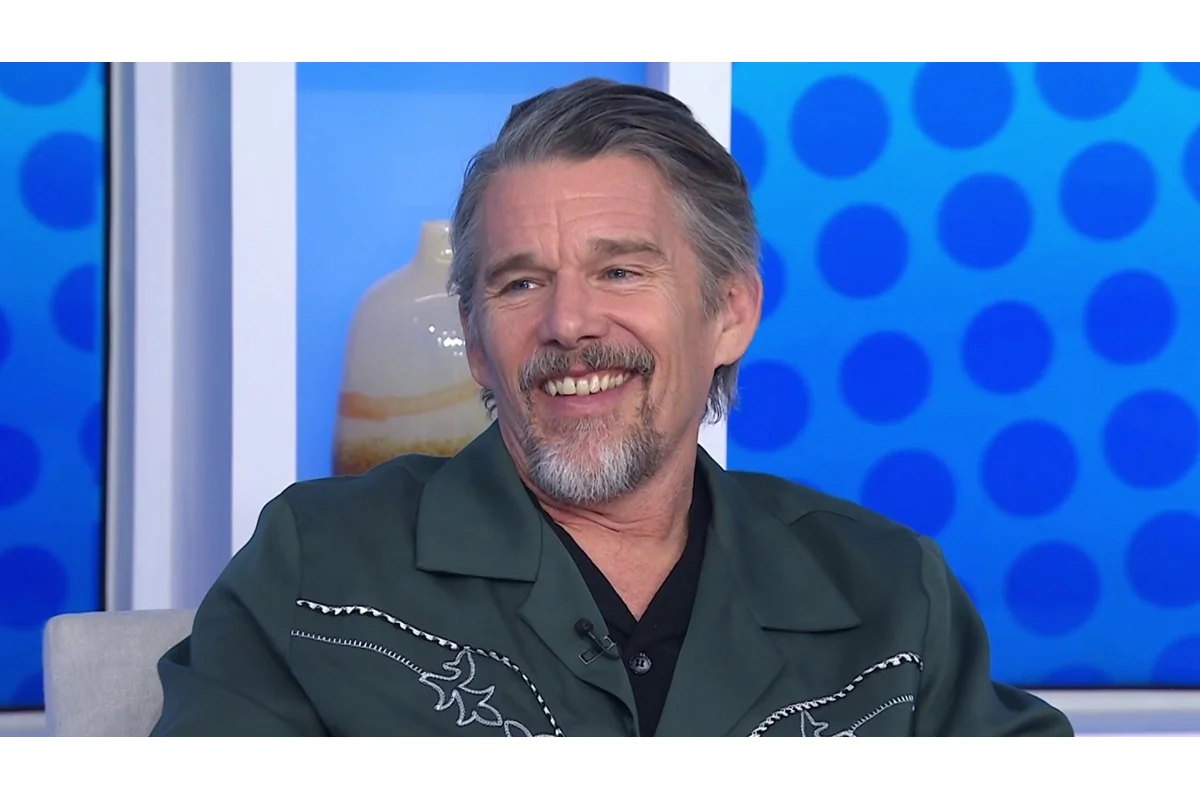
“I love it when people keep the great dream alive of making something magnificent, and it’s very hard because the whole industry that runs movie making is designed to make money – and most of all our favourite movies, that’s not what was motivating the project.”
—Ethan Hawke
Finally, Hawke emphasized his respect for artists willing to invest personally in film projects, saying,
“I would never want to not be a person that wouldn’t sell their house to make a movie. I love that. I think it’s cool. I admire the hell out of it.”
—Ethan Hawke
What Ethan Hawke’s Career Evolution Means for Hollywood
Hawke’s reflections reveal the challenges and resilience required to maintain a lasting career in Hollywood. His ability to adapt from lead roles to more nuanced character parts, while balancing commercial appeal with artistic integrity, highlights a dynamic evolution. This approach not only sustains his presence in the industry but also underscores the tension many actors face between creative ambition and financial realities. As Ethan Hawke continues to embrace these complexities, his journey serves as an example for others navigating the ever-changing landscape of movie making.
