
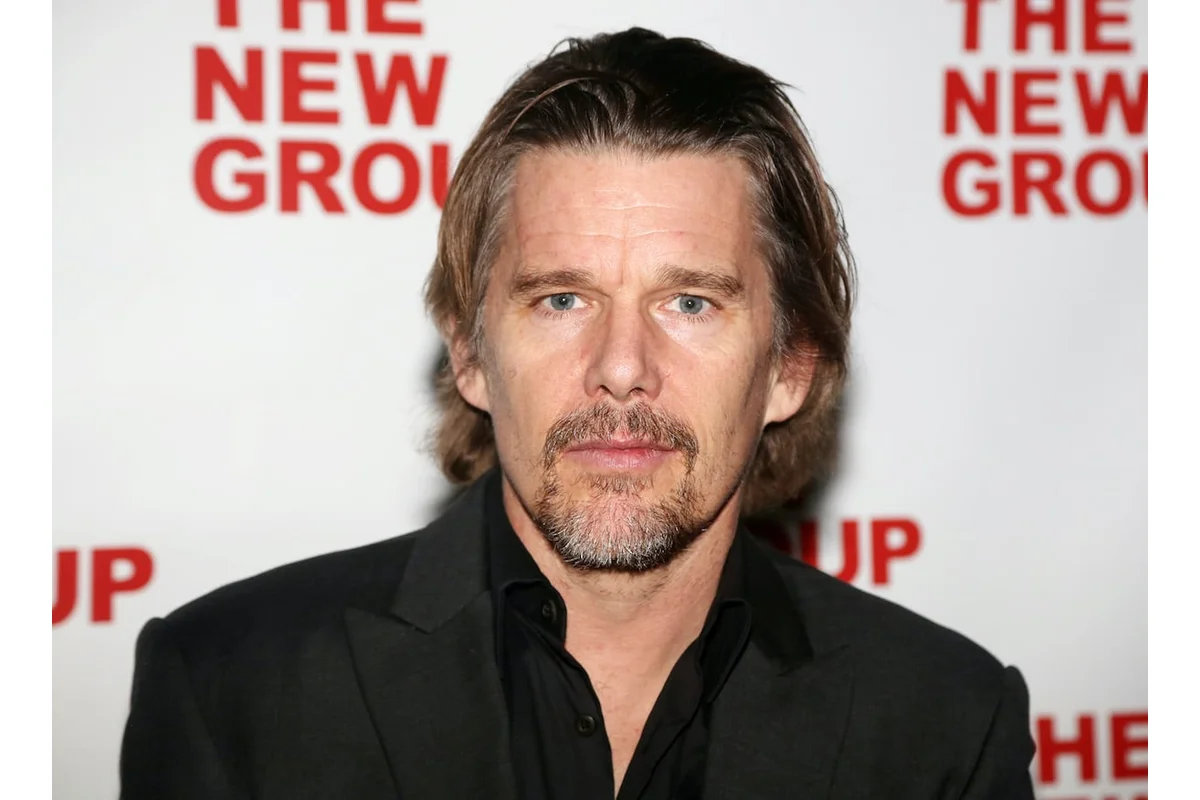
On January 14, 2026, Ethan Hawke shared his unease about the growing role of artificial intelligence in movies, stating it encourages him to return to live theatre performances. The Blue Moon actor highlighted that while he does not fully grasp the technology behind AI, he believes the future of storytelling lies in live events where genuine human interaction takes place.
Speaking with The Hollywood Reporter, Hawke admitted,
“When people start talking about AI, I really just want to go back to the theatere I’m like, ‘I don’t understand what this is about, it’s above my pay grade.’”
Theatre as an Antidote to Digital Overload
Hawke emphasized the unique demands of theatre audiences, where phones are set aside, and patrons must focus and engage fully with the performance, comparing it to returning “back to the farm.” This reflects his personal resistance to technological shifts in entertainment, rooted in a preference for more tangible, immersive experiences.
He said,
“In the theatre, everybody has to f****** put their phones down and they have to breathe and they have to sit still. It’s like going back to the farm. There’s a Luddite aspect to it for me.”
Reflecting on the energy and excitement of live events, Hawke described his experience attending the Taylor Swift Eras Tour, noting the powerful connection audiences share in real time.
It’s all these young people dying to be at a live event. The future is here, strangely.
— Ethan Hawke, Actor
Broadway and West End Draw Big Stars for New Audiences
The movement of prominent film actors onto Broadway and the West End does not trouble Hawke; instead, he sees it as a positive development that encourages younger audiences to engage with theatre. He recounted watching Patrick Stewart and Ian McKellen perform in London’s Gadot production, observing that the majority of the audience were under 30, mostly fans drawn by the actors’ fame in popular franchises.
He explained,
“I remember seeing Patrick Stewart and Ian McKellen do Gadot in London. I would say 90 percent of the audience was under 30, and they were there to see Gandalf and Captain Picard, but the production was brilliant.”
They walked out thrilled, having absorbed Beckett and been given a world-class production. They went for the wrong reason, but it doesn’t matter.
— Ethan Hawke, Actor
Balancing Commercial Success with Artistic Integrity
Hawke also discussed how he navigates between commercial projects and the independent films he prefers. Drawing on director Peter Weir’s perspective, he acknowledged the value and challenge of creating popular art within commercial constraints.
He said,
“Peter Weir used to talk about how much he loved [Andrei] Tarkovsky, but he was like, ‘That’s not what I’m trying to do. I’m trying to make popular art.’ And as a popular artist, I’m willing to play within the sandbox of commerciality.”
Highlighting filmmakers like Quentin Tarantino, Paul Thomas Anderson, and Ryan Coogler as innovators in commercial cinema, Hawke placed industry giants Steven Spielberg and Guillermo del Toro as providing foundational support, comparing them to “large trees in the forest.”
But we need society, the culture, to make events out of small things and to help cultivate the undergrowth of the forest. The underbrush is getting thrashed and it’s so hard for a young sprout to find roots and have enough time to make enough art to grow.
— Ethan Hawke, Actor
Significance of Hawke’s Views on Ethan Hawke AI Theatre and Live Events
Ethan Hawke’s reflections reveal an artist deeply apprehensive about the encroachment of AI technology within film, who instead champions live theatre as a space of authenticity and connection. His perspective not only underscores a cultural yearning for genuine human experiences amid digital disruption but also highlights the important role of experienced actors and filmmakers in mentoring emerging talent through small-scale productions. As AI continues to transform creative industries, Hawke’s call for a return to live events suggests a possible resurgence in theatre’s cultural prominence and a renewed appreciation for art made through human endeavor.
