
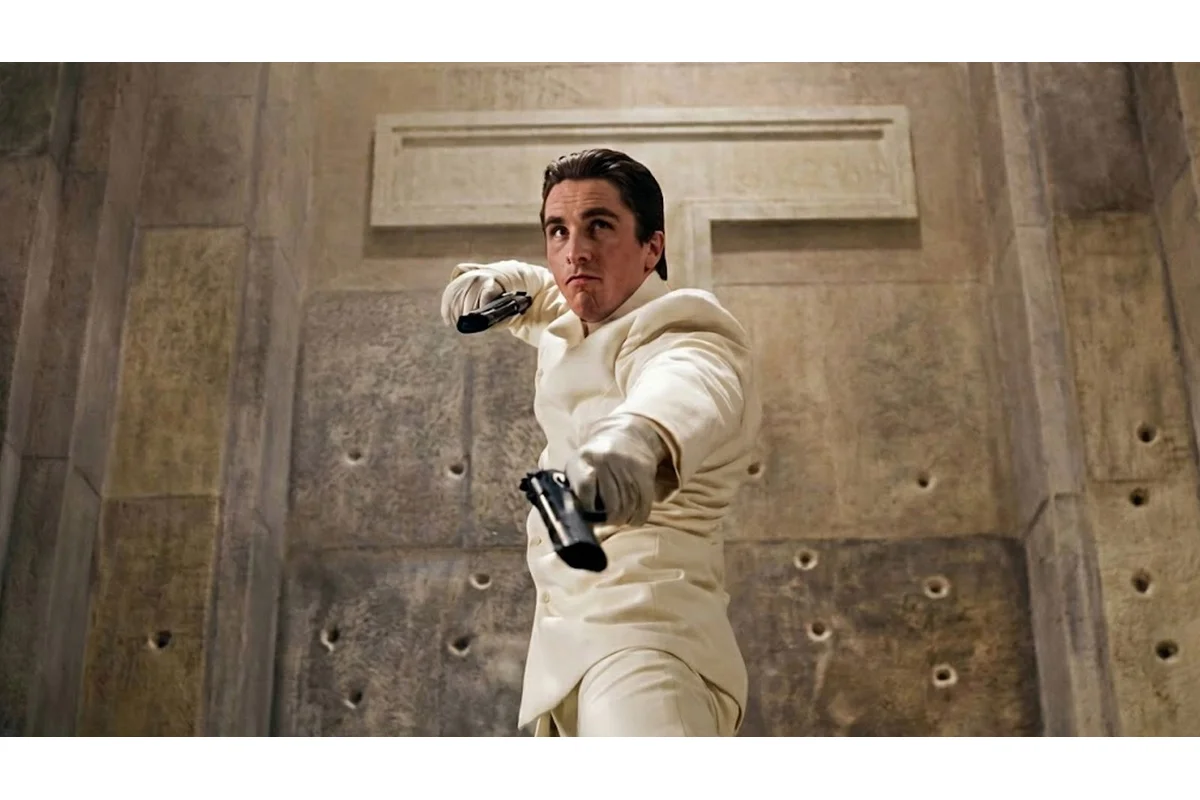
The latest episode of Fallout dramatically intensifies its narrative, with Justin Theroux’s portrayal of Robert House adding a new layer of fear and uncertainty to the series. As the story unfolds in Las Vegas, viewers witness a tense confrontation that pushes the boundaries of the post-apocalyptic world’s mysteries, exploring the enigmatic question central to the show’s arc: who ended the world?
In this pivotal installment, Theroux’s Fallout role becomes the catalyst for a chilling revelation. House, a polymath who blends mathematician, roboticist, and casino owner in one enigmatic figure, tries to predict and control the future amid the chaos of the Wasteland. However, his veneer of control crumbles as he confesses to Cooper Howard, an actor caught in the throes of apocalypse rumors, his failure to foresee who triggered the cataclysm. This moment marks a significant turning point in the season, one that disrupts the familiar rhythm of the show and signals deeper upheavals ahead.
The Rising Tension Between Robert House and Cooper Howard
In a scene charged with desperation, Robert House invites Cooper Howard to a private meeting in his sophisticated penthouse shortly after Cooper arrives in Las Vegas with his wife, Barb, to negotiate a major Vault-Tec Cold Fusion deal. The tension escalates quickly as House’s questions grow more frantic, unable to mask his terror at the uncertainty of the apocalypse’s origin. His mechanical hat and eccentric mannerisms add to the surreal nature of this interaction, underlining the bizarre blend of genius and madness that defines House’s character.
Throughout their exchange, Cooper immediately senses that the figure he meets is not the real Robert House but a double—an indication of the layers of deception inflaming the show’s narrative. House’s fear of the unknown contrasts sharply with his usual smug arrogance, exposing vulnerabilities beneath his calculated exterior. The uncertainty around the apocalypse’s catalyst becomes a fixation, especially as House notes the birth of Cooper and Barb’s daughter, Janey Howard, coincides with his visions of destruction, deepening the mystery.
Theroux’s Complex Portrayal of House: Arrogance Meets Desperation
Justin Theroux seamlessly captures the duality of Robert House, a man driven by control yet haunted by his inability to master the future. His performance conveys House’s oscillation between confidence and genuine fear, painting a nuanced portrait of a man whose intellect is both his weapon and his curse. As the episode progresses, House mutters about unseen players manipulating events behind the scenes, referencing previous events such as the Deathclaw attacks on the Alaska front, and dons what appears to be a high-tech tinfoil hat in a breakdown that undercuts his previous self-assurance.
This solo unraveling adds tension to an already frenetic episode, highlighting the chaotic atmosphere enveloping Vegas. House’s messianic schemes to dominate the Wasteland and manipulate humanity verge on tyrannical obsession, and his visible collapse accentuates the precariousness of power in a devastated world.
Returning Faces and New Threats in the Fallout World
This episode does more than escalate House’s storyline; it also brings back several fan-favorite characters from Fallout’s first season, enriching the worldbuilding and deepening thematic threads. Jon Daly’s Snake Oil Salesman returns with his unmistakable manic energy, contributing to the unsettling vibe that pulses through the episode. Daly’s portrayal combines frenetic humor with a sinister edge, particularly effective when his character becomes subjected to Hank MacLean’s brain chip experiments, raising the stakes around technology’s dark influence in this universe.
Dale Dickey reprising her role as Ma June reintroduces another familiar face. Found squatting in the old Vault-Tec headquarters, June’s presence signals lingering threats and warnings that some characters are doomed to serve as signs urging others to retreat from danger. Norm and his management trainees encounter her, confronting their doubts about their mission and the perilous decisions they face, especially as Norm attempts covert investigation alongside survivor Claudia. Their inquiry reveals dangerous information about the Forced Evolution Virus (F.E.V.), a well-known menace in Fallout lore that corrupts life, turning organic beings into monstrous forms and posing severe risks to the Wasteland’s fragile balance.
The Struggle for Survival in Freeside and Vault-Tec Mysteries
In an intense narrative thread, Sister Lucy’s journey becomes a focal point of emotional complexity and moral ambiguity. Together with The Ghoul, Lucy escapes from a deadly Deathclaw attack on the Strip and seeks refuge in Freeside, a location pulled directly from Fallout: New Vegas. The show honors its source material by breathing life into this familiar area, presenting it as a bustling but dangerous community.
Lucy’s struggle intensifies when she must confront a grim reality: the local general store has been taken over by a suspicious new proprietor whose behavior and surroundings hint at sinister motives. Lucy’s internal conflict surfaces as she takes a human life for the first time, a moment made poignant by Ella Purnell’s committed performance. The scene blends humor with bleak authenticity, illustrating Lucy’s wrenching transformation amidst the Wasteland’s harsh demands.
The episode’s climax sees Lucy betrayed by The Ghoul, who hands her over to Vault 33‘s control while negotiating with Hank to secure Barb Howard and Janey’s safety in cryo pods. Walton Goggins’s portrayal of The Ghoul here is deeply affecting, capturing the character’s painful vacillation between loyalty and survival with nuance. When Lucy mourns their fractured camaraderie, Goggins’s delivery carries the weight of a complicated history suddenly cut short.
Family Secrets and Foreshadowing Future Conflicts
The episode closes on powerful moments of familial strain and looming reveal. Cooper Howard’s reckless bender and subsequent serious conversation with Barb hint at a breaking point in their relationship, while Lucy awakens to a surprising confrontation with her father, signaling a forthcoming shift in alliances and power dynamics. These developments not only deepen individual character arcs but suggest that the fallout from these interactions could have far-reaching consequences for the series’ broader storyline.
By intertwining past and present timelines, Fallout builds a narrative momentum that is rare in its typically episodic structure. The growing tension around the apocalypse’s origin, House’s increasingly unstable grip on control, and the introduction of the F.E.V. virus as a looming threat all point toward major revelations in the near future. Fans are left questioning the true nature of Barb Howard’s actions, the significance of House’s technology, and the role mutant creatures play in this devastated landscape.
Insightful Observations from the Latest Episode
This week’s Fallout installment avoids distractions from minor subplots such as Vault 33’s dramedy or Maximus’s antics, instead focusing tightly on escalating central storylines. This concentration benefits the pacing and emotional impact, allowing character moments to resonate more deeply.
Lucy’s deference to The Ghoul when overwhelmed by Deathclaws, and her busy rejection of a bizarre “Beat me up 4 caps!” offer in Freeside, highlight the show’s blend of tension and dark humor, reflecting the unpredictable nature of the Wasteland’s inhabitants. Freeside itself, along with locations like the “Fully Integrated Security Technetronic Officer,” pay faithful homage to elements popularized in Fallout: New Vegas, reinforcing the series’ commitment to its gaming roots.
Meanwhile, Young Hank’s possession of the Cold Fusion technology, cuffed to his wrist, elevates his status as a potential assassination target, injecting espionage elements into the plot. Cooper and Lee Moldaver’s payphone interactions add a subtle spy thriller vibe, enriching the show’s genre palette.
Martha Kelly’s Representative Welch faces intimidation on House’s Lucky 38 steps, illustrating the ongoing power struggles under the surface of the casino city’s glitter. Walton Goggins delivers an indelible line during House’s reveal, summarizing the episode’s absurdity and gravity: “From the fuckin’ toilet?”
Jon Daly’s Snake Oil Salesman montage, set to “Luck Be A Lady,” injects a burst of chaotic energy, sharply contrasting the deadly moment when he kills a radroach on his neck amid cut-to-silence music. The show’s willingness to confront dark transformation and memory loss appears in a chilling conversation about erasing all past knowledge, underscoring the high stakes involved with emerging technologies and brain manipulation.
Theroux’s frustration in commanding Cooper, juxtaposed with his inability to control the unfolding events, and Jonathan Nolan’s influence as executive producer lend the storyline echoes of his previous works such as Westworld and Person of Interest, especially in their thematic preoccupation with predicting the future and the limits of control.
Stylistic editing choices, like a choppy cut between Cooper and The Ghoul after their confrontation, add a surreal, intense tone, hinting at potential plot complexities ahead. The Forced Evolution Virus remains one of the most significant threats referenced in Fallout lore, responsible for creating the formidable Super Mutants, another menace the show has yet to unleash.
Lastly, the closing credits linger on the Las Vegas Strip casinos, culminating in an iconic shot of Robert House’s life-support sarcophagus from the games—a powerful visual bridge connecting the series to its source material and symbolizing the endurance of House’s legacy even after the apocalypse.
