
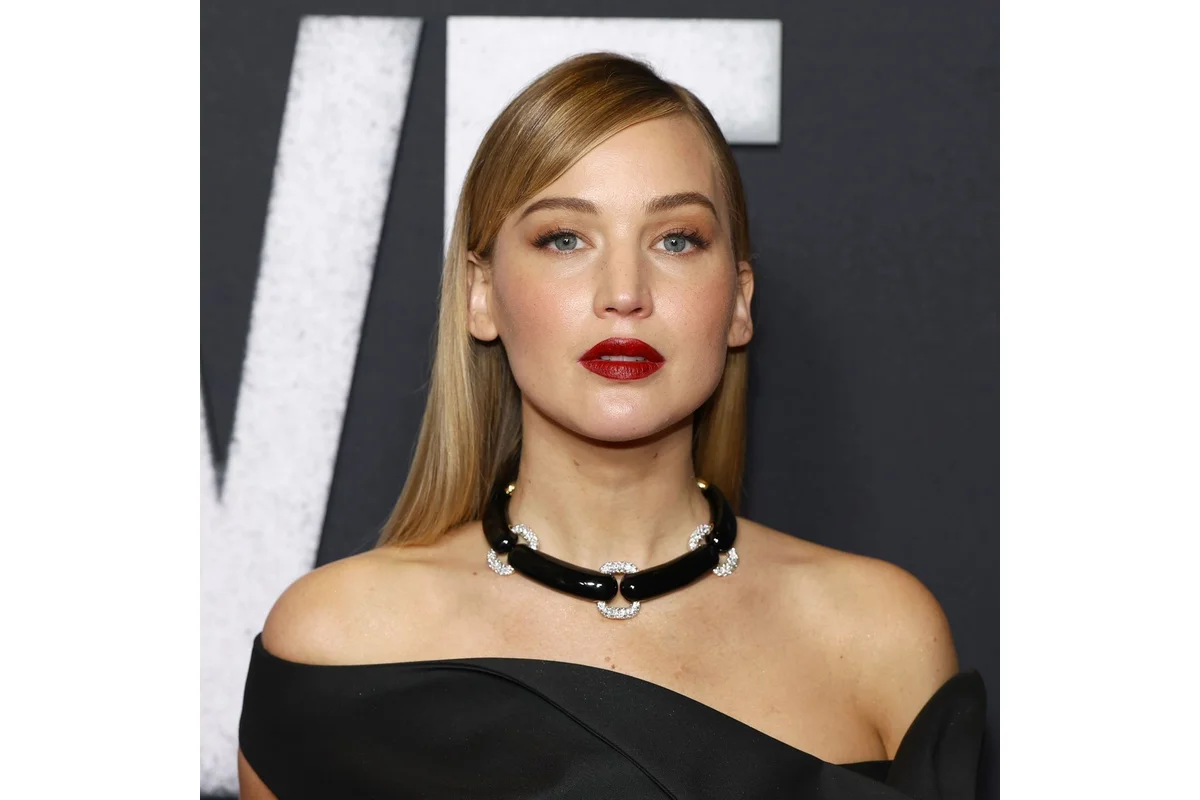
Jennifer Lawrence revealed that she was considered for a role in Quentin Tarantino’s 2019 film Once Upon a Time in Hollywood, but lost the opportunity because of her appearance. The actress, during a January 12 podcast appearance, said that although Tarantino wanted her in the film, others disagreed based on how she looked.
Jennifer Lawrence’s Casting Experience With Tarantino
On the Happy Sad Confused podcast hosted by Josh Horowitz, Lawrence, 35, explained that Tarantino initially intended to cast her but faced opposition from others involved in the project. She stated,
“Well, he did [want to cast me], and then everybody was like, ‘She’s not pretty enough to play Sharon Tate,’
Lawrence claimed. And then they didn’t.
Horowitz challenged her account, suggesting it was false, but Lawrence defended her story, saying,
“I’m pretty sure it is true. Or it’s that thing where I’ve been telling the story this way for so long that I believe it,”
and added,
“I’m pretty sure that happened, or he just never was considering me for the part and the internet just went out of their way to call me ugly.”
Background on the Role and Casting Controversy
Once Upon a Time in Hollywood portrays an alternate history involving the Manson murders, focusing on what might have happened if Sharon Tate had survived. Tate, who was killed by Charles Manson’s followers in 1969 at age 26, was a key character in the film. During casting in 2017, Lawrence was rumored to be a contender for Tate’s role along with Margot Robbie.
Sharon Tate’s sister, Debra Tate, publicly stated that Jennifer Lawrence did not resemble her sibling. Debra told TMZ at the time,
“She’s not pretty enough to play Sharon,”
and added,
“My pick would be Margot simply because of her physical beauty and even the way she carries herself is similar to Sharon.”
Margot Robbie, 35, was ultimately cast and starred opposite Leonardo DiCaprio and Brad Pitt. Debra Tate praised Robbie’s portrayal in an interview with Vanity Fair, saying,
“She made me cry because she sounded just like Sharon,”
and,
“The tone in her voice was completely Sharon, and it just touched me so much that big tears [started falling]. The front of my shirt was wet. I actually got to see my sister again … nearly 50 years later.”
Tarantino’s Consideration of Lawrence for a Different Part
Years after the film’s release, Quentin Tarantino revealed that he had thought about casting Jennifer Lawrence in a different role within Once Upon a Time in Hollywood. According to a 2021 interview on Marc Maron’s WTF podcast, Tarantino said,
“But early on, I investigated the idea of Jennifer Lawrence playing Squeaky [Fromme]. She came down to the house to read the script cause I wasn’t letting it out,”
and he described how he gave her the script to read,
“So, she came down to the house and I gave her the script and said, ‘Go in my living room or go outside by the pool and read it.’”
The role of Squeaky Fromme, a member of the Manson Family, ultimately went to Dakota Fanning, who impressed Tarantino with her performance. He remarked,
“couldn’t be happier with what Dakota Fanning did,”
calling her performance
“one of the best performances in the movie.”
Lawrence’s Other Missed Opportunity With Tarantino
Jennifer Lawrence also revealed that she was offered a part in Quentin Tarantino’s film The Hateful Eight. She admitted she declined the role of Daisy, which later went to Jennifer Jason Leigh. Looking back, Lawrence expressed regret over her decision, stating,
“I turned it down, which I should not have done,”
reflecting on the missed chance to collaborate with Tarantino.
Impact and Future Possibilities
Jennifer Lawrence’s comments highlight the challenges actresses face regarding casting decisions influenced by appearance, even when acclaimed filmmakers express interest. The insider perspectives from Debra Tate and Tarantino emphasize the care taken to select actors who closely embody real-life figures or specific characters. While Lawrence missed roles in two Tarantino films, her candid reflections may influence discussions on casting practices and the pressures actors endure.
As for future collaborations between Lawrence and Tarantino, the history of consideration and near-casts suggests opportunities may arise again, especially given their mutual respect and Lawrence’s continued prominence in the industry.
