
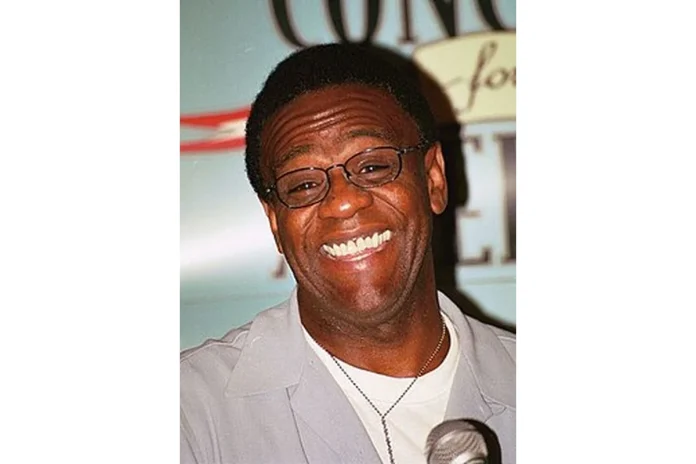
Al Green Bio
Albert Leornes Greene, known professionally as Al Green, is an American singer, songwriter, pastor, and record producer born on April 13, 1946, in Forrest City, Arkansas. He is widely regarded as one of the most gifted purveyors of soul music, best known for his run of early 1970s soul hit singles, including “Tired of Being Alone,” “I’m Still in Love with You,” “Love and Happiness,” “Take Me to the River,” and his signature song, “Let’s Stay Together.” A canonical Memphis soul artist, Green built a long and prolific partnership with producer Willie Mitchell and the Hi Rhythm Section that produced his greatest commercial success.
After a personal crisis in the mid-1970s, Green became an ordained pastor and spent the 1980s largely recording gospel music, before returning to secular recording and high-profile collaborations in the years that followed. He is the winner of 11 Grammy Awards, including the Grammy Lifetime Achievement Award, a Kennedy Center Honors recipient, and a Rock and Roll Hall of Fame inductee, honored in 1995.
Early Life and Background
Albert Leornes Greene was born on April 13, 1946, in Forrest City, Arkansas, the sixth of ten children born to Cora Lee and sharecropper Robert G. Greene Jr. At around the age of ten, he began performing with his sister in a family group called the Greene Brothers. During the late 1950s, the Greene family relocated from Arkansas to Grand Rapids, Michigan, where he spent his formative teenage years.
Growing up in a devoutly religious household, Green was strongly drawn to gospel music, citing Mahalia Jackson and other great gospel singers as early influences. At the same time, he became captivated by secular R&B and rock and roll, naming Jackie Wilson, Wilson Pickett, and Elvis Presley as formative heroes. According to Green, he was kicked out of the family home as a teenager after his father caught him listening to Jackie Wilson, an event that pushed him further into music.
In high school in Grand Rapids, Al formed a vocal group that came to be called Al Greene & the Creations. Two of the group’s members, Curtis Rodgers and Palmer James, established an independent label called Hot Line Music Journal, setting the stage for Green’s first recordings and his eventual introduction to the Memphis music scene.
Path to Music
Around 1966, after changing their name to Al Greene & the Soul Mates, the group recorded “Back Up Train” and released it on Hot Line Music. The song became a hit on the R&B charts and peaked at No. 46 in the Cashbox Top 100, but the group’s subsequent singles and their debut album Back Up Train (1967) failed to chart. Despite the limited commercial result, the record brought Green to wider attention in the regional R&B circuit.
While performing with the Soul Mates, Green came into contact with Memphis record producer Willie Mitchell, who hired him in 1969 to be a vocalist for a Texas show with Mitchell’s band. Following the performance, Mitchell asked Green to sign with his Hi Records label, a move that launched the most commercially successful phase of his career. Before releasing his first album with Hi, Green removed the final “e” from his surname, becoming Al Green.
Al Green Career
Early Career (1966-1970)
Al Green’s professional recording career began in 1966 with “Back Up Train” and the Al Greene & the Soul Mates, a group that drew the attention of Hi Records producer Willie Mitchell. Mitchell, who had noted that Green had been trying to sing like Jackie Wilson, Sam Cooke, Wilson Pickett, and James Brown, became his vocal mentor, coaching him into finding his own voice. Green released his Hi Records debut, Green Is Blues, in 1969, a moderate critical and commercial success that began to establish his identity as a solo artist.
His follow-up album, Al Green Gets Next to You (1971), featured the hit R&B cover of the Temptations’ “I Can’t Get Next to You,” recorded in a slow, blues-oriented style. The album also included his first significant solo hit, “Tired of Being Alone,” which sold a million copies and was certified gold. It became the first of eight gold singles Green would release between 1971 and 1974, signaling his breakthrough as a major soul artist.
Breakthrough (1971-1974)
Al Green’s commercial peak arrived in the early 1970s with a remarkable string of hit albums and singles on Hi Records. His January 1972 album Let’s Stay Together solidified his place in soul music, with its title track reaching number one on both the Billboard Hot 100 and R&B charts and becoming his first certified gold album. His follow-up, I’m Still in Love with You (October 1972), went platinum on the strength of the singles “Look What You Done for Me” and the title track, both of which reached the top 10 on the Hot 100.
The success continued with Call Me (April 1973), which produced three top-10 singles: “You Ought to Be with Me,” “Call Me (Come Back Home),” and “Here I Am (Come and Take Me).” Additional radio hits from this era included “Love and Happiness,” his cover of the Bee Gees’ “How Can You Mend a Broken Heart,” “Simply Beautiful,” “What a Wonderful Thing Love Is,” and the enduring “Take Me to the River,” later covered successfully by Talking Heads and blues artist Syl Johnson. His 1973 album Livin’ for You was also certified gold, while later releases such as Al Green Explores Your Mind (“Sha-La-La (Make Me Happy)”) and tracks like “Let’s Get Married,” “L-O-V-E (Love),” and “Full of Fire” kept him atop the R&B charts through the mid-1970s.
Notable Works and Milestones
Al Green’s signature work is the 1972 single “Let’s Stay Together,” widely regarded as one of the defining soul records of its era and later inducted into the Grammy Hall of Fame. The song has been covered by artists including Tina Turner, whose 1983 version became a comeback single, cementing Green’s status as a songwriter whose material transcended genre. His place in music history was formally recognized in 1995 with his induction into the Rock and Roll Hall of Fame, with the museum describing him as “one of the most gifted purveyors of soul music.”
Al Green Award Nominations
Al Green has been nominated for 21 Grammy Awards over the course of his career, spanning soul, R&B, and gospel categories. His nominations reflect both his early 1970s commercial peak and his later gospel recordings and collaborations, including his duet work with artists such as Lyle Lovett and Ann Nesby. In addition to his Grammy nominations, Green has received major industry honors, including induction into the Gospel Music Hall of Fame in 2004, the Songwriters Hall of Fame in 2004, the Michigan Rock and Roll Legends Hall of Fame in 2009, and a Kennedy Center Honors designation in 2014.
Al Green Awards Won
Al Green has won 11 Grammy Awards, including the Grammy Lifetime Achievement Award, and two of his songs, “Let’s Stay Together” and “Take Me to the River,” have been inducted into the Grammy Hall of Fame. He was inducted into the Rock and Roll Hall of Fame in 1995 and honored as a BMI Icon in 2004 at the annual BMI Urban Awards, joining a list of previous honorees that included James Brown, Chuck Berry, Little Richard, and Bo Diddley. Green also received a Lifetime Achievement Award at the 2009 BET Awards and was named a Kennedy Center Honors recipient in 2014.
Al Green Family
Al Green was born into a large Arkansas sharecropping family, the sixth of ten children of Cora Lee and Robert G. Greene Jr. In the late 1950s, the family relocated from Forrest City, Arkansas, to Grand Rapids, Michigan, where Green spent his teenage years and began his early musical career with family-based groups. He has seven children: sons Chris Burse Sr., Al Green Jr., and Trevor, and daughters Alva Lei Green, Rubi Renee Green, Kora Kishé Green, and Kala. Three of the daughters, Alva, Rubi, and Kora, were born to his former wife Shirley.
Personal Life
On October 18, 1974, Green’s girlfriend, Mary Woodson, assaulted him with a pot of boiling grits in his Memphis home, causing second-degree burns that required skin grafts, and then died by suicide with his firearm. Green has cited the incident as a wake-up call that prompted his spiritual transformation, and in 1976 he established the Full Gospel Tabernacle church in Memphis, where he continues to preach. He married Shirley Green (née Kyles) on June 15, 1977; the marriage ended in a finalized divorce in February 1983 after documented allegations of domestic violence, with Green agreeing to pay $432,800 in alimony and child support. Green resides in Millington, Tennessee, near Memphis, and is a member of the Prince Hall Masons at the Thirty-Third Degree.