
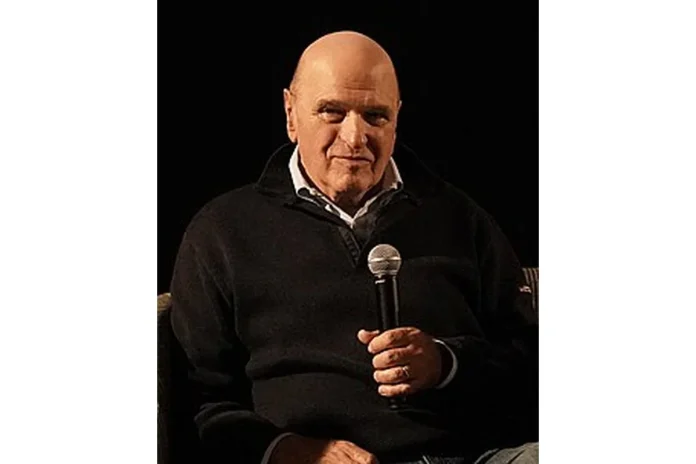
Andrew Davis Bio
Andrew Davis (born November 21, 1946) is an American film director, producer, screenwriter, and cinematographer whose work shaped the action and thriller genres of the 1980s and 1990s. Best known for helming films such as Above the Law (1988), Under Siege (1992), The Fugitive (1993), Chain Reaction (1996), A Perfect Murder (1998), and Holes (2003), Davis built a reputation for a lean, kinetic style that blended grounded characters with high-stakes spectacle. He earned a Golden Globe Award nomination for Best Director and a Directors Guild of America Award nomination for Outstanding Directing in a Feature Film for The Fugitive. Across more than five decades in the film industry, Davis has continued to mentor young filmmakers and to expand his craft into writing and documentary work.
Early Life and Background
Andrew Davis was born on November 21, 1946, on the south side of Chicago, Illinois. He is the son of Nathan Davis, a noted actor, and Metta Davis, and he grew up alongside his brother Richard Peter Davis, a musician who co-founded the cover band Chicago Catz, and a sister, Jo Ellen Friedman. His paternal grandparents were Romanian Jewish immigrants, and the cultural mix of his household helped shape his lifelong interest in storytelling that crosses social lines.
Davis attended the Harand Camp of the Theater Arts summer program and Bowen High School, where he first developed an interest in performance and visual storytelling. He went on to study journalism at the University of Illinois at Urbana-Champaign, earning his degree in 1968. His college years coincided with the civil rights movement and the Vietnam War era, and those experiences later informed the political undertones found in many of his films.
His early exposure to the entertainment world came through his father Nathan Davis, who took on numerous character roles in his son’s later films, including a memorable appearance as the grandfather of Shia LaBeouf’s character in Holes. This blend of family heritage, Chicago roots, and artistic curiosity gave Davis the foundation for a career that would begin almost immediately after college.
Path to Directing
Andrew Davis launched his film career in 1969 when he joined cinematographer and director Haskell Wexler on the documentary-style drama Medium Cool. Wexler became a key mentor to Davis, teaching him how to combine visual craft with social purpose. Working on that film gave Davis hands-on experience on a major production and inspired him to pursue filmmaking as a full-time profession.
Throughout the early 1970s, Davis worked as a director of photography on a string of low-budget features, including Cool Breeze (1972), Private Parts (1972), Hit Man (1972), and The Slams (1973). He later served as cinematographer on Menahem Golan’s Lepke (1975), a film that introduced him to higher-budget storytelling and to Hollywood talent. These projects sharpened his technical skills and helped him understand every layer of film production, from lighting and camera work to pacing and performance.
In 1978, Davis released his directorial debut, the semi-biographical musical drama Stony Island, a film about young musicians forming a band on Chicago’s south side. The project drew directly from his own roots and featured his brother Richie Davis alongside actors Dennis Franz, Rae Dawn Chong, and Meshach Taylor. Although the film earned modest returns, it caught the attention of major studios and proved that Davis could direct with both authenticity and style.
Andrew Davis Career
Early Career (1969–1978)
Davis’s early filmography reads like a director-of-photography apprenticeship, with credits on Cool Breeze, Private Parts, Hit Man, The Slams, Lepke, and Mansion of the Doomed. Each project, whether shot on a $300,000 budget or on a larger Panavision set, taught him how to manage crews, shape performances, and capture action efficiently. His collaboration with producers Gene Corman and Menahem Golan exposed him to a wide range of filmmaking styles.
The release of Stony Island in 1978 marked Davis’s transition from behind-the-camera craftsman to on-set director. Critics praised the film as a vibrant, heartfelt debut that captured the spirit of Chicago’s late-1970s music scene. Although it recouped only two-thirds of its budget, the film’s energy and authenticity earned Davis interest from studios looking for directors who could tell grounded urban stories.
Breakthrough (1983–1993)
Davis’s commercial breakthrough began with the 1983 horror film The Final Terror, a tense, low-budget thriller that featured early performances by Rachel Ward, Daryl Hannah, and Joe Pantoliano. Although the film sat on the shelf for two years before finding a distributor, it built Davis’s reputation for handling suspense with precision.
His real breakthrough came in 1985 with Code of Silence, a Chicago-set action film starring Chuck Norris. Davis’s sharp direction turned a martial arts vehicle into a character-driven crime drama, and the film opened at number one at the U.S. box office, ultimately earning $20.3 million. Critics highlighted Davis’s streetwise rhythm and ability to balance action with realism.
Davis cemented his Hollywood standing with Above the Law (1988), the feature debut of Steven Seagal, followed by The Package (1989) with Gene Hackman and Tommy Lee Jones, and Under Siege (1992), which reunited him with Seagal and became the top-grossing fall film of 1992. The pinnacle of this run arrived in 1993 with The Fugitive, starring Harrison Ford and Tommy Lee Jones. The film earned seven Academy Award nominations, including Best Picture, and won Best Supporting Actor for Jones. Davis himself received a Golden Globe nomination for Best Director and a Directors Guild of America nomination for Outstanding Directing in a Feature Film. Roger Ebert praised Davis for marrying action with artistry and compared his work to directors such as Alfred Hitchcock, David Lean, and Carol Reed.
Notable Works and Milestones
Among Andrew Davis’s signature films are The Fugitive (1993), which remains a touchstone of intelligent action cinema, and Holes (2003), a family-friendly adaptation of Louis Sachar’s novel that starred Shia LaBeouf, Sigourney Weaver, and Jon Voight. A.O. Scott of The New York Times called Holes the best American studio release of its year. Davis’s work on Under Siege and The Fugitive established him as a director capable of staging large-scale set pieces while keeping character at the center of the story.
Andrew Davis Award Nominations
Andrew Davis has received major industry recognition throughout his career. He earned a Golden Globe Award nomination for Best Director and a Directors Guild of America Award nomination for Outstanding Directing in a Feature Film, both for The Fugitive in 1993. His film The Fugitive received seven Academy Award nominations, including Best Picture, and Davis’s direction contributed to the film’s status as one of the most honored thrillers of its decade.
Andrew Davis Awards Won
While Andrew Davis is widely respected for his craft, the verified record of his career shows that his major industry honors have come through nominations rather than competitive wins. His films, including The Fugitive, Under Siege, and Holes, have been praised by critics and audiences alike for their tight pacing, character focus, and visual style.
Andrew Davis Family
Andrew Davis was raised in a close-knit Chicago family headed by his father Nathan Davis, a well-known actor, and his mother Metta Davis. He grew up with his brother, musician Richie Davis, and his sister, Jo Ellen Friedman. Nathan Davis appeared in several of his son’s films, most memorably as the grandfather of Shia LaBeouf’s character in Holes, making their on-screen collaboration a true family affair.
Personal Life
Andrew Davis continues to live and work with strong ties to his hometown of Chicago, which has served as the backdrop for many of his films, including Code of Silence, The Package, and Holes. Beyond filmmaking, Davis published his first novel, the political thriller Disturbing the Bones, in 2024, co-written with Jeff Biggers. He also released the documentary Mentors—Toni and Santi in 2020, exploring the friendship between photographers Santi Visalli and Tony Vaccaro. In April 2024, he was honored at the Reims Polar Film Festival in France, where a career tribute celebrated his lasting influence on the thriller genre.