
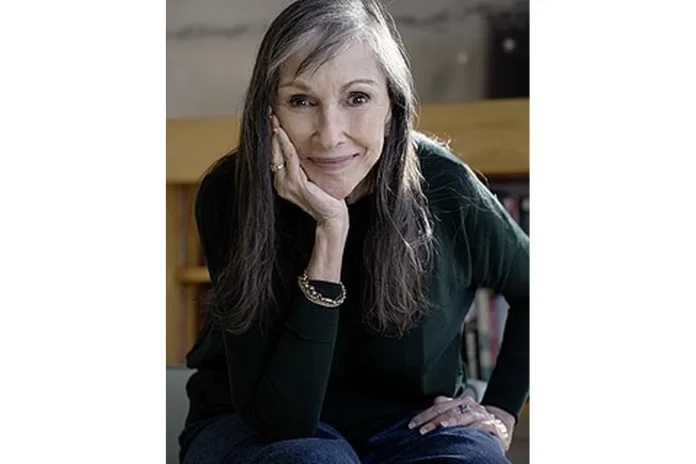
Ann Druyan Bio
Ann Druyan (born June 13, 1949) is an American writer, documentary producer, and director whose work has shaped the way science reaches the public. She is best known for co-writing the landmark 1980 PBS documentary series Cosmos with Carl Sagan and for later creating, producing, and writing its sequels, Cosmos: A Spacetime Odyssey (2014) and Cosmos: Possible Worlds (2020). Druyan also served as creative director of NASA’s Voyager Interstellar Message Project, which produced the Golden Record affixed to the Voyager 1 and Voyager 2 spacecraft. Across film, television, publishing, and digital media, her career has been defined by a rare ability to translate complex scientific ideas into stories that resonate with general audiences.
Early Life and Background
Ann Druyan was born in Queens, New York, to Harry Druyan and Pearl A. Goldsmith Druyan, who co-owned a knitwear firm. Her family was Jewish, and she grew up in a household that valued both intellectual curiosity and hard work. As a young student, Druyan showed a strong interest in mathematics and science, asking questions that reached beyond the standard classroom curriculum.
A junior high-school teacher once ridiculed a question she raised about the universality of pi, an experience Druyan has described as derailing her early enthusiasm for math. The episode left a lasting mark, and she has spoken about the years that followed as a period in which her scientific confidence was muted. She enrolled at New York University, where she later described her three years of study as difficult. She ultimately left the university without graduating, a turning point that led her to discover the pre-Socratic philosophers on her own and to rebuild her interest in science through independent reading and self-education.
Path to Writer
Druyan’s emergence as a writer began with the 1977 publication of her first novel, A Famous Broken Heart, which established her voice in long-form storytelling. A few years later, in the late 1970s, she was recruited as creative director of NASA’s Voyager Interstellar Message Project. In that role, she led a small team designing a complex message of sounds, images, and music intended for any intelligent life that might one day encounter the Voyager spacecraft. The resulting Golden Record, attached to both Voyager 1 and Voyager 2, remains one of the most ambitious science communication projects ever attempted.
Her work on Voyager brought her into close collaboration with Carl Sagan, with whom she also began writing for television. The partnership produced the 1980 PBS series Cosmos, hosted by Sagan, which became the most widely watched program in the history of American public television at that time and reached more than 500 million viewers across over 60 countries. The series won two Emmy Awards and a Peabody Award, and a companion book soon followed. From that point forward, Druyan was recognized as one of the most distinctive science writers in American media.
Ann Druyan Career
Early Career (1977–1980)
Druyan’s early professional years combined publishing and space science outreach. Her 1977 novel A Famous Broken Heart marked her arrival as a writer, and her appointment as creative director of NASA’s Voyager Interstellar Message Project soon followed. Working with Carl Sagan and a small team, she helped select music, greetings, and images for the Golden Record, including Chuck Berry’s Johnny B. Goode, a choice she has explained as the sound of motion, risk, and discovery.
In 1980, Druyan co-wrote the PBS series Cosmos with Sagan and Steven Soter. The thirteen-episode series covered subjects ranging from the origin of life to humanity’s place in the universe and earned two Emmy Awards and a Peabody Award. The success of Cosmos established Druyan as a leading figure in science-based television.
Breakthrough (1987–2000)
Throughout the 1980s and 1990s, Druyan built on the success of Cosmos with a steady run of projects in television and publishing. She wrote and produced the 1987 PBS NOVA episode Confessions of a Weaponeer, about presidential science advisor George Kistiakowsky. Together with Sagan, she co-wrote six New York Times bestsellers, including Comet, Shadows of Forgotten Ancestors, and The Demon-Haunted World. She also co-authored Murmurs of Earth, the definitive account of the Voyager Golden Record.
In the late 1990s, Druyan moved into feature film production as co-creator and co-producer of the 1997 film Contact, an adaptation of Sagan’s novel starring Jodie Foster. The following years brought further television work, including the 2000 planetarium shows Passport to the Universe and The Search for Life: Are We Alone, narrated by Tom Hanks and Harrison Ford, both debuting at the American Museum of Natural History’s Hayden Planetarium. In 2000, she also co-founded Cosmos Studios, a company dedicated to producing science-based entertainment across media.
Cosmos: A Spacetime Odyssey and Possible Worlds (2011–2020)
In 2011, it was announced that Druyan would executive produce, co-write, and direct episodes of a sequel to the original Cosmos. The result, Cosmos: A Spacetime Odyssey, premiered in March 2014 on Fox, with episodes airing on National Geographic Channel the following night. Fox gave the series the largest global rollout of a television series to that date, debuting it in 180 countries. At least some part of the thirteen-episode run was watched by 135 million people, including 45 million in the United States, making it the most-watched series ever on National Geographic Channel International at that time.
Druyan continued her work on the franchise with Cosmos: Possible Worlds, which premiered on National Geographic in March 2020. She served as executive producer, writer, and director, and she also published a companion book of the same name in February 2020. Across the two modern Cosmos series, Druyan has been the throughline, shaping both the scientific vision and the narrative voice that define the programs.
Notable Works and Milestones
Druyan’s signature works include the original 1980 Cosmos, the 1997 feature film Contact, the Golden Record aboard Voyager 1 and Voyager 2, and the modern Cosmos sequels A Spacetime Odyssey and Possible Worlds. The original Cosmos earned two Emmys and a Peabody Award, and the Voyager Golden Record continues to travel through interstellar space with a projected shelf life of one billion years. In recognition of her contributions, asteroid 4970 Druyan is in a companion orbit with asteroid 2709 Sagan, a pairing arranged by the asteroids’ discoverer as a tribute to her late husband.
Ann Druyan Award Nominations
Publicly verified records of specific award nominations for Ann Druyan are limited, and a detailed summary of nomination counts cannot be confirmed from available sources. Her projects have, however, been associated with major television recognition, including Emmy and Peabody honors for the original Cosmos series and ongoing attention for her later science-based productions.
Ann Druyan Awards Won
The original 1980 PBS series Cosmos, co-written by Druyan with Carl Sagan and Steven Soter, won two Emmy Awards and a Peabody Award. The series has been recognized as one of the most influential science programs ever produced for American public television. Druyan has also been honored with the title of Humanist Laureate from the International Academy of Humanism in November 2007. In October 2019, the Center for Inquiry West opened the Carl Sagan–Ann Druyan Theater in Los Angeles, a venue named in part to honor her contributions to science communication.
Ann Druyan Family
Ann Druyan was born to Harry Druyan and Pearl A. Goldsmith Druyan, who co-owned a knitwear firm in New York. She married astronomer and author Carl Sagan in 1981, and the couple remained together until his death in 1996. Druyan and Sagan had two children, including their daughter Sasha Sagan, who has written about growing up in the Sagan household and about the loss of her father when she was a teenager.
Personal Life
Druyan met Carl Sagan while collaborating on the Voyager Golden Record project in the late 1970s, and their partnership became both a working and romantic relationship. The two married in 1981 and worked together on books, television series, and film projects until his death in 1996. Their relationship has been the subject of numerous treatments in popular culture, including a Radiolab episode, a segment of Comedy Central’s Drunk History, and the song Sounds of Earth by Jim Moray. Druyan has remained a public advocate for science, secular humanism, and evidence-based thinking in the years since.