
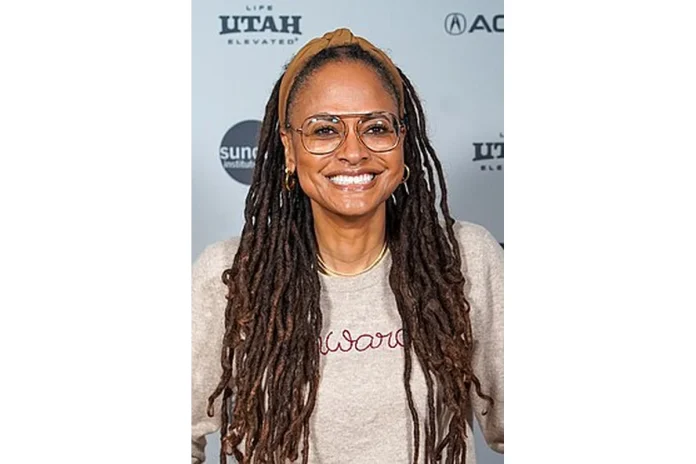
Ava DuVernay Bio
Ava Marie DuVernay, born on August 24, 1972, is an American filmmaker, screenwriter, and producer whose work has reshaped modern Hollywood. She is a recipient of two Primetime Emmy Awards, two NAACP Image Awards, a BAFTA Film Award, and a BAFTA TV Award, and she has also earned nominations for an Academy Award and a Golden Globe. In 2011, she founded her independent distribution company ARRAY. Over more than a decade, DuVernay has become one of the most influential directors working in film and television today.
Early Life and Background
Ava Marie DuVernay was born on August 24, 1972, in Long Beach, California. She was raised by her mother, Darlene Sexton, an educator, and her stepfather, Murray Maye. The surname of her biological father, Joseph Marcel DuVernay III, traces back to Louisiana Creole ancestry. DuVernay grew up in Lynwood, California, alongside four siblings, and spent her summers near Selma, Alabama, at the childhood home of her stepfather.
Those summer trips had a lasting impact on her. DuVernay has explained that the visits influenced her decision years later to make the film Selma, since her stepfather had personally witnessed the 1965 Selma to Montgomery marches. Raised Catholic, she graduated from Saint Joseph High School in Lakewood, California, in 1990.
DuVernay went on to attend the University of California, Los Angeles, where she earned a double Bachelor of Arts degree in English literature and African-American studies. She is an honorary member of Alpha Kappa Alpha sorority. In 2021, Yale University recognized her contributions to the arts by awarding her an honorary Doctor of Fine Arts degree.
Path to Director
DuVernay first explored journalism after completing an internship with CBS News, where she helped cover the O.J. Simpson murder trial. She later grew disillusioned with the field and shifted into public relations, working as a junior publicist at 20th Century Fox, Savoy Pictures, and several other agencies. In 1999, she opened her own public relations firm, The DuVernay Agency, also known as DVAPR, which provided marketing and publicity services for films and television series, including Lumumba, Spy Kids, Shrek 2, The Terminal, Collateral, and Dreamgirls.
Alongside her publicity work, she built several ventures aimed at African-American audiences, including Urban Beauty Collective, a promotional network of beauty salons and barbershops, the blog hub Urban Thought Collective, the radio show Urban Eye, and the digital platform HelloBeautiful. In 2005, over the Christmas holiday, DuVernay took $6,000 of her own money to direct her first short film, Saturday Night Life, which aired on Showtime in 2007. She followed it with the short documentary Compton in C Minor in 2007 and the feature documentary This Is the Life in 2008.
Ava DuVernay Career
Early Career (1991 to 2008)
Before stepping behind the camera, DuVernay spent more than a decade building a career in entertainment publicity, journalism, and entrepreneurship. Her early directorial efforts were the short film Saturday Night Life, a twelve-minute story about a single mother, and the documentary This Is the Life, which examined the Los Angeles Good Life Cafe arts movement. This Is the Life earned audience awards at the ReelWorld Film Festival in Toronto, the Los Angeles Pan-African Film Festival, the Hollywood Black Film Festival, and the Langston Hughes African American Film Festival in Seattle.
During this period, she also expanded her public profile by launching media and beauty ventures aimed at African-American consumers, laying the financial foundation for her later filmmaking career.
Breakthrough (2010 to 2013)
DuVernay made her narrative feature debut in 2011 with I Will Follow, a drama starring Salli Richardson-Whitfield. Inspired by DuVernay’s aunt Denise Sexton, the film was made for $50,000 in fourteen days and was an official selection at AFI Fest, the Pan-African Film Festival, Urbanworld, and the Chicago International Film Festival. Film critic Roger Ebert called it one of the best films he had seen about coming to terms with the death of a loved one.
Her second feature, Middle of Nowhere, premiered at the 2012 Sundance Film Festival, where DuVernay won the U.S. Directing Award: Dramatic, becoming the first African-American woman to receive the honor. The film also earned her the 2012 Independent Spirit John Cassavetes Award. That same year, she founded the African-American Film Festival Releasing Movement, which later became known as ARRAY.
Notable Works and Milestones
DuVernay wrote and directed Selma (2014), a $20 million dramatic film about Martin Luther King Jr., President Lyndon B. Johnson, and the 1965 Selma to Montgomery marches. The film earned a nomination for Best Picture at the Academy Awards, and the song Glory, from the film, won Best Original Song. She later directed the Netflix documentary 13th (2016), which earned an Academy Award nomination for Best Documentary Feature, the Disney fantasy film A Wrinkle in Time (2018), and the biographical drama Origin (2023), based on Isabel Wilkerson’s book Caste: The Origins of Our Discontents. She also created the television series Queen Sugar, the miniseries When They See Us, and the series Colin in Black & White. In 2017, she was named to the Time 100 list of the most influential people in the world, and in 2020 she was elected to the Academy of Motion Picture Arts and Sciences board of governors.
Ava DuVernay Award Nominations
Ava DuVernay has earned nominations across the most respected award bodies in film and television. For her work on Selma, she became the first African-American woman to be nominated for a Golden Globe Award for Best Director, while the film itself earned a nomination for Best Picture at the Academy Awards. Her documentary 13th received a nomination for Best Documentary Feature at the 89th Academy Awards, and her miniseries When They See Us received a record sixteen Emmy nominations in 2019, including categories for writing and directing.
Ava DuVernay Awards Won
DuVernay has won two Primetime Emmy Awards, two NAACP Image Awards, a BAFTA Film Award, a BAFTA TV Award, a Peabody Award, and a Columbia Journalism School duPont Award. She also won the U.S. Directing Award: Dramatic at the 2012 Sundance Film Festival, the Independent Spirit John Cassavetes Award, and multiple audience awards for her early documentary work.
Ava DuVernay Family
DuVernay was born to Joseph Marcel DuVernay III, her biological father, and Darlene Sexton, her mother, who raised her along with her stepfather, Murray Maye. She has four siblings and has often credited her family’s deep ties to the American South, particularly the summers spent in Alabama, as a major influence on her storytelling.
Personal Life
DuVernay has long balanced her filmmaking with public advocacy for artists of color and women in the entertainment industry. In 2018, she helped launch the Evolve Entertainment Fund alongside producer Dan Lin and Los Angeles Mayor Eric Garcetti to support under-served communities pursuing careers in entertainment. She has also used her platform to speak on issues of social justice, including wearing a red Artists4Ceasefire badge at the 2024 Academy Awards ceremony and signing the 2025 Film Workers for Palestine pledge.