
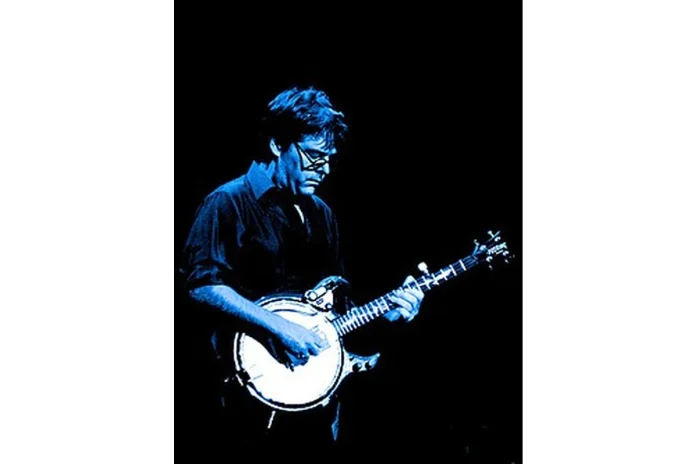
Béla Fleck Bio
Béla Anton Leoš Fleck, known professionally as Béla Fleck, is an American banjo player, songwriter, and composer whose career has reshaped how the banjo is heard across musical genres. Born on July 10, 1958, in New York City, Fleck first gained national recognition as a member of the progressive bluegrass band New Grass Revival and later as the leader of the jazz-inflected group Béla Fleck and the Flecktones. Over more than four decades, he has built a reputation as a virtuoso who blends bluegrass, jazz, classical, and world music into a single expressive voice. He has been nominated for Grammy Awards in more categories than any other musician, spanning country, pop, jazz, bluegrass, classical, folk, spoken word, composition, and arranging. He has won 17 Grammy Awards from 39 nominations and was inducted into the International Bluegrass Music Hall of Fame in 2020 as a member of New Grass Revival.
Béla Fleck Early Life and Background
Béla Anton Leoš Fleck was born into a Jewish family in New York City. His father named him after three classical composers he admired: the Hungarian Béla Bartók, the Austrian Anton Webern, and the Czech Leoš Janáček. His father left the family when Béla was a year old, and the two did not meet again until Fleck was in his 40s. His mother later remarried, and her new husband, a cellist, helped shape a musical atmosphere in the home.
Fleck was drawn to the banjo at a young age after hearing Earl Scruggs perform the theme song for the television show The Beverly Hillbillies. He was also captivated by the recording of Dueling Banjos by Eric Weissberg and Steve Mandell. At the age of 15, while visiting his grandparents in New Jersey, he received his first banjo, which his grandfather had found at a garage sale. During the train ride home, a stranger helped tune the instrument and suggested that Fleck learn from the instructional book How to Play the Five String Banjo by Pete Seeger.
Fleck attended the High School of Music & Art in New York City, where he initially played French horn before flunking out of the program and being transferred to the choir. He spent most of his time on the banjo, studying the book Bluegrass Banjo by Pete Wernick and taking lessons from Erik Darling, Marc Horowitz, and Tony Trischka. These early experiences laid the foundation for his development as a professional musician.
Path to Music
After graduating from high school, Fleck moved to New York City and joined the bluegrass group Tasty Licks, with whom he recorded two albums. He soon released his debut solo album, Crossing the Tracks, in 1979, and the record was chosen Best Overall Album by the readers of Frets magazine. He also played on the streets of New York City with bassist Mark Schatz, sharpening his live performance skills in informal settings.
Along with guitarist Glen Lawson and mandolinist Jimmy Gaudreau, Fleck formed the group Spectrum in 1981. That same year, he joined Tony Trischka and Bill Keith on the album Fiddle Tunes for Banjo, released on Rounder Records. In 1984, he played on the album Snakes Alive! by the Dreadful Snakes, appearing alongside Jerry Douglas, Roland White, and Blaine Sprouse. These projects helped establish his reputation within the progressive bluegrass community.
Béla Fleck Career
Early Career (1976–1988)
Fleck began his professional career in 1976 and quickly built a presence on the New York bluegrass scene. In 1981, Sam Bush invited him to join New Grass Revival, and Fleck performed with the group for nine years, helping define the sound of modern progressive bluegrass. During the 1980s, Fleck and Bush performed live with Doc and Merle Watson at bluegrass festivals, most notably the annual Telluride Bluegrass Festival. In 1987, Fleck recorded the solo album Drive, which was nominated for a Grammy Award in 1988 for Best Bluegrass Album.
In 1988, Fleck teamed up with bassist Victor Wooten to form Béla Fleck and the Flecktones, along with keyboardist and harmonica player Howard Levy and Victor’s brother, Roy Future Man Wooten, who played synthesizer-based percussion. Their second album, Flight of the Cosmic Hippo, reached number one on the Billboard Top Contemporary Jazz Albums chart and brought the group a wider audience among jazz fusion fans.
Breakthrough (1989–2008)
In 1989, Fleck was invited to join the supergroup Strength in Numbers, headed by Sam Bush on mandolin, with Jerry Douglas on resonator guitar, Edgar Meyer on bass, and Mark O’Connor on violin. The group recorded one album, The Telluride Sessions, before Bush disbanded the project. Fleck also played banjo on Before These Crowded Streets by the Dave Matthews Band, including the album’s debut single Don’t Drink the Water.
In 2001, he collaborated with Edgar Meyer on Perpetual Motion, an album of classical music performed on the banjo, accompanied by John Williams, Evelyn Glennie, Joshua Bell, and Gary Hoffman. The album won Grammy Awards for Best Arrangement and Best Classical Crossover Album. Fleck and Meyer later composed a double concerto for banjo and bass, performing its debut with the Nashville Symphony Orchestra, and were commissioned to write a trio concerto that included Indian tabla player Zakir Hussain. Fleck premiered his Concerto for Banjo in Nashville on September 22, 2011, performing it with the full Nashville Symphony Orchestra.
In 2005, while the Flecktones were on hiatus, Fleck undertook several new projects, including recording with traditional African musicians, co-writing the documentary Bring it Home about the Flecktones, and forming the acoustic fusion supergroup Trio! with Jean-Luc Ponty and Stanley Clarke. He also recorded as a member of the Sparrow Quartet with Abigail Washburn, Ben Sollee, and Casey Driessen. The documentary film Throw Down Your Heart, released in 2008, followed Fleck on his travels in Africa as he collaborated with local musicians and researched the African origins of the banjo.
Notable Works and Milestones
Fleck’s signature works include the solo albums Crossing the Tracks (1979) and Drive (1988), and the classical crossover album Perpetual Motion (2001). He has performed at leading festivals including the High Sierra Music Festival, Telluride Bluegrass Festival, Merlefest, Montreal International Jazz Festival, Toronto Jazz Festival, Newport Folk Festival, Austin City Limits Music Festival, Bonnaroo, New Orleans Jazz Fest, and Hardly Strictly Bluegrass. He has also been featured on the cover of the July/August 2013 issue of Making Music magazine.
Béla Fleck Award Nominations
Fleck has received 39 Grammy Award nominations across his career, more categories than any other musician, including country, pop, jazz, bluegrass, classical, folk, spoken word, composition, and arranging. His nominations have come both for his solo work and for collaborations with artists such as Asleep at the Wheel, Alison Brown, and Edgar Meyer.
Béla Fleck Awards Won
Fleck has won 17 Grammy Awards and was inducted into the International Bluegrass Music Hall of Fame in 2020 as a member of New Grass Revival. Among his Grammy wins are the awards earned for the album Perpetual Motion, which took Best Arrangement and Best Classical Crossover Album.
Béla Fleck Family
Fleck is the half-brother of Sascha Paladino, an award-winning children’s television writer. Fleck brought his future wife, Abigail Washburn, to Paladino’s wedding in August 2007, where the two played in a scratch band composed of wedding party members.
Personal Life
Fleck is married to banjo player Abigail Washburn. Washburn first met Fleck in Nashville at a square dance where she was dancing and he was playing. Fleck produced Washburn’s first solo album, and the two have continued to collaborate musically. They have two sons, born in 2013 and 2018.