
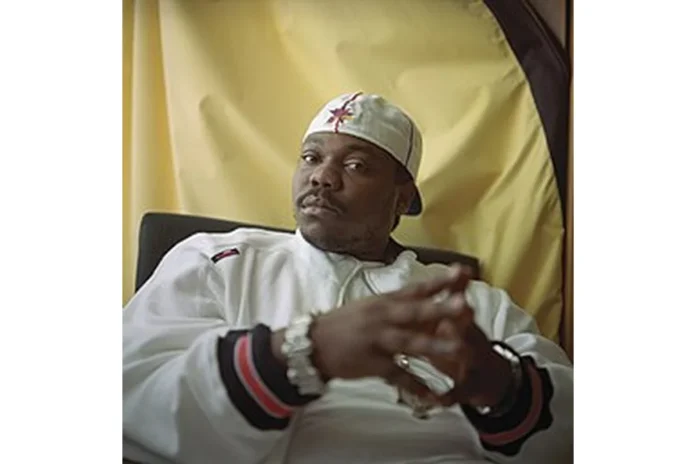
Beanie Sigel Bio
Dwight Equan Grant, known professionally as Beanie Sigel, is an American rapper and songwriter from Philadelphia, Pennsylvania. Born on March 6, 1974, he rose to national prominence after signing with Jay-Z’s Roc-A-Fella Records in 1998 and releasing his debut album, The Truth, in 2000. He is widely recognized as a leading voice in East Coast hip-hop and as the de facto leader of the Philadelphia collective State Property. Over the course of his career, Grant has built a reputation for hard-hitting street lyricism, chart success, and a long string of legal entanglements that have shaped both his public image and his output.
Early Life and Background
Dwight Equan Grant was born on March 6, 1974, in Philadelphia, Pennsylvania, and raised in the city’s tough inner-city neighborhoods. The environment of his hometown, long associated with hard-edged East Coast rap, played a central role in shaping his storytelling style and his deep identification with Philadelphia street culture. He adopted several nicknames over the years, including Beans, Mack, Beanie Mack, and The Broad Street Bully, the last of which later became the title of one of his independent albums.
Grant gravitated toward music during his teenage years, finding in hip-hop a way to express the realities of his surroundings. He began rapping seriously in the early 1990s and was soon noticed on the local Philadelphia circuit for his commanding delivery and raw subject matter. By 1994, he had committed fully to a music career, and the groundwork for his eventual breakthrough was already being laid through freestyle sessions, club appearances, and local recordings. His early years in Philadelphia cemented the toughness and authenticity that would later define his public persona.
Path to Rap
Beanie Sigel’s path to the national stage began with grassroots work on the Philadelphia rap scene, where he performed at clubs, recorded demos, and built a loyal local following. His big break came when he caught the attention of Jay-Z and was signed to Roc-A-Fella Records in 1998, one of the most powerful hip-hop labels of the era. The pairing proved transformative, placing Grant alongside some of the most prominent figures in late-1990s rap.
With Roc-A-Fella’s backing, Beanie Sigel quickly moved from local performer to major-label artist. The label positioned him as a flagship Philadelphia voice and a key street-oriented artist within its roster. In 2000, he helped organize State Property, a Philadelphia-based hip-hop collective composed of Roc-A-Fella labelmates such as Freeway, Peedi Crakk, the Young Gunz, Oschino, and Omillio Sparks. The formation of State Property marked his transition from solo hopeful to a leader of a movement, setting the stage for his chart success in the years that followed.
Beanie Sigel Career
Early Career (1994–1999)
Beanie Sigel began his professional rap career in 1994, performing on Philadelphia’s underground circuit and steadily building a regional reputation. Throughout the mid-1990s, he released independent material and sharpened the gritty, streetwise style that distinguished him from his peers. His relentless work ethic and unmistakable voice eventually reached the ears of Roc-A-Fella Records founder Jay-Z.
In 1998, Sigel signed with Roc-A-Fella Records, a move that would change the trajectory of his career. During this period he also started laying the organizational groundwork for what would become the State Property collective. By the end of the 1990s, he had positioned himself as one of the most talked-about unsigned-to-signed prospects in East Coast rap, ready to translate his local credibility into a national audience.
Breakthrough (2000–2007)
Beanie Sigel’s commercial breakthrough arrived on February 29, 2000, when Roc-A-Fella released his debut studio album, The Truth. The album was a critical and commercial success, debuting at number five on the Billboard 200 and establishing Sigel as a major new voice in hip-hop. The project showcased his raw lyricism and cemented his reputation as a street raconteur with crossover appeal.
In 2002, Sigel expanded his reach beyond music by starring in the film State Property, which was tied to the formation of the State Property collective. The film’s soundtrack produced the single “Roc the Mic,” performed with Freeway, which became his only appearance on the Billboard Hot 100. The follow-up State Property 2, released later in 2002, along with appearances in Paper Soldiers alongside Kevin Hart, further extended his visibility. That same year, the collective released The Chain Gang Vol. 2 (2003), which included the single “Can’t Stop, Won’t Stop” by the Young Gunz and earned a Grammy Award nomination for Best Rap Performance by a Duo or Group.
His second album, The Reason (2001), and his third album, The B. Coming (2005), both debuted within the top five of the Billboard 200. The B. Coming produced the single “Feel It in the Air,” which became his signature song and sold 131,000 copies in its first week. In 2007, Sigel released The Solution, his fourth and final studio album under Roc-A-Fella, debuting at number 37 on the Billboard charts. The single “All The Above,” featuring R. Kelly, also debuted on the U.S. R&B charts at number 83.
Notable Works and Milestones
Beanie Sigel’s signature works include The Truth, The Reason, and The B. Coming, all of which reached the top five of the Billboard 200 and helped define the sound of early-2000s East Coast rap. The single “Feel It in the Air” remains his most recognized track, while “Roc the Mic” with Freeway stands as his only Billboard Hot 100 entry. His leadership of State Property and his Grammy-nominated work with the Young Gunz further cement his influence on the Philadelphia hip-hop scene.
Beanie Sigel Award Nominations
Beanie Sigel received a Grammy Award nomination as part of the State Property collective’s 2003 single “Can’t Stop, Won’t Stop” by the Young Gunz, which was nominated for Best Rap Performance by a Duo or Group. The nomination remains one of the most visible formal recognitions of his career and underscored the collective’s impact on early-2000s hip-hop.
Beanie Sigel Awards Won
Based on the verified information available, no major industry award wins are clearly documented for Beanie Sigel. Any additional accolades from the available sources could not be confirmed at a sufficient level of certainty to be included.
Beanie Sigel Family
Publicly verified details about Beanie Sigel’s immediate family, including his parents, partners, and children, are limited. Available sources do not provide confirmed information about his family background or personal relationships, and this section is therefore kept brief in keeping with verified reporting.
Personal Life
Grant is a Sunni Muslim, a faith he has publicly identified with throughout his adult life. In November 2021, rapper and former Roc-A-Fella cohort Kanye West publicly credited Grant with originating the “Yeezy” nickname, an attribution Grant confirmed in a subsequent interview with TMZ, though he declined West’s offer of monetary compensation. In October 2023, Grant formally endorsed the independent 2024 presidential campaign of environmental lawyer Robert F. Kennedy Jr., and the following year, after Kennedy suspended his campaign, he endorsed Kamala Harris in the 2024 United States presidential election.