
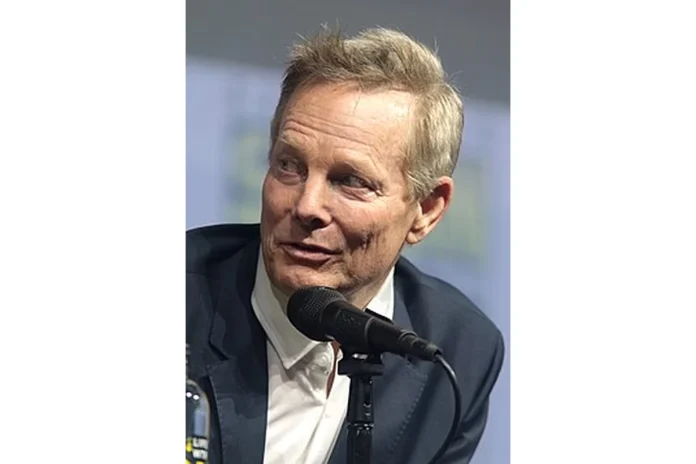
Bill Irwin Bio
William Mills Irwin, known professionally as Bill Irwin, is an American actor, choreographer, clown, and comedian whose career has spanned stage, film, and television for more than five decades. Born on April 11, 1950, in Santa Monica, California, Irwin first rose to prominence as a founder of the Pickle Family Circus, helping lead a revival of American circus arts during the 1970s. He later became a celebrated stage creator, a Tony Award-winning dramatic actor, and a familiar face on screen through roles in Popeye, Rachel Getting Married, and Interstellar. Millions of young viewers also know him as Mr. Noodle on the Sesame Street segment Elmo’s World.
Early Life and Background
Bill Irwin was born on April 11, 1950, in Santa Monica, California, to Elizabeth Mills Irwin, a teacher, and Horace G. Irwin, an aerospace engineer. He grew up in Southern California, where his parents encouraged both academic and creative pursuits. The combination of a teacher mother and an engineer father gave him an appreciation for discipline, structure, and storytelling that would later shape his craft.
After high school, Irwin attended the theater school at the California Institute of the Arts from 1970 to 1972, where he studied under instructor Herbert Blau. When Blau accepted a new position at Oberlin College in 1972, Irwin transferred with him and continued his training. He graduated from Oberlin College in 1974, and the following year he enrolled in the Ringling Brothers and Barnum & Bailey Clown College, an experience that deepened his commitment to physical comedy and the clown tradition.
Path to Celebrity
While still at the Ringling Brothers and Barnum & Bailey Clown College, Irwin helped co-found the Pickle Family Circus in San Francisco in 1975. The small, innovative troupe became a leading force in the renaissance of American circus, and Irwin quickly emerged as its signature performer. He also performed in schools under the Comprehensive Employment and Training Act, work he has credited with turning him into a working artist capable of connecting with any audience.
In 1979, Irwin left the Pickle Family Circus to pursue solo stage work, drawing on his training in mime, vaudeville, and physical theater. He began creating original productions that blended silent clowning with live music, often collaborating with composer Doug Skinner. These early independent projects laid the foundation for his later Broadway successes and established his reputation as a thoughtful and inventive theatrical artist.
Bill Irwin Career
Early Career (1974–1989)
Irwin’s professional career began in 1974, and his first major recognition came in 1981 when he received the National Endowment for the Arts Choreographer’s Fellowship, an honor he received again in 1983. In 1984, he was awarded a Guggenheim Fellowship and became the first performance artist to receive a five-year MacArthur Fellowship, recognizing his unique contributions to American performance. He also made his first featured film appearance in 1980, playing Harold Hamgravy in Robert Altman’s Popeye alongside Robin Williams.
During the mid-1980s, Irwin developed several acclaimed stage works, including The Regard of Flight (1982), which ran on Broadway at the Vivian Beaumont Theatre in April 1987. In 1988, he appeared with Steve Martin and Robin Williams in a Lincoln Center Off-Broadway production of Waiting for Godot, taking on the role of Lucky. For Largely New York, he earned a New York Drama Critics Circle Special Citation in 1988, followed by an Outer Critics Circle Award and a Drama Desk Award in 1989, with the show also receiving five Tony Award nominations.
Breakthrough (1990–2010)
The 1990s marked Irwin’s breakthrough into wider recognition across stage, film, and television. In 1991, he tap-danced in a leading role in Stepping Out with Liza Minnelli, appeared as a mime in Scenes from a Mall with Woody Allen and Bette Midler, and played Charlie Sheen’s father in Hot Shots!. His authentic vaudevillian skills brought him a role in the Sam Shepard film Silent Tongue in 1994, as well as parts in film adaptations of How the Grinch Stole Christmas, The Laramie Project, and A Midsummer Night’s Dream.
His biggest theatrical breakthrough came in 2005, when he starred as George opposite Kathleen Turner in a revival of Edward Albee’s Who’s Afraid of Virginia Woolf?, a performance that earned him the Tony Award for Best Actor in a Play. In film, he received widespread critical acclaim for his role as Paul, the father of Anne Hathaway’s character Kym, in Jonathan Demme’s 2008 drama Rachel Getting Married, earning a 2008 CFCA Award nomination for Best Supporting Actor. He also voiced and puppeteered the robot TARS in Christopher Nolan’s 2014 science-fiction film Interstellar.
On television, Irwin became a household name as Mr. Noodle in the Elmo’s World segment of Sesame Street, a role that introduced him to generations of young viewers. He also portrayed Enrico Ballati, known as The Flying Man, on Northern Exposure, and played the Dick & Jane serial killer Nate Haskell on CSI: Crime Scene Investigation. He later took on the role of Cary Loudermilk on the FX series Legion from 2017 to 2019, and he has regularly appeared on Law & Order: Special Victims Unit as therapist Dr. Peter Lindstrom.
Notable Works and Milestones
Irwin’s signature works include the stage productions The Regard of Flight, Largely New York, Fool Moon, Mr. Fox: A Rumination, and Old Hats, the last of which won the 2013 Drama Desk Award for Outstanding Revue. His most defining dramatic moment came with his Tony-winning performance in Who’s Afraid of Virginia Woolf?, while his film legacy is anchored by Popeye, Eight Men Out, Rachel Getting Married, and Interstellar. His dual identity as a serious dramatic actor and a celebrated clown remains one of the most unusual achievements in modern American theater.
Bill Irwin Award Nominations
Bill Irwin has received multiple prestigious nominations across his career, beginning with five Tony Award nominations for Largely New York in 1989. He was also nominated for a 1989 Tony Award for Best Choreography for Largely New York. In 2008, he earned a CFCA Award nomination for Best Supporting Actor for his performance in Rachel Getting Married, recognizing his work as Anne Hathaway’s father in the film.
Bill Irwin Awards Won
Bill Irwin has collected numerous major honors throughout his career in theater, circus, and performance art. He received the National Endowment for the Arts Choreographer’s Fellowship in both 1981 and 1983, followed by a Guggenheim Fellowship in 1984 and the first five-year MacArthur Fellowship ever awarded to a performance artist. In 1989, he won both an Outer Critics Circle Award and a Drama Desk Award for Largely New York, and in 1992 he earned an Obie Award for Texts for Nothing.
Irwin’s Tony Award victories include a 1999 Special Tony Award for Live Theatrical Presentation for Fool Moon, shared with David Shiner, and the 2005 Tony Award for Best Actor in a Play for Who’s Afraid of Virginia Woolf?. He also received the 1989 Drama Desk Award for Outstanding Theatrical Experience for Fool Moon, the 2010 New Victory Arts Award, and a 2013 Drama Desk Award for Outstanding Revue for Old Hats.
| Award | Wins | Year |
|---|---|---|
| National Endowment for the Arts Choreographer’s Fellowship | 1 | 1981 |
| National Endowment for the Arts Choreographer’s Fellowship | 1 | 1983 |
| Guggenheim Fellowship | 1 | 1984 |
| Outer Critics Circle Award | 1 | 1989 |
| Drama Desk Award (Largely New York) | 1 | 1989 |
| Obie Award | 1 | 1992 |
| Special Tony Award (Fool Moon) | 1 | 1999 |
| Tony Award for Best Actor in a Play | 1 | 2005 |
| New Victory Arts Award | 1 | 2010 |
Bill Irwin Family
Bill Irwin was born to Elizabeth Mills Irwin, a teacher, and Horace G. Irwin, an aerospace engineer, both of whom supported his early interest in the performing arts. He has spoken warmly of how the combination of a structured home life and an appreciation for education shaped his path. He is also a father, having adopted a son named Santos Patrick Morales Irwin, who was born on December 9, 1991.
Personal Life
Bill Irwin was first married to Kimi Okada from 1977 until their divorce in 1982. In 1990, he married Martha Roth, an actress-turned-nurse midwife whom he met while seeking treatment for a stiff neck. The couple resides in the United States and continues to share family life with their adopted son, Santos. Outside of his performing career, Irwin has served on the board of The New 42nd Street, Inc., reflecting his ongoing commitment to arts access in New York City.