
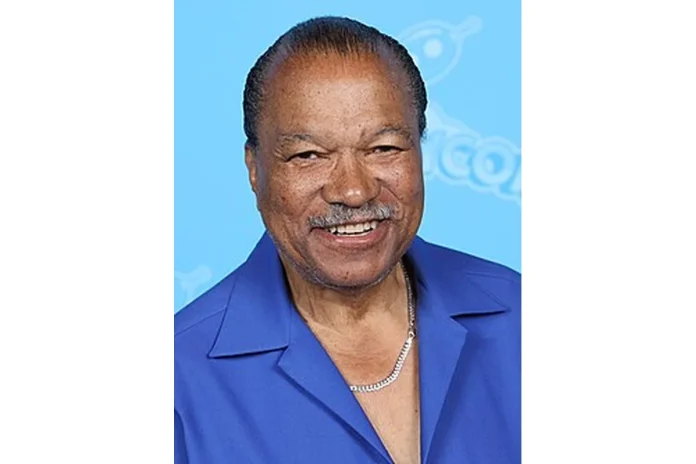
Billy Dee Williams Bio
William December Williams Jr., known professionally as Billy Dee Williams, is an American actor, novelist, and painter whose career has spanned more than six decades. Born on April 6, 1937, in New York City, he has appeared in over 100 films and television productions, becoming one of the most recognizable African-American actors of his generation. He is best known for portraying Lando Calrissian in the Star Wars franchise, as well as memorable roles in Brian’s Song, Lady Sings the Blues, Mahogany, Scott Joplin, Nighthawks, and Batman. Beyond film, Williams has built a respected second career as a visual artist, exhibiting his paintings in galleries and collections across North America and abroad.
Early Life and Background
William December Williams Jr. was born on April 6, 1937, in New York City, the son of Loretta Anne Williams, an elevator operator at the Lyceum Theatre and aspiring performer from Montserrat, and William December Williams Sr., an African-American caretaker with some Native American ancestry from Texas. He grew up in Harlem on 110th Street, between Lenox and Fifth Avenue, adjacent to the Central Park North–110th Street station. He has a twin sister, Loretta, and the two were raised in part by their maternal grandmother while their parents worked several jobs. His mother had studied opera for years, becoming an accomplished performer who wanted to break into movies, and the family was richly cultured, exposing the children early to drawing, painting, theatre, and similar creative experiences.
In March 1945, Williams made his Broadway debut at age seven, portraying a page in the Kurt Weill and Ira Gershwin operetta The Firebrand of Florence, starring Lotte Lenya. He attended Booker T. Washington Junior High School, where he nurtured his dream of becoming a painter. He later graduated in 1955 from the LaGuardia High School of Music & Art and Performing Arts in Manhattan, majoring in visual arts. While there, he earned a two-year scholarship to the National Academy of Fine Arts and Design, where he studied the classical principles of painting and won the Hallgarten Prize in the mid-1950s.
Path to Acting
Although Williams held scholarships that covered his school tuition, he turned to acting to pay for his paints, supplies, and canvases, beginning a long stretch of stage and small-screen work. His first major Broadway break came with the play A Taste of Honey, and he spent roughly a decade working as an extra, taking on small and large theatre roles, and slowly breaking into television and film. During his art school years, he developed an interest in the Stanislavsky Method and began studying at the Harlem Actors Workshop, which was run by blacklisted actor Paul Mann. He also trained there under Sidney Poitier, shaping an approach to the craft that would serve him for decades.
Although he initially viewed acting as a way to fund his art supplies, by the early 1960s Williams had begun to devote all of his energy to performance. In succession, he secured an agent through a friend, started landing major Off-Broadway roles, and then moved on to Broadway. He returned to Broadway as an adult in 1960 in the adaptation of The Cool World, and the same year appeared in A Taste of Honey, building a foundation that would soon translate to film and television stardom.
Billy Dee Williams Career
Early Career (1959–1970)
Williams made his film debut in 1959 in The Last Angry Man, starring opposite Paul Muni and portraying a delinquent young man. The role marked his first major screen appearance and helped introduce him to Hollywood, even if stardom would take several more years. Throughout the 1960s, he grew frustrated by the paucity of leading roles for black men, with most parts he wanted going to Sidney Poitier. He continued to find meaningful work in theatre and television, even as his slow-building film career ate at him.
During this period, Williams also recorded a 1961 jazz LP for Prestige Records titled Let’s Misbehave, on which he covered swing standards and delivered the first-ever vocal recording of A Taste of Honey. The album’s commercial success later earned him a spot on Motown 25: Yesterday, Today, Forever (1983). He also steadily built a presence in the New York stage world, working with the Harlem Actors Workshop and preparing for the breakthrough that would arrive in the next decade.
Breakthrough (1971–1989)
Williams rose to stardom after starring in the critically acclaimed television film Brian’s Song (1971), playing Chicago Bears star Gale Sayers opposite James Caan as Brian Piccolo. Both actors earned Primetime Emmy Award nominations for Best Actor, and Williams has called the role the one of which he was most proud. The success of Brian’s Song earned him a seven-year contract with Motown’s Berry Gordy, launching him as one of America’s most well-known black film actors of the 1970s.
In 1972, he starred as Billie Holiday’s husband Louis McKay in Motown Productions’ Academy Award-nominated biopic Lady Sings the Blues, acting opposite Diana Ross. The New York Times dubbed him the black Clark Gable, and the performance cemented his status as a leading man. Motown paired him with Ross again three years later in the successful follow-up Mahogany. Williams returned to Broadway in 1976, portraying civil rights leader Martin Luther King Jr. in I Have a Dream, directed by Robert Greenwald. In 1977, he played the title role in Scott Joplin, a biopic featuring many of the musician’s ragtime pieces, including an epic piano duel in the opening scenes.
Williams was cast as Lando Calrissian in The Empire Strikes Back (1980), becoming the first African-American actor with a major role in the Star Wars franchise. He reprised the role in Return of the Jedi (1983) and went on to voice the character in the audio drama adaptation of The Empire Strikes Back. Between the two Star Wars films, he starred alongside Sylvester Stallone in the thriller Nighthawks (1981). He returned to Broadway in 1988 as a replacement for James Earl Jones in the role of Troy Maxson in August Wilson’s play Fences. In 1989, he co-starred in Batman as district attorney Harvey Dent, a role originally planned to develop into the villain Two-Face in sequels.
Notable Works and Milestones
Williams’s signature work remains Lando Calrissian, a role he has revisited across films, animated series, video games, and the 2019 film Star Wars: The Rise of Skywalker, marking one of the longest intervals between onscreen portrayals of a character by the same actor in American film history. His collaborations with Motown on Lady Sings the Blues and Mahogany helped define a generation of black cinema, and his performance in Brian’s Song remains a touchstone of television drama. His 1985 star on the Hollywood Walk of Fame and his 1984 induction into the Black Filmmaker’s Hall of Fame cemented his place in entertainment history.
Billy Dee Williams Award Nominations
Williams has earned recognition across his decades-long career, including Primetime Emmy Award nominations and multiple NAACP Image Award nominations for his work in film, television, and stage. His nomination for Best Actor for Brian’s Song (1971) remains one of his most celebrated honors from the television academy, earned alongside co-star James Caan. He has also received nominations for his portrayals in projects such as Lady Sings the Blues and his recurring television roles. His overall nominations reflect sustained peer and industry respect for a body of work that spans genres from drama and biopics to science fiction and comedy.
Billy Dee Williams Awards Won
Williams has received numerous awards and honors throughout his career, including three NAACP Image Awards and the NAACP Lifetime Achievement Award. He was inducted into the Black Filmmaker’s Hall of Fame in 1984 and earned a star on the Hollywood Walk of Fame in 1985. His honors reflect both his on-screen achievements and his broader contributions to the arts, including his parallel work as a painter and cultural figure.
Billy Dee Williams Family
Williams was born to William December Williams Sr. and Loretta Anne Williams, and grew up alongside a twin sister, also named Loretta, in a Harlem household shaped by art, music, and performance. His mother’s background as an aspiring opera performer and his father’s work as a caretaker gave the family a culturally rich environment, with the children exposed early to drawing, painting, and theatre. The family spent time with their maternal grandmother while both parents held multiple jobs to support the household.
Williams is the father of three children. He shares a son, Corey Dee Williams, born in 1960, with his first wife, Audrey Sellers. Through his third wife, Teruko Nakagami, he is the father of a daughter, Hanako, born in 1973. Nakagami also brought a daughter, Miyako, born in 1962, from her previous marriage to musician Wayne Shorter, and Miyako is part of the blended family Williams has spoken about over the years.
Personal Life
Williams has been married three times. His first marriage was to Audrey Sellers in 1959; the couple later divorced. In 1968, he married model and actress Marlene Clark in Hawaii, and they divorced in 1971. He married Teruko Nakagami on December 27, 1972. The couple filed for an amicable divorce in 1993 but later reconciled, and by 1997 they were again living together. In 1984, he bought a Zen-like contemporary home in the Trousdale Estates neighborhood of Beverly Hills, California, which he sold in 2012.
Beyond acting and family life, Williams has long pursued painting, with his work shown in galleries and collections worldwide, and his 1993 self-portrait held at the National Portrait Gallery of the Smithsonian Institution in Washington, D.C. He is the honorary chairman of the Herbie Hancock Institute of Jazz (formerly the Thelonious Monk Institute of Jazz) in Washington, D.C., which has used his artwork each year for its competition programs since 1990. In late 2019, Williams spoke publicly about his feminine side in an interview, using both masculine and feminine pronouns to refer to himself, and clarified that he was referencing the Jungian concepts of anima and animus rather than identifying as gender fluid.