
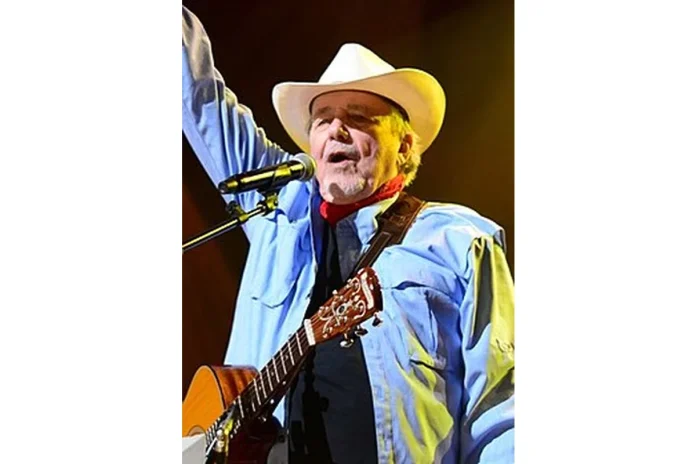
Bobby Bare Bio
Robert Joseph Bare Sr. (born April 7, 1935), known professionally as Bobby Bare, is an American country music singer and songwriter whose career began in the mid-1950s. He first reached a wide audience with the 1959 recording of “The All American Boy” and went on to score major country success with songs such as “(Margie’s At) The Lincoln Park Inn” and the number-one country single “Marie Laveau.” Over the decades, Bare recorded for several major labels, hosted television programs that showcased songwriters, and collaborated with peers in projects like the band Old Dogs. He was inducted into the Country Music Hall of Fame in 2013, reinstated to the Grand Ole Opry in 2018, and continues to perform.
Early Life and Background
Bobby Bare was born Robert Joseph Bare in Ironton, Ohio, on April 7, 1935. He grew up in a working-class community along the Ohio River, an environment that helped shape his love for traditional American music. From a young age, he was drawn to the sounds of country and folk performers he heard on the radio, and he learned to play guitar as a teenager.
In the 1950s, Bare repeatedly tried and failed to sell his original songs to music publishers in the region. Undeterred, he eventually secured a recording contract with Capitol Records, where he cut a handful of unsuccessful rock and roll singles. Just before being drafted into the United States Army, he wrote a song called “The All American Boy” and recorded a demonstration tape for his friend Bill Parsons so that Parsons could learn the song. The label, Fraternity Records, chose to release Bare’s original demo, and the record climbed to number two on the Billboard Hot 100.
Path to Country Music
After his early pop success with “The All American Boy,” Bare turned his attention to country music, the genre in which he would build his lasting reputation. His big break came when legendary producer Chet Atkins signed him to RCA Victor in 1962. His debut single for the label, “Shame on Me,” was followed by the breakthrough hit “Detroit City,” which reached number six on the country chart and number 16 on the Billboard Hot 100.
Throughout the 1960s, Bare built a steady stream of country hits, including “500 Miles Away from Home” and Ian Tyson’s “Four Strong Winds.” He also recorded two duet albums with Skeeter Davis and recorded a trio project with Norma Jean and Liz Anderson that produced a number-five hit, “The Game of Triangles.” These early successes established him as one of country music’s most consistent hitmakers.
Bobby Bare Career
Early Career (1956-1962)
Bare’s professional career began in 1956, and over the next several years he moved between small labels, wrote songs, and honed his craft as a vocalist. His 1959 recording of “The All American Boy” was his first major commercial success, even though Fraternity Records mistakenly credited the single to Bill Parsons. He continued to release rock and roll singles before being drafted into the United States Army.
After completing his military service, Bare redirected his focus to country music. The singles he recorded in this period laid the groundwork for his later signing with RCA Victor, and his growing reputation as a songwriter helped him attract the attention of influential Nashville figures.
Breakthrough (1962-1970)
Signed by Chet Atkins to RCA Victor in 1962, Bare quickly became a chart presence. “Detroit City” earned him a Grammy Award for Best Country and Western Recording in 1964, and he received two further Grammy nominations in 1965 for “Four Strong Winds.” In 1966, he earned another Grammy nomination for Best Country and Western Male Vocal Performance for the song “Talk Me Some Sense.”
His 1969 top-five hit, Tom T. Hall’s “(Margie’s At) The Lincoln Park Inn,” was one of his most beloved recordings. He also recorded with the English group The Hillsiders and made appearances on early 1960s television before deciding to turn his back on Hollywood and focus on his country music career.
Career at Mercury (1970-1972)
Bare moved to Mercury Records in 1970 and scored a top-three hit with “How I Got to Memphis.” He followed that success with two top-10 hits in 1971, both early Kris Kristofferson compositions: “Come Sundown” and “Please Don’t Tell Me How the Story Ends.” In 1972, he released a version of Dr. Hook and the Medicine Show’s pop hit “Sylvia’s Mother,” written by Shel Silverstein, which reached number 12.
Return to RCA Victor (1973-1977)
Bare returned to RCA Victor in 1973 and recorded the Billy Joe Shaver song “Ride Me Down Easy,” which nearly reached the top 10. In 1974, his live recording of “Marie Laveau,” co-written by Shel Silverstein and Baxter Taylor, became his only number-one country hit, and it earned its writers a BMI Award in 1975.
Silverstein penned other songs for Bare, including the Grammy-nominated duet “Daddy What If,” which Bare recorded with his young son, Bobby Bare Jr. The associated album, Sings Lullabys, Legends and Lies, became his most commercially successful release. Other hits of the period included “Alimony” (1975), “The Winner” (1976), and the 1976 Grammy nominee “Drop Kick Me, Jesus (Through the Goalposts of Life).” In 1977, Bare released the album Me and McDill, featuring songs by songwriter Bob McDill.
Career at Columbia (1978-1983)
Signed to Columbia Records, Bare continued to chart with songs like “Sleep Tight Good Night Man” and the Rodney Crowell-produced album As Is, which featured the single “New Cut Road.” In 1979, he helped launch Rosanne Cash’s career with the top-20 duet “No Memories Hangin’ Round.” His 1980 album Down and Dirty included the near top-10 single “Numbers” and marked his first experiments with Southern rock.
His 1983 duet with Lacy J. Dalton, “It’s a Dirty Job,” reached the top 30, and his novelty song “The Jogger” was his last top-30 entry that summer. He also recorded “Used Cars,” the theme song from the film of the same name.
Later Country Career (1983-Present)
From 1983 to 1988, Bare hosted Bobby Bare and Friends on The Nashville Network, where he interviewed songwriters who performed their hits. In 1998, he formed the band Old Dogs with Jerry Reed, Mel Tillis, and Waylon Jennings. As of 2023, he is the last surviving member of the group.
In 2005, he released his first new album in two decades, The Moon Was Blue, produced by his son Bobby Bare Jr. In January and February 2012, Bare joined Petter Øien at the 2012 Melodi Grand Prix, where their song “Things Change” finished third. On April 10, 2013, the Country Music Association announced that Bare would be inducted into the Country Music Hall of Fame, alongside Cowboy Jack Clement and Kenny Rogers.
Notable Works and Milestones
Bobby Bare’s signature recordings include “The All American Boy” (1959), “Detroit City” (1963), “500 Miles Away from Home” (1963), “(Margie’s At) The Lincoln Park Inn” (1969), and “Marie Laveau” (1974). His 1974 number-one country hit earned a BMI Award for its songwriters, and his duet “Daddy What If” with his son received a Grammy nomination. The 2013 Country Music Hall of Fame induction stands as the defining honor of his decades-long career.
Bobby Bare Award Nominations
Bobby Bare has received multiple Grammy Award nominations across his career. They include Best Country and Western Vocal Performance and Best Country and Western Single for “Four Strong Winds” in 1965, Best Country and Western Male Vocal Performance for “Talk Me Some Sense” in 1966, and a nomination for the trio recording “The Game of Triangles.” In 1973, “Daddy What If” earned a nomination, and “Drop Kick Me, Jesus (Through the Goalposts of Life)” was nominated for Best Country Song in 1976.
Bobby Bare Awards Won
Bobby Bare won the Grammy Award for Best Country and Western Recording in 1964 for “Detroit City.” In 1975, his songwriters Shel Silverstein and Baxter Taylor received a BMI Award for “Marie Laveau.” In 2013, he was inducted into the Country Music Hall of Fame, and on April 7, 2018, he was reinstated as a member of the Grand Ole Opry by Garth Brooks.
Bobby Bare Family
Bobby Bare is the father of musician Bobby Bare Jr., who has followed in his father’s footsteps as a recording artist and produced the 2005 album The Moon Was Blue. Bare is married to his wife, Jeannie Bare, with whom he recorded the duet “Vegas” in 1977. Bobby Bare Jr. joined his father on the 1973 recording of “Daddy What If,” which became a Grammy-nominated country hit.
Personal Life
Outside of music, Bobby Bare has largely kept his personal life private. He has been married to his wife Jeannie, and the couple occasionally collaborated in the studio. He has spent much of his life based in Tennessee, close to the Nashville music community that shaped his career. He continues to perform and tour.