Bong Joon Ho Bio
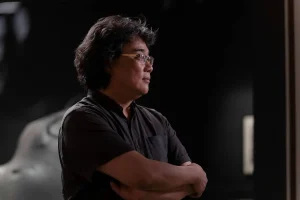
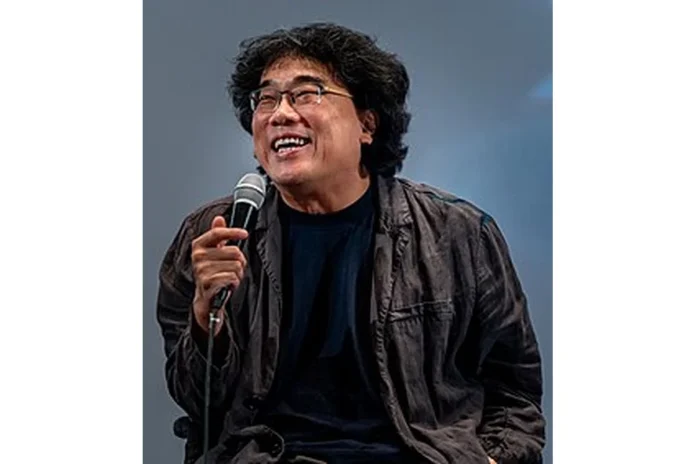
Bong Joon Ho (born September 14, 1969) is a South Korean filmmaker whose work has reshaped contemporary world cinema. Known for genre-mixing storytelling, dark comedy, and a sharp focus on social class, he has built a reputation as one of the most distinctive directors of his generation. His films routinely examine inequality, family bonds, and the friction between ordinary people and the systems around them.
Over a career that began in the mid-1990s, Bong Joon Ho has written, directed, and produced films that have resonated with both critics and global audiences. He earned international recognition with Memories of Murder and The Host before reaching an extraordinary peak with Parasite, the first non-English language film to win the Academy Award for Best Picture.
Early Life and Background
Bong Joon Ho was born on September 14, 1969, in the Bongheok-dong neighborhood of Daegu, South Korea. He has three older siblings. His mother, Park So-young, was a housewife, while his father, Bong Sang-gyun, worked as a graphic designer and industrial designer. Bong Sang-gyun also served as a professor of art at Yeungnam University and headed the art department at the National Film Institute, giving the young Bong an early connection to visual culture.
Bong’s maternal grandfather, Park Taewon, was a respected author during the Japanese colonial period, best known for the novel A Day in the Life of Kubo the Novelist and for defecting to North Korea in 1950. Raised as a Catholic, Bong was given the Christian name Michael. When he was in elementary school, the family relocated to Seoul and settled in Jamsil-dong, near the Han River, an area that would later inspire key imagery in his films.
During his third year at Jamsil High School in 1987, Bong was reportedly startled by a vision of what he believed to be a monster crawling up a pillar of the Jamsil Bridge and falling into the Han River. Already dreaming of becoming a film director, he vowed to make a movie about a creature living around the river. He would fulfill that promise nearly two decades later with The Host.
Path to Filmmaking
In 1988, Bong Joon Ho enrolled at Yonsei University, where he majored in sociology. He also studied the English language, later crediting the films of Spike Lee with teaching him English profanity. The university was a hotbed of the South Korean democracy movement, and Bong took part in student demonstrations during his early college years, often encountering tear gas at protests.
After completing a two-year term of compulsory military service, Bong returned to Yonsei in 1992. He co-founded a film club called Yellow Door with students from neighboring universities, and through that group produced his earliest short films, including the stop-motion work Looking for Paradise and the 16 mm short Baeksaekin (White Man). He graduated from Yonsei University in 1995.
Bong then enrolled in the two-year program at the Korean Academy of Film Arts, where he made several 16 mm shorts. His graduation films, Incoherence and Memories in My Frame, were invited to screen at the Hong Kong International Film Festival and the Vancouver International Film Festival. These projects established his early voice as a filmmaker and opened the door to feature work.
Bong Joon Ho Career
Early Career (1994–2005)
During his time at the Korean Academy of Film Arts, Bong Joon Ho took on collaborative roles across several shorts, serving as cinematographer on the acclaimed short 2001 Imagine and as a lighting technician on The Love of a Grape Seed and Sounds From Heaven and Earth. He earned screenplay credit on the anthology film Seven Reasons Why Beer is Better Than a Lover and worked as both screenwriter and assistant director on Park Ki-yong’s debut Motel Cactus, before co-writing Phantom: The Submarine.
His first feature, Barking Dogs Never Bite, was shot in 1999 and released in February 2000 under producer Cha Seung-jae. The dark comedy centers on a low-ranking university lecturer who abducts a neighbor’s dog. Though the film drew limited commercial interest at home, it earned strong reviews, competed at the San Sebastián International Film Festival, and won awards at the Slamdance Film Festival and the Hong Kong International Film Festival.
Breakthrough (2003–2019)
Bong’s second feature, Memories of Murder, was released in April 2003 and marked a major leap forward. Adapted from a stage play about a real serial killer case from the 1980s, the crime thriller drew more than five million viewers in South Korea, rescued producer Cha Seung-jae’s company Sidus from near-bankruptcy, and won Best Picture, Best Director, Best Actor, and Best Lighting at the Grand Bell Awards.
The Host (2006) elevated his scale even further. The big-budget monster film, in which a creature rises from the Han River to terrorize Seoul, premiered in the Directors’ Fortnight at the 2006 Cannes Film Festival, set a domestic box-office record with 13 million tickets sold, and was bought by Universal for remake rights. Bong followed it with the anthology segment Tokyo! (2008), the thriller Mother (2009), and his first English-language film, Snowpiercer (2013), a science fiction action piece based on the French graphic novel Le Transperceneige.
Okja (2017), a co-production with Netflix, screened in competition at the 2017 Cannes Film Festival and sparked debate over streaming distribution. Bong then returned to Korean-language filmmaking with Parasite (2019), a dark comedy thriller about a poor family infiltrating a wealthy household. The film premiered at the 2019 Cannes Film Festival, where it won the Palme d’Or as the first South Korean film to receive the award and the first to win it by unanimous vote since 2013.
Notable Works and Milestones
Across his career, Bong Joon Ho’s signature films include Memories of Murder (2003), The Host (2006), Snowpiercer (2013), Okja (2017), and Parasite (2019). Parasite stands as his defining milestone, winning the Palme d’Or, the Academy Award for Best Picture, the Academy Award for Best Director, and the Academy Award for Best Original Screenplay, the last shared with Han Jin-won. It became the highest-grossing South Korean film in history and remains a landmark moment for non-English language cinema worldwide.
Bong Joon Ho Award Nominations
Bong Joon Ho has received nominations across major international film bodies throughout his career. He earned nominations for Best Director and Best Screenplay at the 77th Golden Globe Awards, where Parasite itself won Best Foreign Language Film, marking the first Golden Globe nomination and win for any South Korean film. At the 73rd British Academy Film Awards, Parasite received nominations in four categories, winning two, and the cast of Parasite won the Screen Actors Guild Award for Outstanding Performance by a Cast in a Motion Picture, making it the first foreign-language film to win in that category.
Bong Joon Ho Awards Won
Bong Joon Ho has won three Academy Awards, two British Academy Film Awards, and five Asian Film Awards, among many other honors. His feature debut Barking Dogs Never Bite won awards at the Slamdance Film Festival and the Hong Kong International Film Festival, and Memories of Murder swept the Grand Bell Awards in 2003. Mother earned Kim Hye-ja the Los Angeles Film Critics Association Award for Best Actress. Parasite won the Palme d’Or at the 2019 Cannes Film Festival and four Academy Awards, including Best Picture and Best Director. In 2020, Bong was named one of Time’s 100 most influential people in the world and was included on the Bloomberg 50.
Bong Joon Ho Family
Bong Joon Ho’s father, Bong Sang-gyun, was a graphic designer, industrial designer, and professor of art who headed the art department at the National Film Institute before retiring from Seoul Institute of the Arts in 2007. His mother, Park So-young, was a housewife. His maternal grandfather, Park Taewon, was a celebrated author known for A Day in the Life of Kubo the Novelist. Bong’s older brother, Bong Joon-soo, is an English professor at Seoul National University, and his older sister, Bong Ji-hee, teaches fashion styling at Anyang University.
Personal Life
Bong Joon Ho married screenwriter Jung Sun-young in 1995. The couple has one son, Bong Hyo-min, who is also a filmmaker. Bong has been active in civic causes throughout his career, supporting the now-defunct Democratic Labor Party in the 2000s before joining its successor, the New Progressive Party, in 2008, and voting for that party in the 2012 South Korean presidential election. In December 2024, he joined approximately 2,520 South Korean film industry employees calling for the impeachment and arrest of President Yoon Suk Yeol following the declaration of martial law.