
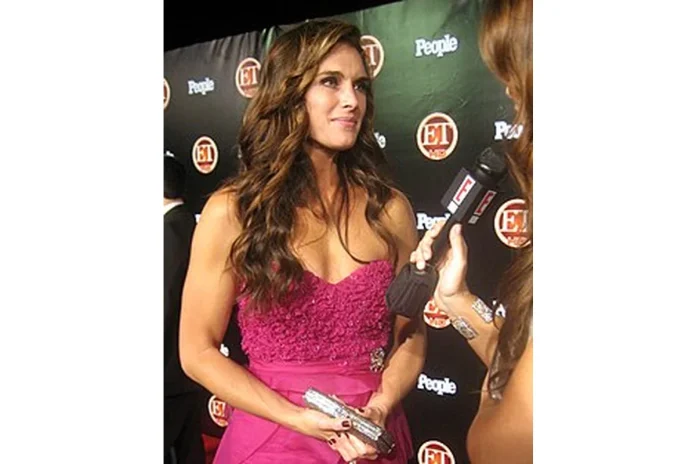
Brooke Shields Bio
Brooke Christa Shields, born May 31, 1965, in New York City, is an American actress and former child model who rose to prominence in the 1970s and 1980s through acclaimed and controversial roles that highlighted both her beauty and acting range. She began modeling at 11 months old, gaining early fame through national advertising campaigns and high-profile film projects such as Pretty Baby, The Blue Lagoon, and Endless Love, while navigating intense media scrutiny. Shields attended Princeton University, earning a Bachelor of Arts degree in Romance Languages, and later built a versatile career across film, television, and stage, including lead roles on Broadway and her hit NBC series Suddenly Susan. She has served as president of the Actors’ Equity Association, authored books, and remains active in entertainment and advocacy.
Early Life and Background
Brooke Christa Shields was born in Manhattan, New York City, on May 31, 1965, the daughter of actress and model Teri Shields and businessman Francis Alexander Shields. Her mother was of English, German, Scotch-Irish, and Welsh descent, while her father had English, French, Irish, and Italian ancestry. Her paternal grandmother was Italian noblewoman Marina Torlonia di Civitella-Cesi, giving Shields ancestral links to a number of noble Italian families. Her parents married, but they divorced when Shields was only five months old, and she was raised primarily by her mother.
When Shields was only five days old, her mother openly stated she wanted her to be active in show business, describing her as the most beautiful child and pledging to help with her career. Growing up, Shields took piano, ballet, and horse-riding lessons and was raised in the Roman Catholic faith, taking the confirmation name Camille at age 10. She was a childhood friend of actress Laura Linney and attended the New Lincoln School in New York City until eighth grade. She later graduated from the Dwight-Englewood School in Englewood, New Jersey, in 1983.
Path to Acting
Shields began her career as a model when she was 11 months old, photographed by Francesco Scavullo for Ivory Soap. She continued as a successful child model with agent Eileen Ford, who started her agency’s children’s division largely for Shields. Her first television appearance came in the 1974 adaptation of Arthur Miller’s play After the Fall, followed by her feature film debut in the horror film Alice, Sweet Alice (1976), in which she was cast after director Alfred Sole saw her in a Vogue advertisement. She also worked with director Woody Allen on Annie Hall (1977), although her scene was ultimately cut from the final edit.
In 1977, Shields and her mother appeared on the cover of New York Magazine in a story that addressed Shields’s career as a young model. The cover headline asked readers to meet Teri and Brooke Shields, noting that Brooke was twelve, posed nude, and that her mother thought it was swell. The attention placed Shields at the center of a national conversation about childhood, modeling, and the media.
Brooke Shields Career
Early Career (1966–1977)
During her first decade in the public eye, Shields became one of the most recognized child models in the United States, appearing in major advertising campaigns and magazine editorials. Her early film work included Alice, Sweet Alice, which was later re-released in 1981 to capitalize on her rising fame. By her early teenage years, she had already accumulated significant magazine covers and commercial work that established her as a household name.
Shields won the People’s Choice Award in the category of Favorite Young Performer in four consecutive years from 1981 to 1984, reflecting her widespread popularity with audiences. During this same period, she starred in a public service announcement sponsored by the American Lung Association encouraging public figures to advocate against smoking.
Breakthrough (1978–1981)
The 11-year-old Shields was cast as the lead in French director Louis Malle’s Pretty Baby (1978), playing a child named Violet who lived in a brothel, the daughter of a prostitute played by Susan Sarandon. The film included nude scenes featuring Shields and prompted significant controversy, with some critics labeling it child pornography and the film being banned in several countries and Canadian provinces. The attention marked Shields as a major cultural figure and set the tone for much of her early career.
In 1980, Shields became the youngest fashion model ever to appear on the cover of Vogue, and that same year she appeared in controversial print and television advertisements for Calvin Klein jeans that included her famous tagline, “You want to know what comes between me and my Calvins? Nothing.” She next starred as a lead in The Blue Lagoon (1980), which included nude scenes between teenage lovers stranded on a tropical island, and in 1981 she starred in Franco Zeffirelli’s drama Endless Love, a film initially rated X by the MPAA before being re-edited for an R rating.
Notable Works and Milestones
Shields played a romantic lead in the adventure film Sahara (1983), earning a reported fee of $1 million or $1.5 million, although the film was a critical and financial failure. For Sahara, she earned the unusual distinction of being the only actress ever to win the Golden Raspberry Award for Worst Supporting Actor at the 1984 Razzies, where she was also nominated for Worst Actress. In the 1990s, she returned to acting with notable television work, starring as the title character in the NBC sitcom Suddenly Susan from 1996 to 2000, a role that earned her two Golden Globe nominations and a People’s Choice Award for Favorite Female Performer in a New Television Series.
Brooke Shields Award Nominations
Brooke Shields has received a number of notable award nominations across her career in film and television. In 1984, she was nominated at the Golden Raspberry Awards for Worst Actress for her work in Sahara. She later received two Golden Globe nominations for her starring role in the NBC sitcom Suddenly Susan (1996–2000), a performance that helped re-establish her as a leading television actress.
Brooke Shields Awards Won
Brooke Shields has won several major audience-voted awards over the course of her career. She received the People’s Choice Award for Favorite Young Performer in four consecutive years from 1981 to 1984. In 1984, she also won the Golden Raspberry Award for Worst Supporting Actor for Sahara, a category historically dominated by male recipients, making her the only actress to have won that particular Razzie. In 1997, she won the People’s Choice Award for Favorite Female Performer in a New Television Series for Suddenly Susan.
| Award | Wins | Year |
|---|---|---|
| People’s Choice Awards – Favorite Young Performer | 1 | 1981 |
| People’s Choice Awards – Favorite Young Performer | 1 | 1982 |
| People’s Choice Awards – Favorite Young Performer | 1 | 1983 |
| People’s Choice Awards – Favorite Young Performer | 1 | 1984 |
| Golden Raspberry Awards – Worst Supporting Actor | 1 | 1984 |
| People’s Choice Awards – Favorite Female Performer in a New Television Series | 1 | 1997 |
Brooke Shields Family
Shields is the daughter of businessman Francis Alexander Shields and actress and model Teri Shields. Her parents divorced when she was five months old, and she was raised primarily by her mother, who managed her early career in modeling and acting. Her paternal grandmother was Italian noblewoman Marina Torlonia di Civitella-Cesi, and through her father’s ancestry Shields has documented links to several European noble families, including the Torlonia, Chigi-Albani, Doria-Pamphili-Landi, and Savoy dynasties.
Personal Life
Shields has been married twice. She married tennis champion Andre Agassi in 1997, and the couple divorced in 1999. In 1999, she met television writer Chris Henchy through mutual friends, and the pair married in 2001. Together they have two daughters, Rowan Francis Henchy, born May 15, 2003, and Grier Hammond Henchy, born April 18, 2006. As of recent public records, the family has lived in Greenwich Village, New York City. In her 2006 memoir Down Came the Rain, Shields publicly discussed her experience with postpartum depression, an experience that contributed to broader public awareness of the condition.