
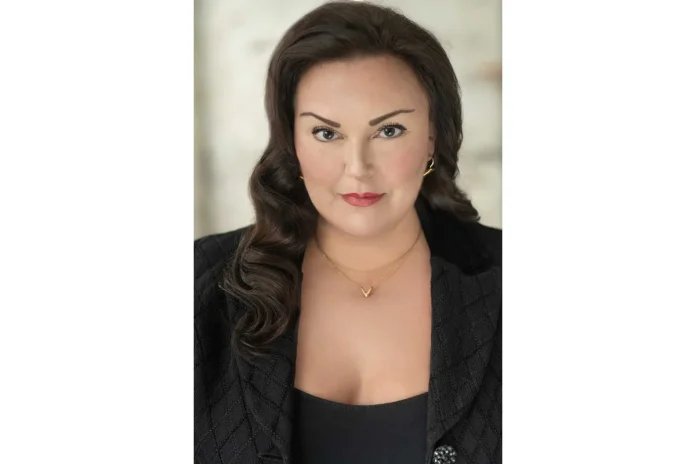
Cheryl Studer Bio
Cheryl Studer (born 24 October 1955) is an American dramatic soprano recognized for her commanding interpretations of Richard Strauss and Richard Wagner. Over a career spanning more than four decades, she has performed at most of the world’s leading opera houses, including the Metropolitan Opera, the Bavarian State Opera, La Scala, the Royal Opera House Covent Garden, the Vienna State Opera and the Bayreuth Festival. She is equally celebrated for her work in recital and concert repertoire, with a discography that captures her broad stylistic range. In recent years she has also transitioned into lower-voiced roles, teaching and master classes while continuing to appear on the international stage.
Early Life and Background
Cheryl Studer was born on 24 October 1955 in Midland, Michigan, to Carl W. Studer and Elizabeth (born Smith) Studer, and was one of three children. Growing up in the small Midwestern city, she studied piano and viola as a child and began voice lessons at age 12 with Gwendolyn Pike, a local opera singer and voice teacher. Her early musical training gave her a solid foundation before she pursued formal studies at the high school and conservatory level.
She attended Herbert Henry Dow High School before transferring to the Interlochen Arts Academy for her junior and senior years, graduating in 1974. Following high school, Studer studied at the Oberlin Conservatory of Music but left the program after a year, moving with her family to Tennessee. She continued her studies at the University of Tennessee at Knoxville and graduated with a Bachelor’s degree in Vocal Performance in 1979. During her student years she earned several early distinctions, including the High Fidelity/Musical America Award in 1977 and the Metropolitan Opera National Council Auditions in 1978.
In the summer of 1979, Studer attended a course for foreign students on the art of the German Lied at the Schubert Institute in Baden bei Wien, Austria, where her teachers included Irmgard Seefried, Brigitte Fassbaender and Hans Hotter. Hotter persuaded her to remain in Europe, and she studied with him for one year at the Hochschule für Musik und darstellende Kunst in Vienna before launching her professional career. She also received the Franz-Schubert-Institut-Preis for excellence in Lied interpretation in 1979.
Path to Opera Singer
In 1981, Cheryl Studer was hired as a permanent member of the Bavarian State Opera by Wolfgang Sawallisch, marking her entry into the professional opera world. She remained with the company for two consecutive seasons, singing mostly minor roles before taking on lead parts such as the title role in Carl Maria von Weber’s Euryanthe and Mařenka in The Bartered Bride. Working with the Bavarian State Opera introduced her to the dramatic soprano repertoire and the works of Richard Wagner, a turning point that shaped the rest of her artistic life.
At the end of the 1981–82 season she joined the Staatstheater Darmstadt for two seasons, and in the spring of 1983 she took her first major role as Violetta in Verdi’s La traviata with the Staatstheater Braunschweig. In 1984 she became a permanent member of the Deutsche Oper Berlin ensemble and made her United States opera debut that same year with the Lyric Opera of Chicago as Micaëla in Carmen. By the mid-1980s her career had shifted decisively toward the major German and Wagnerian repertoire.
Cheryl Studer Career
Early Career (1981–1985)
Studer’s earliest professional years were spent in German opera houses, where she built a versatile foundation across German, Italian and Czech repertoire. Her first major breakthrough role came in 1985, when she performed as Elisabeth in Wagner’s Tannhäuser under Giuseppe Sinopoli at the Bayreuth Festival. The performance earned strong reviews and quickly led to more prominent leading engagements throughout Europe.
During this period she also made her United States debut at the Lyric Opera of Chicago, her debut at Opéra de Paris as Pamina in Mozart’s Die Zauberflöte, and her San Francisco Opera debut as Eva in Wagner’s Die Meistersinger. She also became a permanent member of the Deutsche Oper Berlin ensemble, expanding her dramatic range while preparing for the major Wagnerian assignments of the next decade.
Breakthrough (1986–1999)
The late 1980s saw Studer establish herself among the leading dramatic sopranos of her generation. In 1987 she debuted at the Royal Opera House, Covent Garden, as Elisabeth in Tannhäuser and at La Scala as Donna Anna in Mozart’s Don Giovanni. The following year she made her Metropolitan Opera debut as Micaëla in Bizet’s Carmen and returned to La Scala as Mathilde in Rossini’s William Tell. In 1989 she made her Vienna State Opera and Salzburg Festival debuts as Chrysothemis in Strauss’ Elektra and received the Grand Prix du Disque – Prix Maria Callas.
Throughout the 1990s she continued to expand her repertoire at the highest level. Major appearances included Elsa in Lohengrin at the Vienna State Opera, Countess Almaviva in Le nozze di Figaro, the Marschallin in Der Rosenkavalier at the Salzburg Festival, Arabella at the Royal Opera and the Zürich Opera, Leonore in Beethoven’s Fidelio at the Salzburg Festival under Sir Georg Solti, and Senta in Der fliegende Holländer at the Bayreuth Festival in 1998 and 1999. A brief period of vocal problems in the late 1990s led the Bavarian State Opera to cancel her contracts in 1998, but after a period of rest she returned to form and the company renewed her contract for fourteen more performances.
In 2000 she sang Richard Strauss’ Four Last Songs with the Berlin Philharmonic under David Zinman, stepping in for an ailing Claudio Abbado, and returned to the Metropolitan Opera for the Marschallin in Der Rosenkavalier. In February 2002 she sang Isolde’s Liebestod with the Indianapolis Symphony, and in January 2003 she sang the soprano part in Beethoven’s Symphony No. 9 in Berlin during UNESCO’s official designation of the manuscript as Memory of the World. The early 2000s also brought her first complete Isolde in concert in Münster in 2004 and her appearance in Richard Wagner’s first Ring Cycle in China at Beijing’s Poly Theatre in 2005.
Notable Works and Milestones
Studer is particularly known for her portrayals of Strauss heroines such as the Marschallin in Der Rosenkavalier, the Kaiserin in Die Frau ohne Schatten, the title role in Arabella and Chrysothemis in Elektra, as well as Wagnerian roles including Elsa, Elisabeth, Sieglinde, Senta and Isolde. She can be heard singing the Ave Maria from Verdi’s Otello on the soundtrack of the 2001 Hollywood film O. In 2011 she received the Terras sam Sombra International Prize, and in 2012 she was honored with the Ovation Award by the Interlochen Center for the Arts.
Cheryl Studer Award Nominations
Cheryl Studer has been recognized by international competitions and music institutions throughout her student years and professional career, including the High Fidelity/Musical America Award and the Metropolitan Opera National Council Auditions during her training, the Franz-Schubert-Institut-Preis in 1979, the Grand Prix du Disque – Prix Maria Callas in 1989, the Ovation Award of the Interlochen Center for the Arts in 2012, and the Terras sam Sombra International Prize in 2011. Her competition record from her earliest years in Vienna and Tennessee helped secure her entry into the major European opera houses.
Cheryl Studer Awards Won
Cheryl Studer has received several distinguished honors across her training, performing and teaching career. She won the High Fidelity/Musical America Award in 1977, the Metropolitan Opera National Council Auditions in 1978 and the Franz-Schubert-Institut-Preis in 1979. In 1989 she received the Grand Prix du Disque – Prix Maria Callas for her recording work. Later recognitions include the Ovation Award from the Interlochen Center for the Arts in 2012 and the Terras sam Sombra International Prize in 2011.
Cheryl Studer Family
Cheryl Studer was born to Carl W. Studer and Elizabeth (born Smith) Studer and was one of three children raised in Midland, Michigan. She is married to Greek tenor Michalis Doukakis and has lived in Germany for most of her adult life. From previous marriages, Studer has two daughters, Elsa and Senta, whose names are drawn from characters in Richard Wagner operas.
Personal Life
Cheryl Studer is married to Greek tenor Michalis Doukakis and has spent most of her life based in Germany. She has two daughters, Elsa and Senta, from previous marriages. In addition to her performing schedule she has taught at the University of Music in Würzburg for eighteen years from 2003 to 2021, serves as an honorary professor at the Central Conservatory of Music in Beijing, and conducts a yearly series of master classes and opera workshops at her own North Aegean Music Festival on the island of Lesbos, Greece. She continues to give master classes internationally in the United States, Greece, South Korea, China, Spain, Italy and Germany.