
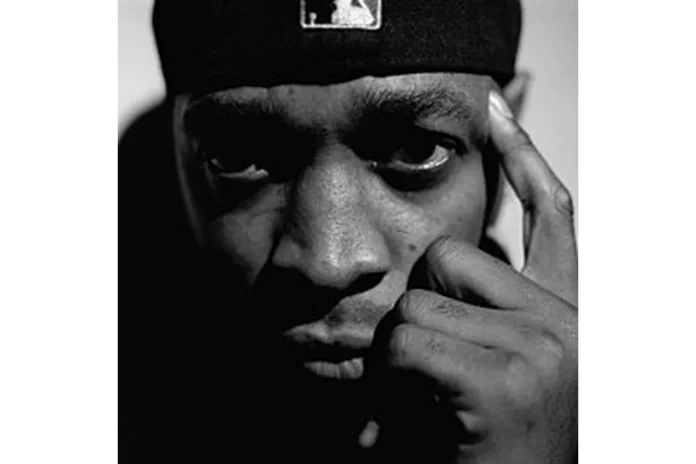
Chuck D Bio
Carlton Douglas Ridenhour, known professionally as Chuck D, is an American rapper, songwriter, and activist recognized as the leader and frontman of the hip-hop group Public Enemy. Born on August 1, 1960, in Hempstead, New York, he helped define politically and socially conscious hip-hop during the late 1980s and early 1990s. Beyond music, he has built a parallel career as a cultural commentator, publisher, and community advocate.
Chuck D first gained widespread attention as co-founder of Public Enemy with William Drayton Jr., better known as Flavor Flav, in 1985. His powerful, resonant voice and dense political lyrics influenced a generation of hip-hop artists, and he has continued to release solo work and collaborate across genres. He is also a member of the rock supergroup Prophets of Rage and was inducted into the Rock and Roll Hall of Fame in 2013 as a member of Public Enemy.
Early Life and Background
Carlton Douglas Ridenhour was born on August 1, 1960, on Long Island, New York, and grew up in the Hempstead area. As a child, he was surrounded by music at home, with his mother playing Motown records and showtunes while his father maintained a membership in the Columbia Record Club. These early listening experiences shaped his lifelong appreciation for both popular song and carefully crafted lyrics.
Ridenhour began writing his own lyrics in the aftermath of the New York City blackout of 1977, using the moment as a turning point to channel his thoughts onto paper. He attended W. Tresper Clarke High School in Westbury, where he received no formal music education despite his growing interest in the art form. After graduating, he enrolled at Adelphi University on Long Island to study graphic design.
It was at Adelphi that he met William Drayton Jr., who would later become Flavor Flav, and the two bonded over their shared passion for hip-hop. He earned a Bachelor of Fine Arts from Adelphi in 1984 and later received an honorary doctorate from the same university in 2013. During his college years, he co-hosted a Saturday-night hip-hop radio show called the Super Spectrum Mix Hour on Long Island rock station WLIR, designed flyers for local hip-hop events, and drew a cartoon titled Tales of the Skind for the Adelphi student newspaper The Delphian.
Path to Music
After completing his studies, Ridenhour worked as a delivery driver for a custom color photo lab in West Hempstead called EPD Color Services while continuing to pursue music on the side. He recorded a demo track titled Public Enemy Number One that caught the attention of fledgling producer Rick Rubin, who signed him to his newly formed Def Jam Records. This connection provided the launchpad for one of the most influential groups in hip-hop history.
In 1985, Ridenhour officially formed Public Enemy with Flavor Flav, drawing on their shared interest in politically charged lyricism and high-energy performances. The group was quickly signed to Def Jam, setting the stage for a string of landmark releases. Ridenhour adopted the stage name Chuck D, and the act became a defining voice of mid-1980s hip-hop.
Chuck D has cited Melle Mel and sportscasters such as Marv Albert as key influences on his distinctive vocal style. He often begins a song by drafting a title first, then writes lyrics on paper before occasionally refining them on a computer. He prefers to avoid punching in or overdubbing vocals, favoring the energy of complete, uninterrupted takes.
Chuck D Career
Early Career (1984–1987)
Chuck D began his recording career in 1984, releasing early demo material while still active on the college radio circuit with the Super Spectrum Mix Hour. The breakout of those demo sessions, including Public Enemy Number One, drew the attention of Def Jam Records founder Rick Rubin. By 1985, he had formally co-founded Public Enemy with Flavor Flav, and the group soon became one of Def Jam’s flagship acts.
The group’s first major-label album, Yo! Bum Rush the Show, arrived in 1987 and announced Public Enemy as a new force in hip-hop. Chuck D’s dense political rhymes and commanding delivery stood out immediately, helping to differentiate the group from many of its contemporaries and earning it a loyal underground following before broader mainstream recognition arrived.
Breakthrough (1988–1994)
Public Enemy’s second album, It Takes a Nation of Millions to Hold Us Back, was released in 1988 and is widely regarded as one of the most important hip-hop records ever made. The album fused dense production from The Bomb Squad with Chuck D’s politically charged lyricism, elevating the group to international acclaim. It set a new standard for what hip-hop could address and how it could sound.
In 1990, the group followed up with Fear of a Black Planet, an ambitious record that expanded on the themes of race, identity, and resistance. The album featured the iconic single Fight the Power, which became an anthem after its use in Spike Lee’s film Do the Right Thing. Subsequent releases, including Apocalypse 91… The Enemy Strikes Black in 1991, the compilation Greatest Misses in 1992, and Muse Sick-n-Hour Mess Age in 1994, sustained the group’s relevance through the early 1990s.
In addition to group work, Chuck D expanded his creative reach through high-profile collaborations. In 1990, he appeared on Sonic Youth’s single Kool Thing, bringing his voice into alternative rock circles. He has also worked as a featured artist with artists such as Janet Jackson, Kool Moe Dee, Run-D.M.C., Ice Cube, Rage Against the Machine, Anthrax, and John Mellencamp. In 1993, he served as executive producer for Got ‘Em Running Scared, an album by Ichiban Records group Chief Groovy Loo and the Chosen Tribe.
Notable Works and Milestones
Chuck D’s signature works remain It Takes a Nation of Millions to Hold Us Back (1988) and Fear of a Black Planet (1990), both of which are routinely cited among the greatest hip-hop albums of all time. In 1996, he released his solo debut Autobiography of Mistachuck on Mercury Records, further establishing his individual voice. He was inducted into the Rock and Roll Hall of Fame in 2013 as a member of Public Enemy, and he has received the Grammy Lifetime Achievement Award as part of the group. The Source ranked him at number 12 on its list of the Top 50 Hip-Hop Lyricists of All Time.
Chuck D Award Nominations
Chuck D has been nominated for six Grammy Awards across his career as a performer and songwriter, with multiple nods tied to Public Enemy’s landmark albums. These nominations reflect the consistent critical recognition he has received for both group and individual work. Specific category-level details for individual nominations are not fully verified in available sources, so they are summarized here at the aggregate level.
Chuck D Awards Won
As a member of Public Enemy, Chuck D received the Grammy Lifetime Achievement Award, honoring the group’s lasting impact on music and culture. He was inducted into the Rock and Roll Hall of Fame in 2013 as part of Public Enemy. He has continued to receive recognition for his cultural contributions beyond traditional music awards, including being named a US Global Music Ambassador through a program established by the US State Department and YouTube.
Chuck D Family
Chuck D has said on Twitter that he is the maternal great-grandson of architect George Washington Foster. He grew up on Long Island with parents who fostered his early appreciation for music, including Motown records and showtunes played by his mother and a Columbia Record Club membership maintained by his father. Specific details about siblings and other extended family members are not consistently documented in available sources.
Personal Life
Chuck D does not drink alcohol. As of June 2023, he has three children: two oldest, aged 34 and 30, with his first ex-wife Deborah McClendon, and a youngest, aged 12, with his second ex-wife Gaye Theresa Johnson. He lives in California and lost his home in the Thomas Fire that occurred from December 2017 to January 2018. Outside of music, he has narrated podcasts and voiced characters in video games, including Grand Theft Auto: San Andreas and NBA Ballers: Chosen One.