
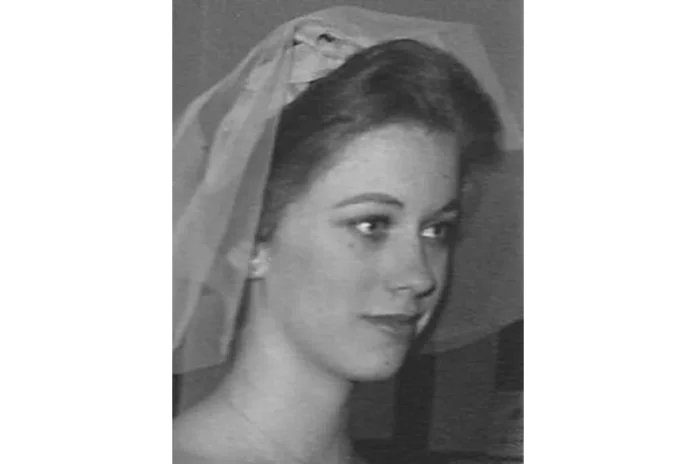
Connie Booth Bio
Constance Booth Bollinger, known professionally as Connie Booth, is a retired American actress, writer, and psychotherapist born on December 2, 1940, in Indianapolis, Indiana. She is best known for co-writing and starring in the British television series Fawlty Towers with her then-husband John Cleese, where she played the role of Polly Sherman. After leaving acting in 1995, Booth retrained and worked for many years as a psychotherapist in London. Her career, though brief on screen, left a lasting mark on British comedy through her sharp writing and performance.
Beyond Fawlty Towers, Booth appeared in several early Monty Python projects, including Monty Python’s Flying Circus and the films And Now for Something Completely Different and Monty Python and the Holy Grail. She also built a steady career in British television and West End theatre before stepping away from public performance to pursue a quieter professional life.
Early Life and Background
Booth was born Constance Booth Bollinger in Indianapolis, Indiana, on December 2, 1940. Her father, Elmer Edward Bollinger, was a Wall Street stockbroker, and her mother, Virginia Caylor Bollinger, was an actress. She had an elder brother named Conrad Booth Bollinger. The family later moved to New York State, where Booth spent much of her formative years.
Growing up in a household that combined finance and the performing arts, Booth developed an early interest in acting. She entered the theatre world by working as a Broadway understudy, supporting herself with work as a waitress while she trained and auditioned. It was during this period in New York City that she met John Cleese, who was also working in the city at the time.
Path to Actress
Booth began her professional career in 1968, the same year she married Cleese on February 20, 1968. Her first notable screen credit came in the 1968 film How to Irritate People, a pre-Monty Python production that starred Cleese alongside other future members of the comedy group. This early collaboration helped introduce her to the British comedy scene and the circle of performers who would shape her career.
She went on to take small roles in episodes of Monty Python’s Flying Circus between 1969 and 1974, including appearances in the German episode. These projects gave her valuable experience writing and performing for television. Her growing partnership with Cleese eventually led to the creation of Fawlty Towers, the project that would define her work for decades to come.
Connie Booth Career
Early Career (1968–1974)
Booth’s earliest work included her appearance in the 1968 film How to Irritate People and guest spots on Monty Python’s Flying Circus starting in 1969. She also featured in the 1971 Python film And Now for Something Completely Different. These roles were typically small but placed her at the heart of a creative community that was reshaping British comedy.
In 1974, she starred alongside Cleese in the short film Romance with a Double Bass, which Cleese adapted from a short story by Anton Chekhov. The collaboration showed her range as a performer and deepened her working relationship with Cleese, setting the stage for the major project they would co-create the following year.
Breakthrough (1975–1979)
Booth’s career-defining moment came in 1975 with the launch of Fawlty Towers on BBC Two. She co-wrote the series with Cleese and starred as Polly Sherman, an art student and chambermaid at the chaotic hotel run by Cleese’s character, Basil Fawlty. The show became an instant classic of British comedy and earned her recognition as both a writer and a performer.
The first series was followed by a second series in 1979, which Booth also co-wrote and starred in. She played a wide range of other roles during this period, including Sophie in Dickens of London in 1976 and Mrs. Hudson in Cleese’s 1977 Sherlock Holmes parody, The Strange Case of the End of Civilization as We Know It. She also took the lead role in the 1981 drama The Story of Ruth, where she played a schizophrenic daughter of an abusive father, demonstrating her willingness to take on serious dramatic work.
Later television credits included Mrs. Errol in the BBC adaptation of Little Lord Fauntleroy in 1980, Miss March in the 1995 dramatisation of Edith Wharton’s The Buccaneers, and a supporting role in the 1994 children’s science fiction episode of The Tomorrow People. In 1975, she also appeared in Monty Python and the Holy Grail as a woman accused of being a witch.
Booth maintained a parallel stage career, primarily in London theatre. She appeared in ten productions from the mid-1970s through the mid-1990s, including a notable 1983–1984 West End run at Wyndham’s Theatre in Little Lies, co-starring with John Mills. For roughly thirty years after Fawlty Towers ended, she declined most interview requests about the show before agreeing to take part in a 2009 documentary about the series for the digital channel Gold.
Notable Works and Milestones
Booth’s signature work remains Fawlty Towers, which she co-wrote and starred in across its two series in 1975 and 1979. Her role as Polly Sherman remains one of the most memorable performances in British television comedy. She is also remembered for her appearances in Monty Python’s Flying Circus, And Now for Something Completely Different, and Monty Python and the Holy Grail.
Connie Booth Award Nominations
There are no widely verified award nominations on record for Connie Booth from the sources available for this profile. Any specific nominations she may have received for her work in Fawlty Towers or her other projects could not be confirmed with certainty, so this section is left intentionally brief.
Connie Booth Awards Won
There are no widely verified award wins on record for Connie Booth from the sources available for this profile. While her work on Fawlty Towers is widely regarded as a landmark of British comedy, the specific awards she may have received could not be confirmed with sufficient certainty to list here.
Connie Booth Family
Booth was born to Elmer Edward Bollinger, a Wall Street stockbroker, and Virginia Caylor Bollinger, an actress. She had an elder brother, Conrad Booth Bollinger. Through her second marriage, she is connected to the American actor Bert Lahr, who is her father-in-law, while her former son-in-law is the screenwriter Ed Solomon. Booth also shares a family connection to the New York theatre world through her second husband, John Lahr, a long-time senior drama critic for The New Yorker.
Personal Life
Booth married John Cleese on February 20, 1968, after meeting him in New York City. The couple had a daughter, Cynthia, born in 1971. Booth and Cleese divorced in 1978, around the time the second series of Fawlty Towers was being completed and aired. In 2000, she married John Lahr, the author and former senior drama critic for The New Yorker. After leaving acting in 1995, Booth studied for five years at the University of London and went on to work as a psychotherapist, registered with the British Psychoanalytic Council.