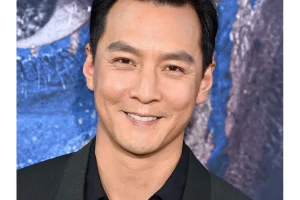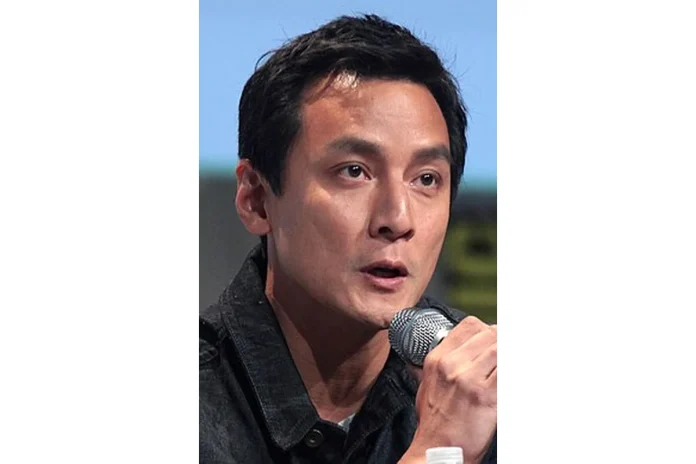
Daniel Wu Bio
Daniel Neh-Tsu Wu, born September 30, 1974, is an American actor and producer widely recognized as one of the most versatile leading performers in the Chinese-language film industry. Often described as a flexible and distinctive talent, Wu has built a career that bridges Hong Kong action cinema, Hollywood blockbusters, and American television. He made his film debut in 1998 and has since appeared in more than 60 films. A three-time Golden Horse Award nominee, Wu gained broad international attention for his starring role as Sunny in the AMC martial arts drama series Into the Badlands and for his work in the Disney+ wuxia action comedy American Born Chinese.
Born and raised in the San Francisco Bay Area, Wu moved to Hong Kong in the late 1990s and quickly established himself as a popular screen presence. Over the course of his career he has expanded into producing, directing, martial arts instruction, and entrepreneurship, while continuing to train in wushu and other disciplines. He splits his time between homes in California and Greater China, balancing Hollywood projects with continued work across the Asian entertainment industry.
Early Life and Background
Daniel Wu was born in Berkeley, California, and grew up in the nearby city of Orinda. He is a third-generation Chinese-American whose parents’ families originally came from Shanghai. During the upheavals of the twentieth century, his grandparents relocated from the mainland to Taiwan and Hong Kong before both branches of the family immigrated to the United States in the 1950s. Wu has two older sisters, Gloria and Greta, and an older brother, Douglas, who died in an accident when he was two years old.
His father, George Wu, is an engineer who earned a master’s degree in Oklahoma, and his mother, Diana Wu, is a university professor who holds a doctorate. George and Diana met while Diana was a student at New York University, and after marrying they settled in California. Wu attended the Head-Royce School in Oakland and later majored in architecture at the University of Oregon, where he also spent a summer studying at SCI-Arc and working for architect Michael Rotondi.
As a child, Wu’s grandfather often took him to movie theaters in San Francisco’s Chinatown, and a young Daniel Wu became fascinated with martial arts cinema after seeing Jet Li in The Shaolin Temple and Donnie Yen in Iron Monkey. He began studying wushu at the age of 11, later founding the University of Oregon Wushu Club in 1994 and serving as the team’s first coach. He also took film classes during college and developed an admiration for directors Akira Kurosawa and Luc Besson, whom he describes as men of vision.
Path to Celebrity
After graduating from the University of Oregon, Daniel Wu traveled to Hong Kong in 1997 to witness the handover of the territory from the United Kingdom to China. He had no plans to pursue acting and initially went at the suggestion of his sister, who encouraged him to try modeling. Within a month, film director Yonfan spotted Wu in a clothing advertisement and approached him about starring in an upcoming project.
Although Wu could not yet speak Cantonese or read Chinese and had no acting experience, he eventually agreed to Yonfan’s offer. That decision launched his career, leading to his 1998 film debut in Yonfan’s Bishonen. The role quickly drew the attention of other Hong Kong filmmakers, and within days Wu was offered the lead in Mabel Cheung’s City of Glass, followed by a supporting part in Andrew Lau’s gangster film series prequel Young and Dangerous: The Prequel.
Around this time, Wu met Jackie Chan at a restaurant opening and was signed to Chan’s JC Group with agent Willie Chan. The mentorship of Chan, along with steady work in the Hong Kong film industry, helped shape Wu’s early development as a leading man, blending on-screen charisma with rigorous physical training.
Daniel Wu Career
Early Career (1998–2002)
Daniel Wu’s first years in Hong Kong cinema moved quickly. After debuting in Bishonen in 1998, he earned a nomination for Best New Performer at the 18th Hong Kong Film Awards for City of Glass and built his reputation with the 1999 hit Gen-X Cops, directed by Benny Chan. He then appeared in a wide range of projects, including the big-budget thriller Purple Storm, the arthouse drama Peony Pavilion, and the popular romantic comedy Love Undercover.
By 2001, Wu’s willingness to take on edgier material drew both criticism and new opportunities. His performance in Cop on a Mission sparked debate in Hong Kong media over intimate scenes with co-star Suki Kwan, but the controversy also caught the attention of directors and expanded the kinds of roles he was offered.
Breakthrough (2003–2006)
In 2003, Daniel Wu took on a starring role in Julian Lee’s Night Corridor, which doubled as his first experience in film production. He helped secure funding and distribution for the project and recruited composer Jun Kung to create its soundtrack. His performance earned a Best Actor nomination at Taiwan’s 40th Golden Horse Film Awards. That same year, he appeared as both producer and creative director on MTV Asia’s Jackass-style program Whatever Things! and performed a 16-minute Cantonese monologue at the Hong Kong Arts Festival’s stage production of The Happy Prince.
In 2004, Wu was nominated for Best Actor at the 24th Hong Kong Film Awards for Derek Yee’s One Nite in Mongkok and for Best Supporting Actor for New Police Story. He went on to win Best Supporting Actor at the 41st Golden Horse Film Awards for New Police Story, an achievement he has described as a complete surprise.
Wu also co-founded the boy band Alive with Terence Yin, Andrew Lin, and Conroy Chan, and in 2006 he made his writing and directorial debut with the mockumentary The Heavenly Kings. The film chronicled the band’s formation and blurred the line between fiction and reality, leading some media outlets to question the project. The film nonetheless earned Wu the Best New Director award at the 26th Hong Kong Film Awards.
Notable Works and Milestones
Daniel Wu’s signature works include the martial arts drama Into the Badlands, where he served as both star and executive producer, the bilingual film Inseparable alongside Kevin Spacey, and major Hollywood appearances as Gul’dan in Warcraft, Captain Lu Ren in Tomb Raider, and a featured role in Lisa Joy’s Reminiscence. His Golden Horse Award for New Police Story and his Hong Kong Film Award for The Heavenly Kings stand out as defining honors of his career.
Daniel Wu Award Nominations
Daniel Wu has received multiple high-profile nominations across his career, including a Best New Performer nod at the 18th Hong Kong Film Awards for City of Glass, a Best Actor nomination at Taiwan’s 40th Golden Horse Film Awards for Night Corridor, and Best Actor and Best Supporting Actor nominations at the 24th Hong Kong Film Awards for One Nite in Mongkok and New Police Story. Additional nominations followed at the Golden Horse Awards for his performances in Chinese-language films through the late 2000s, reflecting his sustained recognition by regional industry juries.
Daniel Wu Awards Won
Daniel Wu’s competitive honors include the Best Supporting Actor award at the 41st Golden Horse Film Awards for New Police Story and the Best New Director award at the 26th Hong Kong Film Awards for his debut film The Heavenly Kings. These wins cemented his standing as both a performer and a creative force within the Chinese-language film industry and helped open doors to larger international productions.
Daniel Wu Family
Daniel Wu was raised in a close-knit, highly educated family. His father, George Wu, is an engineer, and his mother, Diana Wu, is a university professor. He has two older sisters, Gloria and Greta, and a brother, Douglas, who died as a toddler before Daniel was born. Both sides of the family trace their roots to Shanghai, with branches that settled in Taiwan and Hong Kong before moving to the United States.
Personal Life
Daniel Wu married Lisa S. on April 6, 2010, in a ceremony held in South Africa, and the couple welcomed a daughter in May 2013. After his mother passed away due to illness in 2014, Wu relocated his family from Hong Kong back to California to care for his elderly father and to support his daughter’s education. He has maintained residences in Hong Kong, Shanghai, Beijing, and Oakland, California, and continues to train in wushu alongside his professional work. In 2019, he publicly denied rumors suggesting he supported Hong Kong independence and stated his opposition to the movement.