
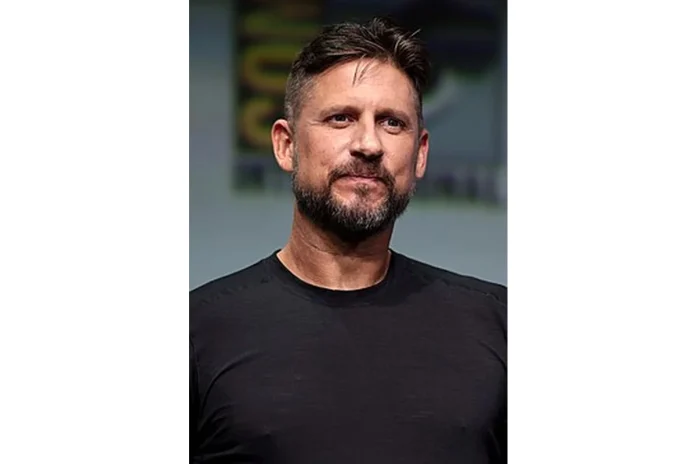
David Ayer Bio
David Ayer (born January 18, 1968) is an American film director, film producer, and screenwriter whose career spans both film and television. He first gained attention for writing the screenplays of Training Day (2001), The Fast and the Furious (2001), and S.W.A.T. (2003), and later built a reputation as a director with the crime dramas End of Watch (2012) and Fury (2014), followed by the comic-book adaptation Suicide Squad (2016). His work often explores urban life, law enforcement, and morally complex characters, combining gritty realism with high-stakes action. Through his production company, Cedar Park Entertainment, he has continued to develop and produce projects across Hollywood.
Early Life and Background
David Ayer was born on January 18, 1968, in Champaign, Illinois. He grew up in Bloomington, Minnesota, and later in Bethesda, Maryland, where, according to published reports, he was asked to leave his family home as a teenager. After that experience, he moved to Los Angeles, California, to live with his cousin, and his time in South Central Los Angeles became a lasting influence on his storytelling.
Before turning to the arts, Ayer dropped out of high school and worked painting houses for a living. He later enlisted in the United States Navy, serving as a submarine sonar technician aboard the USS Haddo. He has spoken publicly about valuing his time in the Navy and has credited the discipline and perspective he gained there as important to his later filmmaking career. His grandfather also served in the Navy during the 1950s, continuing a family tradition of military service.
Path to Filmmaking
Ayer’s screenwriting career began to take shape after his Navy service, when he drew on his experiences as a submariner to co-write the screenplay for U-571 (2000), a submarine thriller set during World War II. He followed that with the screenplay for The Fast and the Furious in 2001, a film that helped launch a major action franchise. His research into the Los Angeles Police Department informed the screenplay for the crime drama Training Day, which became one of his most recognized writing credits.
He continued his screenwriting work with the story and screenplay for S.W.A.T., which was released in 2003 and directed by Clark Johnson. By that point, Ayer had developed strong connections within the industry and a clear interest in stories about police, military, and urban conflict. These early writing assignments laid the foundation for his transition into directing and gave him the credibility needed to step behind the camera for his own projects.
David Ayer Career
Early Career (2000-2008)
David Ayer’s career in feature films officially began in 2000, the same year U-571 was released. His first three major screenwriting credits, Training Day (2001), The Fast and the Furious (2001), and S.W.A.T. (2003), established him as a reliable voice for action-driven storytelling with grounded, character-based writing. Training Day in particular proved to be one of his most significant scripts, earning him industry recognition.
He made his directorial debut with Harsh Times (2006), an action-drama set on the streets of South Central Los Angeles that he also wrote, exploring how drug use and past military experience affect people’s attempts to live ordinary lives. He followed that with the action thriller Street Kings (2008), continuing his focus on law enforcement and morally complicated characters.
Breakthrough (2012-2017)
Ayer’s breakthrough as a director came with End of Watch (2012), which he wrote and directed. The action thriller follows the daily lives of two South Central Los Angeles police officers, played by Jake Gyllenhaal and Michael Peña. The film performed well at the box office and drew strong reviews, with critic Roger Ebert naming it one of the best films of 2012 and praising it as one of the best police movies in recent years.
He moved quickly into bigger productions, directing the action thriller Sabotage (2014) starring Arnold Schwarzenegger, and then writing and directing the World War II-set action film Fury (2014), starring Brad Pitt, Shia LaBeouf, and Logan Lerman. In 2016, he wrote and directed Suicide Squad, a film adaptation of the DC Comics anti-hero team that became his most commercially successful release, even though reviews of the film and his direction were largely negative.
In 2017, Ayer directed Bright, a contemporary cop thriller with fantastical elements starring Will Smith and Joel Edgerton. Netflix acquired the film in a high-profile deal and released it on December 22, 2017, helping solidify Ayer’s reach into streaming audiences.
Notable Works and Milestones
Among David Ayer’s signature works, Training Day (2001) remains one of the most acclaimed screenplays of his career, while End of Watch (2012) and Fury (2014) stand out as defining directorial achievements that cemented his standing in Hollywood. His direction of Suicide Squad (2016) marked his highest-grossing film to date, and the Netflix release Bright (2017) showed his ability to work in the streaming space.
David Ayer Award Nominations
Across his career as a writer and director, David Ayer has received industry recognition for several of his screenplays and films, particularly Training Day (2001), End of Watch (2012), and Fury (2014). Specific nominations tied to him cannot be confirmed from the verified sources available, so detailed nomination categories are not listed here.
David Ayer Awards Won
David Ayer’s films have earned praise from critics and audiences alike, with End of Watch being singled out by major reviewers as one of the standout films of its release year. Because the verified sources do not provide a confirmed list of individual awards won, a detailed summary of specific wins is not included.
David Ayer Family
David Ayer has been married to Mireya Ayer, with the couple tying the knot in 2002 and separating in 2017. They have four children together. Beyond this, limited verified information about his extended family is publicly available.
Personal Life
Outside of his film work, David Ayer is known for the disciplined approach he developed during his time in the United States Navy, an experience he has said shaped his career. His separation from Mireya Ayer was reported in 2017, ending a marriage that had lasted roughly fifteen years.