
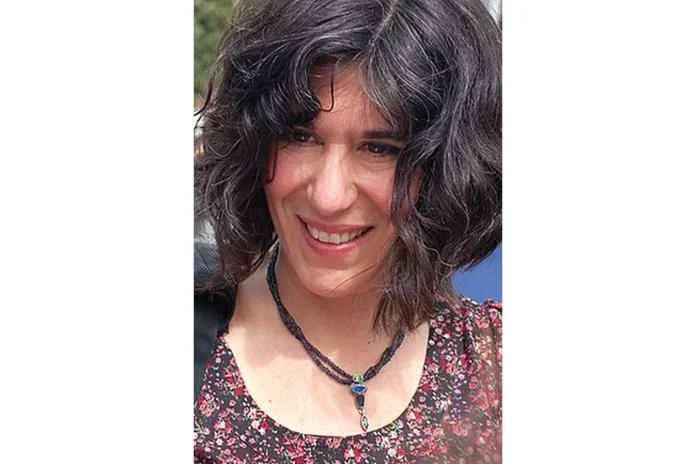
Debra Granik Bio
Debra Granik (born February 6, 1963) is an American filmmaker who has built a distinguished career directing intimate, character-driven dramas that explore resilience, family bonds, and moral ambiguity in challenging American landscapes. She is best known for directing Down to the Bone (2004), Winter’s Bone (2010), and Leave No Trace (2018). Granik frequently collaborates with producer and screenwriter Anne Rosellini, and she is noted for casting non-professional actors from rural communities to create authentic, grounded performances. Her work has earned critical acclaim, with Winter’s Bone receiving four Academy Award nominations including Best Picture and Best Adapted Screenplay. Granik’s approach blends documentary realism with fiction, helping launch the careers of actors like Jennifer Lawrence and Vera Farmiga.
Early Life and Background
Debra Granik was born in Cambridge, Massachusetts, to father William R. Granik, an attorney with the Department of Housing and Urban Development who litigated fair housing cases, and mother Brenda Granik Zusman. She grew up in the suburbs of Washington, D.C. Granik comes from a notable family as the granddaughter of broadcast pioneer Ted Granik (1907–1970), who founded and moderated the long-running public affairs panel discussion program The American Forum of the Air from 1934 to 1956, first on radio and later on television. Granik was raised in a Jewish family.
Granik attended Brandeis University, where she received her Bachelor of Arts in political science in 1985. While at Brandeis, she took film and media workshop production classes with Henry Felt and volunteered with the Boston grassroots filmmaking organization Women’s Video Collective. During her undergraduate years, she also took classes at the Studio for Interrelated Media at the Massachusetts College of Art, where she made educational films for trade unions on workplace health and safety topics. After working in production on long-form documentaries by Boston-area filmmakers, Granik decided to pursue graduate studies in filmmaking.
In 2001, Granik earned her Master of Fine Arts from New York University’s Tisch School of the Arts. Her path to filmmaking included working on educational media projects and documentary production before she transitioned to narrative filmmaking.
Path to Director
Granik’s journey into directing began during her time at NYU, where she was mentored by film professor Boris Frumin, who shared his passion for post-World War II European neorealist films. In 1997, Granik directed her first short film, Snake Feed, as her senior thesis. The project began as a 7-minute documentary portrait exercise and was accepted into the Sundance Institute’s Lab Program for screenwriting and directing. Granik workshopped and developed the short film into a feature at the Sundance Lab, eventually expanding it into her first feature-length film years later.
Her early work in documentary and educational filmmaking shaped her distinctive approach to storytelling. Before pursuing her MFA, Granik worked on production for educational media projects and documentaries by Boston-area filmmakers. This background in documentary techniques would later inform her observational style and commitment to authentic performances.
Granik’s commitment to discovering raw talent became apparent early in her career. She has worked with creative partner Anne Rosellini on all her films, developing screenplays together that focus on complex characters navigating difficult circumstances.
Debra Granik Career
Early Career (1997–2004)
In 2004, Granik released her first feature-length film, Down to the Bone, which was based on an original screenplay she co-wrote with Anne Rosellini. The film tells the story of an upstate New York mother struggling with cocaine addiction who enters rehab, falls in love with a nurse, and battles to overcome her old habits. The role of the main character Irene, played by Vera Farmiga, significantly raised Farmiga’s profile as an actor and demonstrated Granik’s ability to draw powerful performances from her cast.
Down to the Bone was shot in Ulster County in upstate New York. The film established Granik’s reputation for intimate character studies set against the backdrop of working-class America. It marked her emergence as a distinctive voice in independent cinema.
Breakthrough (2010)
Granik’s second feature, Winter’s Bone (2010), based on the 2006 novel by Daniel Woodrell, became her breakthrough success. The film follows Ree Dolly, a determined teenager living in Missouri’s Ozark Mountains who serves as the sole caretaker of her two younger siblings and catatonic mother while searching for her missing drug-dealing father to save her family from eviction. The role was played by a then-unknown Jennifer Lawrence, whose performance launched her career to international stardom.
Winter’s Bone won the Grand Jury Prize: Dramatic Film at the 2010 Sundance Film Festival, which led to a distribution deal with Roadside Attractions. The film received four Academy Award nominations in 2011: Best Picture, Best Adapted Screenplay (Granik and Rosellini), Best Actress for Jennifer Lawrence, and Best Supporting Actor for John Hawkes. At the Seattle International Film Festival, Granik won the Golden Space Needle Award for Best Director and Lawrence won for Best Actress.
Granik cast many supporting roles with first-time actors from the surrounding Ozark area, and all homes used in the film were actual established Ozarks homes with no sets constructed. The soundtrack featured traditional gospel, bluegrass, and music native to the Ozarks region, with contributions from regional music and folklore consultant Marideth Sisco.
Notable Works and Milestones
Following Winter’s Bone, Granik directed Stray Dog (2014), a documentary about Ron Hall, a Vietnam veteran nicknamed “Stray Dog,” exploring his life as an avid biker struggling with post-traumatic stress disorder. Granik had met Hall during filming of Winter’s Bone. In 2018, she directed Leave No Trace, starring Ben Foster and newcomer Thomasin McKenzie. The film, based on Peter Rock’s novel My Abandonment, tells the story of a father and daughter living off government land who must adapt to mainstream society. Leave No Trace premiered at the Sundance Film Festival and played at the Cannes Film Festival, receiving critical acclaim and becoming a critics’ pick of The New York Times.
Debra Granik Award Nominations
Debra Granik has received significant recognition throughout her career, beginning with her breakthrough at the 2010 Sundance Film Festival where Winter’s Bone won the Grand Jury Prize. That same year, she earned additional recognition at the Seattle International Film Festival. Her most notable nominations came at the 2011 Academy Awards, where Winter’s Bone received four nominations including Best Picture and Best Adapted Screenplay, cementing her reputation as a leading voice in American independent cinema.
Debra Granik Awards Won
Granik’s films have won top prizes at major festivals. Her debut feature Down to the Bone established her talent for intimate storytelling, while Winter’s Bone brought her widespread acclaim including multiple major awards for directing.
| Award | Wins | Year |
|---|---|---|
| Sundance Film Festival Grand Jury Prize – Dramatic | 1 | 2010 |
| Seattle International Film Festival Golden Space Needle Award for Best Director | 1 | 2010 |
| Seattle International Film Festival Golden Space Needle Award for Best Actress | 1 | 2010 |
Debra Granik Family
Granik was born to William R. Granik and Brenda Granik Zusman in Cambridge, Massachusetts. Her father was an attorney who worked on fair housing litigation, and her grandfather was Ted Granik, a prominent broadcast pioneer who founded The American Forum of the Air. Granik has one child and lives in New York City.
Personal Life
Debra Granik is married to Jonathan Scheuer, who has served as executive producer on her films and is Vice Chairman of the Board of Trustees of the National Jazz Museum in Harlem. The couple lives in New York City. Granik has spoken about the challenges of maintaining a career in independent filmmaking with a relatively low output compared to her contemporaries, often facing questions about the time elapsed between projects. Despite these challenges, she has continued to develop new projects, including documentaries and adaptations of books like Barbara Ehrenreich’s Nickel and Dimed.