
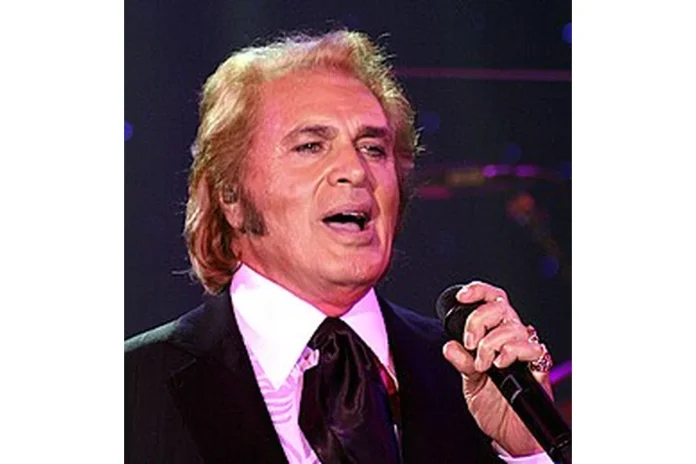
Engelbert Humperdinck Bio
Arnold George Dorsey MBE (born 2 May 1936), known professionally as Engelbert Humperdinck, is a British pop singer noted for his middle-of-the-road ballads and wide international appeal. He first drew major public attention in 1967 with the hit single “Release Me” and quickly followed it with a string of successful recordings, including “The Last Waltz” and “A Man Without Love.” Over a career spanning more than six decades, Humperdinck has sold more than 140 million records worldwide, developed a strong reputation as a live performer in Las Vegas and beyond, and ventured into gospel, duets, and soundtrack recordings. He was appointed Member of the Order of the British Empire (MBE) in 2021 for services to music.
Early Life and Background
Arnold George Dorsey was born on 2 May 1936 in Madras, Madras Presidency, British India. He was one of ten children born to British Army non-commissioned officer Mervyn Dorsey, who was of Irish descent, and his wife Olive, who was of German descent. When Dorsey was ten years old, his family moved to Leicester, England, where he would spend much of his youth. The family later maintained ties with Leicestershire, and Humperdinck remains a well-known supporter of Leicester City F.C.
As a young man, Dorsey developed an interest in music and began learning the saxophone. By the early 1950s, he was playing saxophone in nightclubs, and his impression of the American comedian Jerry Lewis prompted friends to begin calling him “Gerry Dorsey,” a stage name he would work under for almost a decade. He is believed not to have begun singing until he was in his late teens, focusing first on instrumental work before eventually stepping to the microphone as a vocalist.
Dorsey’s early attempt to launch a music career was interrupted by conscription into the British Army’s Royal Corps of Signals during the mid-1950s. After his discharge, he got his first chance to record in 1959 with Decca Records, having been spotted when he won a talent contest on the Isle of Man the previous summer. His first single, “Crazy Bells,” was not a hit despite appearances on the ITV teenage music show Oh Boy!. He switched to Parlophone later that year, but that release also failed to chart.
Path to Music
By 1959, Dorsey had become part of a touring show called “The Big Beat Show,” appearing alongside other British pop singers of the time, including Billy Fury, Vince Eager, and Terry Dene. He followed this with further television appearances on ITV’s “The Song Parade” and a support tour with Adam Faith, while continuing to work the nightclub circuit. In June 1961, however, he was stricken with tuberculosis and spent nine months in hospital, forcing him to rebuild his career virtually from scratch when he returned to show business in 1962.
After regaining his health, Dorsey returned to the variety stage and to nightclub work, but with little commercial success through the early 1960s. In 1965, he teamed up with Gordon Mills, his former roommate in Bayswater, London, who had become a music impresario and the manager of Tom Jones. Mills suggested a change of name to the more arresting Engelbert Humperdinck, borrowed from the nineteenth-century German composer of operas such as Hansel and Gretel. The new stage name, with its unusual sound in English, marked the turning point that led to international success.
Humperdinck’s first real breakthrough came in July 1966 in Belgium, where he and four others represented Britain in the annual Knokke song contest and won that year’s prize. He made a mark on the Belgian charts with “Dommage, Dommage” and was filmed in an early music video in the harbour of Zeebrugge. These continental successes set the stage for the string of British and American hits that would soon follow.
Engelbert Humperdinck Career
Early Career (1956–1966)
Humperdinck began performing in the late 1950s under the name Gerry Dorsey, marking the start of a professional career that has continued in some form since 1956. His earliest recordings, including “Crazy Bells” and “I’ll Never Fall in Love Again,” failed to chart, and his early progress was slowed by his hospitalisation with tuberculosis in 1961. After recovering, he rebuilt his live act on the variety and nightclub stages of the United Kingdom through the early 1960s.
During this period, Humperdinck made a series of television appearances and supported established acts on tour, building the stagecraft that would later define his concert career. His partnership with manager Gordon Mills in 1965, followed by his win at the Knokke song contest in 1966, gave him the platform he needed to compete with the biggest names in British pop. By the end of 1966, he was ready to record the material that would change his life.
Breakthrough (1967–1969)
In early 1967, Humperdinck’s version of “Release Me” topped the UK Singles Chart and reached No. 4 on the US Billboard 100. Arranged by Charles Blackwell in an “orchestral country music” style, with Big Jim Sullivan and Jimmy Page among the session musicians, the record kept the Beatles’ “Strawberry Fields Forever”/”Penny Lane” from the top slot in the United Kingdom for the first time since 1963. “Release Me” spent 56 weeks in the UK Top 50 and was believed to have sold 85,000 copies a day at the height of its popularity.
Two further hit ballads, “There Goes My Everything” and “The Last Waltz,” quickly followed, and Humperdinck earned a Variety Club of Great Britain award for Show Business Personality of 1967. In 1968, “A Man Without Love” reached No. 2 on the UK Singles Chart, with the parent album climbing to No. 3 on the UK Albums Chart, while “Les Bicyclettes de Belsize” became a top 10 hit in the UK and a top 40 single in the United States. By the end of the decade, his roster of songs had grown to include “Am I That Easy to Forget,” “The Way It Used to Be,” “I’m a Better Man (For Having Loved You),” and “Winter World of Love,” supported by successful albums such as Release Me, The Last Waltz, A Man Without Love, and Engelbert Humperdinck.
His easygoing style and good looks soon earned him a large following, particularly among women, and his most devoted female fans began calling themselves “Humperdinckers.” For two seasons in 1969–70, Humperdinck fronted his own television series, The Engelbert Humperdinck Show, for ATV in the United Kingdom and ABC in the United States, in a musical variety format that featured guests including Paul Anka, Shirley Bassey, Tony Bennett, Ray Charles, Lulu, Dusty Springfield, Tom Jones, and Dionne Warwick.
Notable Works and Milestones
Among Humperdinck’s most significant recordings are “Release Me” (1967), “The Last Waltz” (1967), “A Man Without Love” (1968), and “After the Lovin’” (1976), each of which became a defining song of his career and a staple of his concert repertoire. His 1976 album After the Lovin’ reached the top 20 on the US charts, was nominated for a Grammy Award, and was certified Double Platinum, while the title single won the “most played jukebox record of the year” award.
Engelbert Humperdinck Award Nominations
Engelbert Humperdinck has received nominations from major industry bodies across his long recording career. The 1976 album After the Lovin’ earned a Grammy Award nomination, and the 2003 gospel release Always Hear the Harmony: The Gospel Sessions was nominated for a Grammy for “Best Southern, Country or Bluegrass Gospel Album of the Year.” He has also collected further industry recognition in subsequent years, building a nominations record that mirrors his commercial longevity.
Engelbert Humperdinck Awards Won
Humperdinck’s career has been marked by several major honours in addition to his chart success. In 1967, he received the Variety Club of Great Britain award for Show Business Personality of the Year. He was awarded a star on the Hollywood Walk of Fame in 1989 and won a Golden Globe Award as Entertainer of the Year. In 2006, the University of Leicester awarded him an Honorary Doctorate of Music, and in 2010 he became one of the first nine people honoured with a plaque on the Leicester Walk of Fame. He was appointed Member of the Order of the British Empire (MBE) in the 2021 Birthday Honours for services to music.
| Award | Wins | Year |
|---|---|---|
| Variety Club of Great Britain — Show Business Personality of the Year | 1 | 1967 |
| Golden Globe Award — Entertainer of the Year | 1 | — |
| Hollywood Walk of Fame Star | 1 | 1989 |
| Honorary Doctorate of Music, University of Leicester | 1 | 2006 |
| Member of the Order of the British Empire (MBE) | 1 | 2021 |
Engelbert Humperdinck Family
Engelbert Humperdinck was born into a large military family as one of ten children of Mervyn Dorsey, a British Army non-commissioned officer of Irish descent, and his wife Olive, who was of German descent. The family moved from Madras, British India, to Leicester, England, when he was ten years old, and he retains ties with Leicestershire to this day. In 1964, Humperdinck married Patricia Healey, a lifelong Catholic whom he had first met at the Palais de Danse, a nightclub in Leicester, and the couple had four children, splitting their time between homes in the United Kingdom and the United States.
Personal Life
Humperdinck and his wife Patricia lived between the UK and the US and raised four children during their long marriage. In 2017, the singer publicly revealed that Patricia had been suffering from Alzheimer’s disease for ten years; she died in Los Angeles on 5 February 2021, with the family praying with her and blessing her with water from Lourdes in her final moments. Outside of music, Humperdinck has invested in real estate in Mexico and the United States, and in the latter half of the 1970s he bought the Pink Palace in Los Angeles, the former home of actress Jayne Mansfield, later selling it to developers in 2002.