
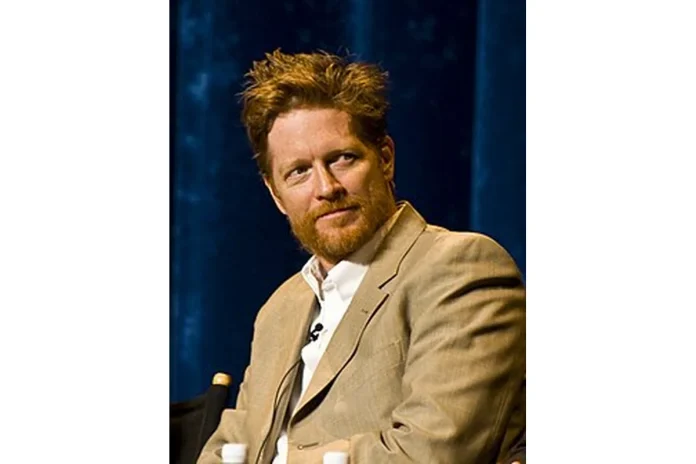
Eric Cameron Stoltz Bio
Eric Cameron Stoltz, born on September 30, 1961, is an American actor, director, and producer whose career has spanned film, television, and stage since the late 1970s. He first drew wide critical notice for his portrayal of Rocky Dennis in the biographical drama Mask (1985), a performance that earned him a Golden Globe nomination and helped establish him as one of the most compelling actors of his generation. Over the decades, Stoltz has built a reputation for taking on unconventional roles in independent and studio productions alike, while also directing episodes of some of the most popular American television dramas of the twenty-first century.
Beyond his acting work, Stoltz has developed a parallel career as a television director, with credits including long runs on the musical series Glee and the political drama Madam Secretary. He has also stepped behind the camera on episodes of Grey’s Anatomy and Law & Order, and has produced several independent films. A native of Whittier, California, Stoltz continues to balance work in front of and behind the camera, making him one of the more quietly versatile figures in modern Hollywood.
Early Life and Background
Eric Cameron Stoltz was born on September 30, 1961, in Whittier, California, the son of Evelyn Vawter, a violinist and schoolteacher, and Jack Stoltz, an elementary school teacher. He grew up with two sisters in a household shaped by music and education, experiences that informed his later interest in the performing arts. Parts of his childhood were spent in American Samoa, while he later lived in Santa Barbara, California, giving him an unusually broad sense of place before he entered the entertainment industry.
During the 1970s, while still a teenager, Stoltz joined a repertory company that toured ten plays to the Edinburgh Festival, an early experience that exposed him to professional stage work and international audiences. He returned to the United States in 1979 and enrolled at the University of Southern California as a drama student, formally beginning the academic side of his training. Although he ultimately left USC before graduating, the school gave him an entry point into the wider world of professional acting.
After leaving USC, Stoltz moved to New York in 1981, where he studied acting with Stella Adler and Peggy Feury, two of the most respected acting teachers of the era. This period of formal training, combined with his earlier repertory work, helped him transition from amateur performances to a more disciplined professional approach.
Path to Acting
Stoltz’s first professional screen credit came in 1978, when he was cast as Steve Benson in the television adaptation of Erma Bombeck’s The Grass Is Always Greener Over the Septic Tank. This small role introduced him to the rhythms of on-camera acting and led directly to further work in film and television during his time at USC.
His friendship with writer-director Cameron Crowe began on the set of Fast Times at Ridgemont High (1982), in which Stoltz had a minor role. Crowe reportedly promised Stoltz parts in all of his future films, a pledge that was largely kept in subsequent projects. Stoltz appeared in Crowe’s The Wild Life (1984), Say Anything… (1989), Singles (1992), and Jerry Maguire (1996), building a steady working relationship that gave him early visibility in Hollywood.
On stage, Stoltz developed a parallel reputation as a serious theatre actor, working on Broadway in productions such as Three Sisters, Two Shakespearean Actors, Arms and the Man, and Our Town. His performance as George Gibbs in the 1989 Broadway revival of Thornton Wilder’s Our Town earned him a Tony Award nomination for Best Featured Actor in a Play, cementing his standing as a respected stage presence.
Eric Cameron Stoltz Career
Early Career (1978-1984)
During the early 1980s, Stoltz moved between television movies and supporting film roles while continuing his stage work in New York. His appearance in Fast Times at Ridgemont High (1982) gave him an early foothold in the film industry and led to his casting in The Wild Life (1984), the first of several collaborations with Cameron Crowe.
These formative years allowed Stoltz to refine his craft in a variety of formats, from anthology television to low-budget features. He also spent time on the New York stage, performing in both Broadway and off-Broadway productions, which helped him develop a reputation for thoughtful, character-driven work.
Breakthrough (1985-1989)
Stoltz’s breakthrough came with his starring role in Mask (1985), in which he played Rocky Dennis, a teenager with a rare facial condition. The performance earned him a Golden Globe Award nomination for Best Supporting Actor in a Motion Picture and is widely considered one of the defining roles of his career.
That same period brought him leading roles in John Hughes’s Some Kind of Wonderful (1987), the Cameron Crowe-scripted Say Anything… (1989), and the sequel The Fly II (1989), the last of which grossed approximately $38.9 million worldwide. He was also briefly cast as Marty McFly in Back to the Future before being replaced by Michael J. Fox after five weeks of shooting, a decision that became a frequently cited moment in Hollywood history.
Notable Works and Milestones
Stoltz built on his 1980s success with an eclectic run of films in the 1990s, including Pulp Fiction (1994), Little Women (1994), Rob Roy (1995), Jerry Maguire (1996), Grace of My Heart (1996), and Anaconda (1997). He received an Independent Spirit Award nomination for Best Supporting Male for his work in Pulp Fiction and later earned a Daytime Emmy nomination for directing the cable film My Horrible Year! (2001). Other notable projects include The House of Mirth (2000) with Gillian Anderson, recurring television roles on Mad About You, Chicago Hope, Once and Again, and Grey’s Anatomy, and a starring turn as Daniel Graystone in the science fiction series Caprica (2010).
Eric Cameron Stoltz Award Nominations
Eric Cameron Stoltz has earned several prestigious nominations across film, television, and stage during his career. He received a Golden Globe nomination for his performance in Mask (1985), a Tony Award nomination for Featured Actor for his work in Our Town (1989), and an Independent Spirit Award nomination for Best Supporting Male for Pulp Fiction (1994). He has additionally been nominated for a Daytime Emmy Award for his direction of the cable movie My Horrible Year! (2001), reflecting recognition from multiple branches of the entertainment industry.
Eric Cameron Stoltz Awards Won
Eric Cameron Stoltz’s career has been marked more by nominations than by competitive wins in major televised ceremonies, though he has been honored by independent and festival organizations for his contributions. He received the Indie Supporter Award at the 1998 Los Angeles Film Festival, recognizing his work as an actor and producer in independent cinema.
Eric Cameron Stoltz Family
Eric Cameron Stoltz was raised in a close-knit family in Whittier, California, by his father, Jack Stoltz, an elementary school teacher, and his mother, Evelyn Vawter, a violinist and schoolteacher. He has two sisters, and his parents’ backgrounds in music and education shaped his early interest in the arts.
Personal Life
Eric Cameron Stoltz began a long-term relationship with actress Bridget Fonda in 1990; the couple dated for eight years before parting ways. In 2005, he married Bernadette Moley, a singer, and the couple have one daughter. Stoltz is also known to be a vegetarian.