
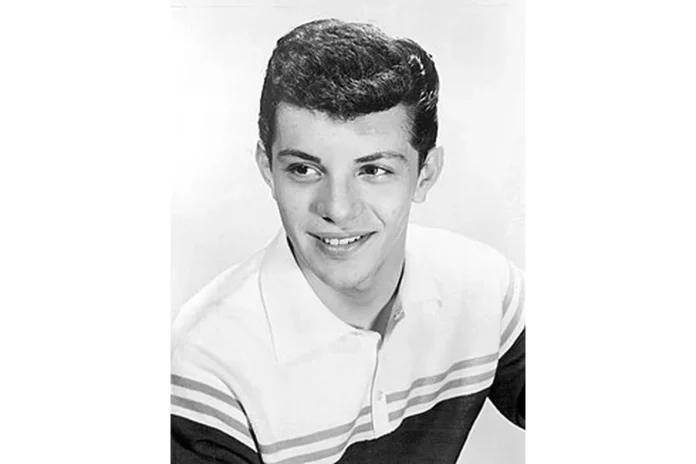
Frankie Avalon Bio
Francis Thomas Avallone, known professionally as Frankie Avalon, is an American singer, actor, and former teen idol whose career has spanned more than seven decades. Born in Philadelphia, Pennsylvania, on September 18, 1940, he rose to fame in the late 1950s with a string of pop hits, including the chart-topping singles “Venus” in 1959 and “Why” in 1960. Between 1958 and late 1962, he placed 31 songs on the U.S. Billboard charts, becoming one of the defining voices of the early rock and roll era. He later transitioned into film, most notably as the sunny male lead of the Beach Party series and as the singing Teen Angel in the 1978 musical Grease.
Early Life and Background
Frankie Avalon was born in Philadelphia, Pennsylvania, on September 18, 1940, the son of Italian-American parents Mary and Nicholas Avallone. His mother was originally from Sicily, while his father, a butcher, was born in Philadelphia to a grandfather from Salerno, in Campania, Italy. Growing up in a close-knit Italian-American household in South Philadelphia, Avalon discovered music at a young age and became especially drawn to the trumpet, studying the instrument as a boy.
He displayed a natural gift for performance as a child, practicing trumpet for hours and appearing in local talent showcases. According to Avalon, his early ambition as a ten-year-old was to lead his own band, much like the trumpeter Harry James. That youthful dedication to musicianship laid the foundation for his later crossover success as both a recording artist and a Hollywood performer.
Path to Celebrity
Avalon’s road to national fame began on television in December 1952, when he made his American network debut playing the trumpet during a “Christmas Party” sketch on The Jackie Gleason Show. He soon joined a Philadelphia group called Rocco and the Saints, where he played alongside a young Bobby Rydell. Two singles highlighting his trumpet skills appeared on RCA Victor’s X sublabel in 1954, giving him his first taste of recording success.
By the mid-1950s, Avalon had signed with Chancellor Records, where songwriter and producer Bob Marcucci guided his transition from instrumentalist to singing pop star. After modest early releases, his career exploded in 1959 with “Venus,” which spent five weeks at number one on the Billboard Hot 100, followed by “Why,” which became the first number one hit of the 1960s. These songs turned him into a teen idol and a frequent guest on television variety shows of the era.
His early film work began with a brief appearance in Jamboree (1957), where he played trumpet and sang “Teacher’s Pet.” Producer John Wayne spotted his talent during the production of Guns of the Timberland (1960), a Western with Alan Ladd, and cast him in the dramatic role of “Smitty” in The Alamo (1960). After seeing his performance, Wayne publicly praised Avalon as “the finest young talent” he had seen in a long time, helping to launch Avalon’s film career alongside his music career.
Frankie Avalon Career
Early Career (1952-1958)
Frankie Avalon launched his professional career in 1952 as a trumpet-playing teenager on network television. His early recordings for RCA Victor and his work with Rocco and the Saints helped him develop a fan base around the Philadelphia area, and his appearances on local shows brought him to the attention of Chancellor Records.
During this period he honed his skills as a singer, dancer, and actor, building the versatile stage persona that would later define his screen work. By 1958 he was regularly appearing on television and beginning to land small parts in films, setting the stage for his breakthrough as a chart-topping recording artist.
Breakthrough (1958-1962)
Frankie Avalon’s breakthrough arrived in 1959 with “Venus,” which held the number one spot on the Billboard Hot 100 for five consecutive weeks. The follow-up single, “Why,” reached the top of the chart in 1960 and became the first number one hit of the new decade. Additional charting singles during this peak period included “Just Ask Your Heart” (No. 7), “I’ll Wait for You” (No. 5), “Bobby Sox to Stockings” (No. 8), and “A Boy Without a Girl” (No. 10).
On screen, he co-starred with Alan Ladd in Guns of the Timberland (1960) and appeared in the John Wayne-directed Western The Alamo (1960), followed by roles in Voyage to the Bottom of the Sea (1961), Sail a Crooked Ship (1961), and Panic in Year Zero! (1962) with Ray Milland. These dramatic and science-fiction parts established him as a genuine film talent in addition to his pop-music fame.
Beach Party Era and 1960s Film Work (1963-1968)
His biggest film success of the decade came with Beach Party (1963), a cheerful pop musical comedy that paired him with Annette Funicello and was directed by William Asher for American International Pictures. The film became a major hit and launched a string of sequels, including Muscle Beach Party (1963), Bikini Beach (1964), Beach Blanket Bingo (1965), and How to Stuff a Wild Bikini (1965). He later called Beach Blanket Bingo the picture of his that audiences remember most.
Beyond the beach films, Avalon took on a wide range of roles in the 1960s, including voice work in Alakazam the Great (1960), war comedy Operation Bikini (1963), the African adventure Drums of Africa (1963), the swashbuckler The Castilian (1963), the comedy I’ll Take Sweden (1965) with Bob Hope, the spy thriller The Million Eyes of Sumuru (1967), and Otto Preminger’s counterculture comedy Skidoo (1968). He also became a national television spokesperson for Sonic Drive-In and made numerous TV guest appearances, including the Combat! episode “Brother, Brother” and ABC’s The Patty Duke Show.
Notable Works and Milestones
Avalon’s signature screen moments include the Beach Party series with Annette Funicello and his performance of “Beauty School Dropout” in Grease (1978), which introduced him to a new generation of fans. He revived the Teen Angel role for stage productions of Grease and returned to the beach setting alongside Funicello in Back to the Beach (1987), a Paramount comedy that became a moderate hit.
Frankie Avalon Family
Frankie Avalon was born to Italian-American parents Mary Avallone and Nicholas Avallone, both of whom raised their family in Philadelphia. His father worked as a butcher, and his mother was originally from Sicily, giving Avalon a strong connection to his Italian heritage that he has celebrated in later projects such as his 2015 cookbook.
He married Kathryn “Kay” Diebel on January 19, 1963, after meeting her while playing cards at a friend’s house. The couple have eight children, including a son, Frankie Avalon Jr., a former actor who appeared in the original The Karate Kid. Avalon and his wife are also grandparents to ten grandchildren.
Personal Life
Beyond his work in entertainment, Frankie Avalon has built a life as a family man, businessman, and enduring live performer. He has toured repeatedly as part of “Dick Fox’s Golden Boys,” a concert package that has paired him over the years with fellow Philadelphia teen idols Fabian and, until his passing, Bobby Rydell. In 2024, Avalon teamed up with Tommy Cono for a new version of “Beauty School Dropout,” and Cono later stepped into Rydell’s spot on the Golden Boys tour in 2025.
He has also expanded into brand work, founding Frankie Avalon Products, a line of health and cosmetic aids promoted on the Home Shopping Network. Continuing to make public appearances, Avalon performed on American Idol in 2009 and on Dancing with the Stars on October 18, 2021, showing the lasting appeal of an artist who has remained a familiar face in American pop culture for more than seven decades.