
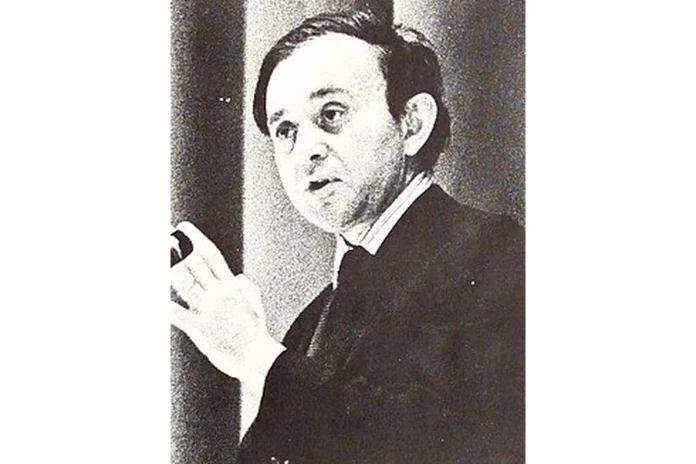
Frederick Wiseman Bio
Frederick Wiseman (January 1, 1930 – February 16, 2026) was an American filmmaker, documentarian, theater director, editor, and actor whose career defined a distinctive style of observational cinema. Over more than five decades of work, he examined American institutions through long, patient films built from direct observation, without narration, interviews, or voice-over. His most widely discussed works include Titicut Follies (1967), Hospital (1970), Welfare (1975), In Jackson Heights (2015), and Ex Libris: The New York Public Library (2017). In 2014, the Venice Film Festival awarded him the Golden Lion for Lifetime Achievement, and in 2016, the Academy of Motion Picture Arts and Sciences presented him with an Honorary Award. He retired from filmmaking in 2025 and died at his home in Cambridge, Massachusetts, in February 2026 at the age of 96.
Early Life and Background
Frederick Wiseman was born on January 1, 1930, in Boston, Massachusetts, into a Jewish family. He was the son of Jacob Leo Wiseman and Gertrude Leah Wiseman, née Kotzen. Growing up in Boston in the early decades of the twentieth century gave him an early awareness of the urban institutions that would later become the focus of his films, including schools, hospitals, courts, and government offices.
He attended Williams College, where he earned a Bachelor of Arts in 1951. He then went on to Yale Law School and completed a Bachelor of Laws in 1954. Although his education was rooted in law, his time at Williams and Yale helped sharpen the analytical approach that later defined his documentary work, where careful observation of social systems took the place of argument.
Path to Director
After Yale, Wiseman was drafted into the United States Army, where he served from 1954 to 1956. He spent the following two years in Paris before returning to the United States. On his return, he took a position teaching law at the Boston University Institute of Law and Medicine, a role that gave him a steady income while he began exploring documentary filmmaking. The combination of legal training and teaching experience informed his interest in how institutions operate and how they treat the people who pass through them.
His first major production was The Cool World (1963), a feature-length documentary about life in a Harlem youth gang. The film was later selected for preservation in the United States National Film Registry. Working on The Cool World gave him the confidence to direct his own documentaries, beginning with Titicut Follies in 1967, which examined conditions inside a state institution for the criminally insane. The film drew intense attention and confirmed his commitment to long-form observational work. He founded Zipporah Films in 1971 to handle the distribution of his own films and the work of other documentary makers.
Frederick Wiseman Career
Early Career (1963-1969)
Wiseman’s first notable films were produced and directed in quick succession at the end of the 1960s. After The Cool World in 1963 and Titicut Follies in 1967, he released High School (1968) and Law and Order (1969), both focused on American institutions. Law and Order earned him the Emmy Award for Outstanding Achievement in News Documentary Programming, an early sign of the recognition his method would attract.
He also won Guggenheim and MacArthur fellowships, which gave him the financial freedom to keep filming inside institutions for extended periods. In 1971, he established Zipporah Films, a distribution company that helped him maintain control of his work and reach public television audiences across the country. All of his films would eventually air on PBS, which became a primary funder and broadcast home for his productions.
Breakthrough (1970-1980)
The 1970s marked a peak period in Frederick Wiseman’s career. In 1970, he released Hospital, a documentary about the daily life of Metropolitan Hospital Center in New York City. The film won two Emmy Awards and was selected in 1994 for preservation in the United States National Film Registry, as well as for screening in the Cannes Classics section in 2016.
In 1975, he directed Welfare, a lengthy look at the U.S. welfare system from the perspective of both officials and claimants. Critics later called Welfare his masterpiece. He followed it in 1976 with Meat, which examined the Colorado meatpacking industry. These films built his reputation for spending four to six weeks inside an institution with little preparation, then shaping the material into a dramatic structure through careful editing.
Breakthrough (1980-2009)
Through the 1980s and 1990s, Wiseman continued to explore a wide range of American and European institutions. He directed Model (1981) about a modeling agency, Missile (1988) about U.S. military training, Central Park (1990), Ballet (1995), Public Housing (1997), and Belfast, Maine (1999). Each film extended his approach of patient, camera-led observation of how organizations function.
In the 2000s, he broadened his reach into Europe. His documentary Domestic Violence (2000) premiered at the 58th Venice International Film Festival, while State Legislature (2007) examined the Idaho Legislature for PBS. La Danse (2009), about the Paris Opera Ballet, brought him a wider international audience. The work of this period cemented his standing as a defining observational documentarian.
Breakthrough (2010-2019)
Wiseman’s 2010s work brought renewed attention to his career. Boxing Gym (2010) premiered at the 63rd Cannes Film Festival, while National Gallery (2014), which looked at London’s National Gallery, screened at Cannes, the New York Film Festival, and the Toronto International Film Festival. In 2015, he released In Jackson Heights, focused on local politics and activist organizations in a New York City neighborhood. The film won the New York Film Critics Circle Award for Best Non-Fiction Film in 2015, and The New York Times later named it the 13th best film of the twenty-first century so far.
Ex Libris: The New York Public Library (2017) screened in the main competition section of the 74th Venice International Film Festival, where it won the FIPRESCI Award. Wiseman also received the Critics’ Choice Documentary Award for Best Director for that film. In 2018, he released Monrovia, Indiana, returning to small-town American life. The 2010s closed a chapter in his career that began with the 2014 Golden Lion for Lifetime Achievement and the 2016 Academy Honorary Award.
Breakthrough (2020-2026)
In 2020, Wiseman released City Hall, a documentary about the government of Boston produced for PBS. Cahiers du Cinéma named it the best film of 2020. In 2022, he directed A Couple, his second narrative feature after La Dernière Lettre (2002). His final documentary, Menus-Plaisirs – Les Troisgros (2023), examined the daily operations of the French restaurant Le Bois sans feuilles. In 2025, he announced his retirement, citing a lack of energy for a new production. He died on February 16, 2026, at his home in Cambridge, Massachusetts.
Notable Works and Milestones
Frederick Wiseman’s most celebrated films include Titicut Follies, Hospital, Welfare, In Jackson Heights, and Ex Libris: The New York Public Library. He was known for acquiring more than 100 hours of raw footage per project and shaping it into a feature-length film without voice-over, title cards, or interviews. He called his films Reality Fictions, a phrase that captured his belief that even observational documentaries are built through editorial choices. His work has been selected for the United States National Film Registry and is taught in film programs around the world.
Frederick Wiseman Award Nominations
Frederick Wiseman’s career included recognition from major film institutions across the United States and Europe. His films regularly screened at international festivals, and his work earned numerous nominations and honors. The most notable career honors included a Golden Lion for Lifetime Achievement at the 2014 Venice International Film Festival and an Academy Honorary Award presented by the Academy of Motion Picture Arts and Sciences in 2016. He was presented the Carrosse d’Or at the 2021 Cannes Film Festival in recognition of his contributions to cinema. He also received the Dan David Prize in 2003 and the George Polk Career Award in 2006.
Frederick Wiseman Awards Won
Frederick Wiseman earned major awards for his documentaries throughout his career, beginning with the Emmy Award for Outstanding Achievement in News Documentary Programming for Law and Order in 1969. He received two Emmy Awards for Hospital in 1970. He won the New York Film Critics Circle Award for Best Non-Fiction Film in 2015 for In Jackson Heights, the FIPRESCI Award at the 2017 Venice International Film Festival for Ex Libris: The New York Public Library, and the Critics’ Choice Documentary Award for Best Director in 2017 for the same film.
| Award | Wins | Year |
|---|---|---|
| Emmy Award for Outstanding Achievement in News Documentary Programming (Law and Order) | 1 | 1969 |
| Emmy Awards for Hospital | 2 | 1970 |
| Dan David Prize | 1 | 2003 |
| George Polk Career Award | 1 | 2006 |
| Golden Lion for Lifetime Achievement | 1 | 2014 |
| New York Film Critics Circle Award for Best Non-Fiction Film (In Jackson Heights) | 1 | 2015 |
| Academy Honorary Award | 1 | 2016 |
| Critics’ Choice Documentary Award for Best Director (Ex Libris) | 1 | 2017 |
| FIPRESCI Award at Venice Film Festival (Ex Libris) | 1 | 2017 |
| Carrosse d’Or at Cannes Film Festival | 1 | 2021 |
Frederick Wiseman Family
Frederick Wiseman was the son of Jacob Leo Wiseman and Gertrude Leah Wiseman, née Kotzen. He married Zipporah Batshaw in 1955, and the couple remained married until her death in 2021. They had two sons. Wiseman lived for many years in Cambridge, Massachusetts, where he also owned a home in Paris and a summer home in Northport, Maine.
Personal Life
Frederick Wiseman lived a quiet personal life centered on his work and family. He and his wife Zipporah Batshaw were married for more than six decades, from 1955 until her death in 2021. The couple raised two sons, and Wiseman divided his time between homes in Cambridge, Massachusetts, Northport, Maine, and Paris, France. Outside of filmmaking, he directed several stage productions in the United States and France, wrote and directed Welfare: The Opera between 1987 and 1997, and took on small acting roles in his later years, including appearances in The Summer House (2018), Other People’s Children (2022), Eephus (2024), and A Private Life (2025).