
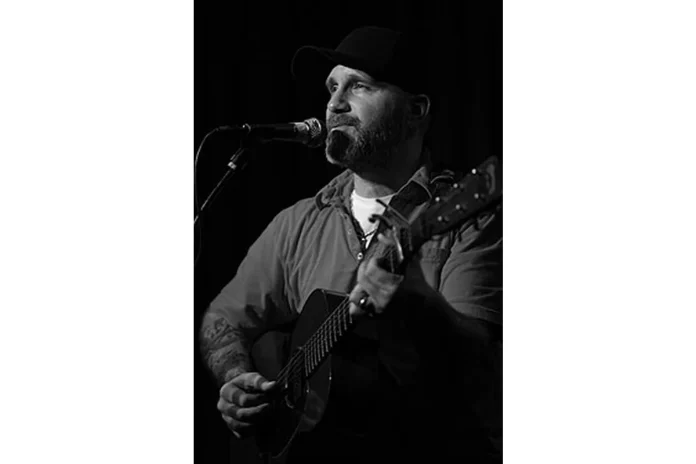
Gary Jules Bio
Gary Jules Aguirre Jr., known professionally as Gary Jules, is an American singer-songwriter born on March 19, 1969, in Fresno, California. He is widely recognized for his sparse, melancholic cover of the Tears for Fears song “Mad World,” which he recorded with longtime friend and collaborator Michael Andrews for the soundtrack of the 2001 cult film Donnie Darko. Released as a single in late 2003, the rendition topped the UK Singles Chart that Christmas, becoming one of the most distinctive cover versions in modern popular music. Active since 1990, Jules has built a catalog rooted in rock, pop, folk, and soft rock, marked by intimate arrangements and emotionally direct songwriting.
Beyond “Mad World,” Jules has composed original material that has found its way into films, television programs, theatrical productions, and advertising campaigns across the United States and Europe. His recordings have been praised for their clarity, restraint, and emotional resonance, drawing on influences that range from contemporary folk to classic singer-songwriter traditions. He has performed on international stages, including a notable guest appearance during French singer Mylène Farmer’s 2013 Timeless tour.
Early Life and Background
Gary Jules Aguirre Jr. was born in Fresno, California, to Marie Aguirre and Gary Aguirre. His family background reflects a diverse heritage with ancestral roots in Oklahoma, Ireland, France, Mexico, and Spain, an ancestry that has informed aspects of his worldview and artistic sensibility. Growing up in California, he was raised in a household that valued music and creativity, elements that would later shape his career as a performer and songwriter.
Jules attended The Bishop’s School in La Jolla, California, where he received his secondary education. Following high school, he went on to study at the University of California, Los Angeles (UCLA). During his time at UCLA, he enrolled in a class on Native American history that would later inspire the song “Wichita,” drawing on a story about Indigenous communities following bison herds across the country. These formative years laid the groundwork for the introspective style that would define his later recordings.
Path to Music
Jules began his professional music career in 1990, initially performing and writing in the Southern California scene. He developed his craft playing guitar, piano, mandolin, harmonica, and ukulele, building a versatile skill set that allowed him to shape the layered acoustic textures heard in his recordings. His early work blended rock, folk, and pop influences, and he cultivated a reputation for heartfelt performances and a clear, expressive vocal style.
Throughout the 1990s, Jules released material that demonstrated a maturing songwriting voice, drawing comparisons to introspective folk and soft rock artists of the era. He recorded for labels including A&M and later Sanctuary, refining the minimalist arrangements that would become his signature sound. His friendship and ongoing collaboration with composer Michael Andrews proved especially significant, ultimately leading to the recording that would change the trajectory of his career.
Gary Jules Career
Early Career (1990s)
Gary Jules began releasing music in 1990, working steadily through the decade to establish his sound. He performed live, honed his songwriting, and recorded for A&M Records, a period during which he developed the intimate, acoustic-driven approach that characterized his later successes. His early catalog showcased a blend of folk, rock, and pop sensibilities, earning him a loyal following in independent music circles.
During these formative years, Jules built the collaborative relationships that would define his breakthrough moment, most notably his partnership with Michael Andrews. Together, the two musicians experimented with sparse production and emotionally direct arrangements, a creative direction that would later prove central to his most recognized work.
Breakthrough (2001–2003)
In 2001, Jules and Michael Andrews recorded a stripped-down cover of Tears for Fears’ 1982 song “Mad World” for the soundtrack of Richard Kelly’s independent film Donnie Darko. The pair reimagined the track with piano, acoustic guitar, and Jules’s haunting vocal, transforming the original new wave arrangement into a haunting meditation on isolation and despair. The recording appeared in the film and later gained renewed attention as Donnie Darko developed a cult following.
In December 2003, the cover was released as a standalone single. It quickly gained traction on radio and television, eventually reaching number one on the UK Singles Chart and becoming the official UK Christmas number-one single for 2003. The success marked a turning point in Jules’s career, introducing his work to a global audience.
Notable Works and Milestones
The cover of “Mad World” remains Gary Jules’s signature work, a defining moment that connected a song originally written by Roland Orzabal and Curt Smith to a new generation of listeners. The track earned a place in television programming, advertising, and live performance, with covers and remixes extending its cultural reach. A piano cover influenced by Jules’s rendition was later featured in a Lloyd’s Bank commercial, while electronic producer Phutureprimitive released a remix in 2011. Adam Lambert, during his American Idol run, also performed a version inspired by Jules’s interpretation.
Gary Jules Award Nominations
Verified award nomination details for Gary Jules are not available in the provided sources, and as a result no specific nominations can be confirmed with certainty.
Gary Jules Awards Won
Verified award win details for Gary Jules are not available in the provided sources. While his cover of “Mad World” achieved significant commercial success, including the UK Christmas number-one position in 2003, no formal award wins can be confirmed with the available data.
Gary Jules Family
Gary Jules was born to Marie Aguirre and Gary Aguirre. His family lineage traces to Oklahoma, Ireland, France, Mexico, and Spain, a multicultural heritage that has informed both his personal identity and artistic perspective. The family later relocated from Southern California to North Carolina after a violent incident near their Los Angeles home prompted Jules to move his family to a safer environment.
Personal Life
Jules has maintained a relatively private personal life. He has spoken about the experience of relocating his family from Southern California to North Carolina, a decision that influenced the song “Gone Daddy.” His work continues to be shaped by personal experiences, family, and a commitment to emotionally resonant songwriting, qualities that have defined his career since 1990.