
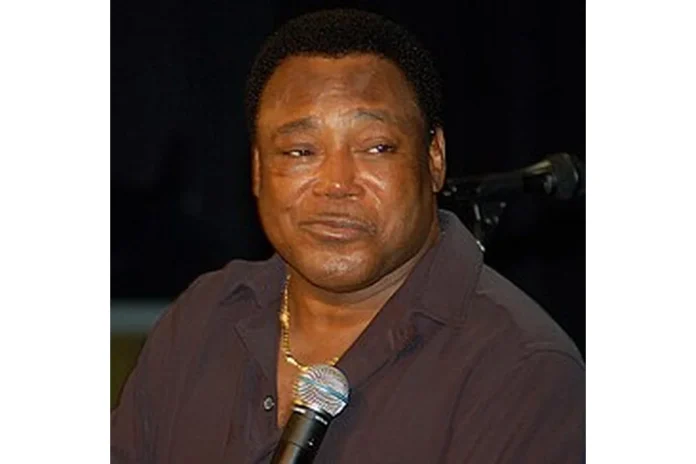
George Benson Bio
George Washington Benson, born on March 22, 1943, in Pittsburgh, Pennsylvania, is an American jazz fusion guitarist, singer, and songwriter whose career has spanned more than six decades. A former child prodigy from Pittsburgh’s Hill District, Benson began performing in local clubs as a young boy and released his first recording at the age of nine. He first gained national prominence in the 1960s playing soul jazz with organist Jack McDuff before launching a solo career that moved fluidly between instrumental jazz guitar work and vocal performances spanning jazz, pop, and R&B. With ten Grammy Awards, an NEA Jazz Master designation, and a star on the Hollywood Walk of Fame, Benson remains one of the most celebrated figures in modern American music.
Early Life and Background
George Washington Benson was born and raised in the Hill District of Pittsburgh, Pennsylvania, where music filled the neighborhood clubs and street corners. At the age of seven, he played the ukulele in a corner drug store, earning a few dollars for his performances. By eight years old, he was already playing guitar in an unlicensed nightclub on Friday and Saturday nights, although police eventually shut the establishment down. At nine, Benson cut his first record, with two of the four sides released on RCA Victor’s Groove Records label under the name George Benson, including “She Makes Me Mad” backed with “It Should Have Been Me.”
Benson attended Connelley Vocational High School on Bedford Avenue in the Hill District but dropped out to focus on music. As a youth, he developed his straight-ahead instrumental jazz skills during an extended period performing with organist Jack McDuff, and he counted country-jazz guitarist Hank Garland among his early guitar heroes. In 1987, the Pittsburgh Public Schools recognized his achievements with an honorary degree, honoring the boy who had once played Pittsburgh clubs for spare change.
Path to Music
George Benson’s rise to national attention began in 1964, when, at the age of 21, he recorded his first album as leader, The New Boss Guitar of George Benson, featuring Jack McDuff. He followed that debut with It’s Uptown in 1966, recorded with the George Benson Quartet including Lonnie Smith on organ and Ronnie Cuber on baritone saxophone, and The George Benson Cookbook in 1967. During the mid-1960s, Miles Davis employed Benson, featuring his guitar on the track “Paraphernalia” from the 1968 Columbia release Miles in the Sky, before Benson moved to Verve Records.
Throughout the late 1960s and early 1970s, Benson built a reputation as a versatile session player and bandleader. He signed with Creed Taylor’s CTI Records and became a core member of the CTI All-Stars collective, touring and recording alongside Freddie Hubbard and Stanley Turrentine, and playing on Turrentine’s acclaimed 1970 album Sugar. He also appeared on Hubbard’s 1971 album First Light, which won a Grammy Award for Best Jazz Performance by a Group at the 15th Annual Grammy Awards. These collaborations helped establish Benson as a leading voice in the emerging jazz fusion movement and set the stage for his crossover success later in the decade.
George Benson Career
Early Career (1964-1975)
George Benson’s early career was marked by a steady stream of recordings that showcased his instrumental mastery. After his 1964 debut, he built a catalog of soul-jazz and hard-bop albums on Verve and other labels, exploring arrangements that highlighted his fluid guitar lines. In 1970, he released The Other Side of Abbey Road, a set of jazz interpretations of Beatles songs that demonstrated his willingness to cross genre boundaries. By 1974, his album Bad Benson had climbed to the top of the Billboard jazz chart, signaling his growing stature among jazz audiences.
During this formative period, Benson became known for balancing his work as a sideman with his commitments as a bandleader. He played on six Freddie Hubbard studio albums and contributed to numerous other CTI projects, all while continuing to develop his own solo voice. His 1972 version of “White Rabbit,” released on the album of the same name, and his 1975 collaborations further widened his audience. By the mid-1970s, Benson had earned the respect of jazz purists and the attention of pop audiences, positioning him for a major commercial breakthrough.
Breakthrough (1976-1980)
The release of Breezin’ in 1976 transformed George Benson from a respected jazz guitarist into a mainstream pop star. The album reached No. 1 on the Billboard chart and was certified triple-platinum, driven in large part by Benson’s vocal performance on “This Masquerade,” a Leon Russell composition that won the Grammy Award for Record of the Year. The track’s lush piano introduction and solo by Jorge Dalto complemented Benson’s smooth, romantic vocal delivery, opening his work to a much wider audience.
In 1977, Benson recorded the original version of “The Greatest Love of All” for the Muhammad Ali biopic The Greatest, a song later made famous by Whitney Houston as “Greatest Love of All.” His 1978 live album Weekend in L.A. included a performance of “On Broadway” that also won a Grammy Award. The pivotal moment of the era came in 1980, when Quincy Jones produced Benson’s album Give Me the Night on the Qwest label, yielding pop and R&B hits such as the title track, “Love All the Hurt Away,” “Turn Your Love Around,” “Inside Love,” and “Lady Love Me.” During this period, Benson accumulated three additional platinum LPs and two gold albums, cementing his crossover appeal.
Notable Works and Milestones
Benson’s signature works include the triple-platinum album Breezin’ (1976), the Grammy-winning single “This Masquerade” (1976), and the Quincy Jones-produced Give Me the Night (1980). These releases showcased his rare ability to move between jazz, pop, and R&B while maintaining both critical respect and commercial success. The Hollywood Walk of Fame star and ten Grammy Awards stand as lasting recognition of his achievements.
George Benson Award Nominations
Across his career, George Benson has received numerous Grammy Award nominations spanning jazz, R&B, and pop categories. He earned nominations for his work on CTI projects, his vocal performances on crossover hits, and his long string of vocal albums into the 1990s. His collaborations with Freddie Hubbard and other jazz heavyweights also brought additional industry recognition, with multiple nominations tied to the recordings he made as both leader and sideman.
George Benson Awards Won
George Benson has won ten Grammy Awards, one of the most decorated careers in modern jazz and crossover music. Among his most notable wins is Record of the Year for “This Masquerade” in 1977, as well as Grammys for Best Jazz Performance by a Group as part of Freddie Hubbard’s First Light and a Grammy for the live take of “On Broadway” from Weekend in L.A. In 2009, he was named an NEA Jazz Master, the highest honor the United States bestows in jazz, and he has received an Honorary Doctorate of Music from the Berklee College of Music. He also holds a star on the Hollywood Walk of Fame and an honorary degree from the Pittsburgh Public Schools.
| Award | Wins | Year |
|---|---|---|
| Grammy Award for Record of the Year (“This Masquerade”) | 1 | 1977 |
| Grammy Award for Best Jazz Performance by a Group (First Light with Freddie Hubbard) | 1 | 1973 |
| Grammy Award (“On Broadway” from Weekend in L.A.) | 1 | 1979 |
| Total Grammy Awards | 10 | Career total |
| NEA Jazz Master | 1 | 2009 |
| Hollywood Walk of Fame Star | 1 | Awarded |
George Benson Family
George Benson has been married to Johnnie Lee since 1965, and the couple has seven children. His long marriage and family life have shaped his artistic outlook, with Benson describing his music as focusing on love and romance, themes tied to his commitment to his family. He is one of Jehovah’s Witnesses, a faith that has informed both his personal values and his approach to performance.
Personal Life
Benson has lived in Englewood, New Jersey, where he has long balanced his recording and touring career with family responsibilities. Beginning in 2024, he stepped back from international touring due to ill health, cancelling a series of UK concerts that summer. Despite that pause, he released the album Dreams Do Come True: When George Benson Meets Robert Farnon on July 19, 2024, a project built on long-lost 1989 recordings with arranger and conductor Robert Farnon and the London Symphony Orchestra. He also announced plans for a four-night festival called Breezin’ with the Stars, originally scheduled for January 2025.