
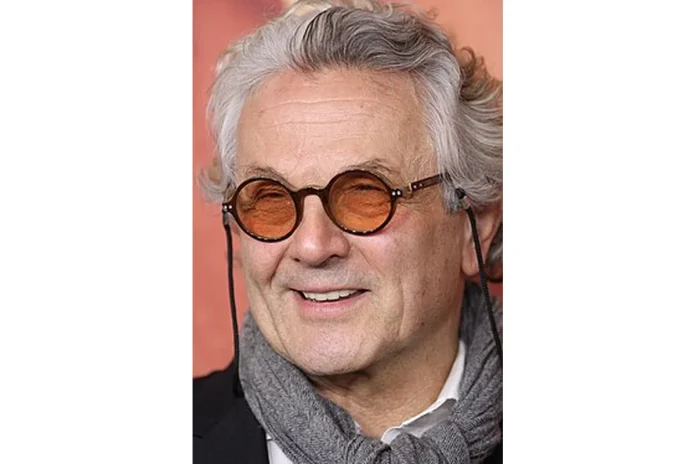
George Miller Bio
George Miller (born 3 March 1945 in Chinchilla, Queensland, Australia) is an Australian filmmaker and screenwriter whose career spans more than five decades. He is widely known for creating and directing the Mad Max franchise and for directing acclaimed films across multiple genres, from gritty action to family animation.
Miller trained in medicine at the University of New South Wales and began making short films while completing his medical residency. He transitioned to a full-time film career in the early 1970s and has since earned international recognition, including an Academy Award and multiple high-profile nominations.
Early Life and Background
George Miller was born to Jim Miller and Angela Miller in Chinchilla, Queensland. His family background and upbringing in regional Queensland preceded secondary schooling at Ipswich Grammar School and Sydney Boys High School, followed by studies at the University of New South Wales.
While completing medical training, Miller developed an interest in film and participated in student and experimental projects. In 1971 he made a short film and attended film workshops that connected him with peers interested in cinematic storytelling, an involvement that set the stage for his move from medicine into professional filmmaking.
Path to Celebrity
Miller’s early film collaborations led to a lasting production partnership with Byron Kennedy and the founding of Kennedy Miller Productions. The independent production route allowed Miller to develop original material and to make bold creative choices outside the studio system.
His breakthrough with Mad Max in 1979 established Miller as a director capable of delivering visceral, original action cinema on modest budgets. Subsequent projects and a steady mix of producing, writing and directing work broadened his profile within Australia and internationally.
George Miller Career
Early Career (1971–1979)
Miller began by directing short and experimental films while completing medical training and service in Sydney. His early short film work attracted attention and led to the independent production of his first feature, Mad Max, which premiered in 1979 and became an international success.
The financial and critical reception of Mad Max provided Miller with a platform to expand his filmmaking ambitions, refine his craft, and secure resources for larger-scale projects and sequels.
Mad Max Breakthrough (1979–1985)
Mad Max (1979) launched a franchise that grew into an influential series of post-apocalyptic action films. Miller wrote and directed the first three films in the series, including Mad Max 2 (also known as The Road Warrior, 1981) and Mad Max Beyond Thunderdome (1985), securing his reputation for kinetic staging and inventive production design.
During this period Miller worked closely with producer Byron Kennedy; their partnership shaped the production company and the creative approach behind the Mad Max films. The trilogy established recurring collaborators and a distinctive visual and thematic template that would return in later decades.
Established Director (1987–1995)
Miller transitioned to Hollywood and broader dramatic work with The Witches of Eastwick (1987) and then returned to more intimate drama with Lorenzo’s Oil (1992), a film that earned him an Academy Award nomination for writing. His ability to move between genre filmmaking and character-driven drama became a defining feature of his career.
In the mid-1990s Miller expanded into family entertainment as a producer and writer, most notably on Babe (1995). He later directed the sequel, Babe: Pig in the City (1998). These films demonstrated Miller’s range and his interest in storytelling that balances technical craft with human themes.
Kennedy Miller Mitchell Era (1983–Present)
Following the death of Byron Kennedy, Miller continued to lead the company that became Kennedy Miller Mitchell, working closely with producers including Bill Miller and Doug Mitchell. The production company provided a base for Miller’s diverse output: action, drama, family films and animation.
Through this company Miller has developed long-term creative teams, overseen production of miniseries and features, and supported Australian film projects while pursuing international co-productions and studio collaborations.
Directing Style and Strengths
Miller’s directing blends bold visual composition, meticulous production design and an emphasis on physical performance and stuntcraft. He balances large-scale action choreography with character detail and moral themes, and he adapts his approach to suit genre—from visceral action sequences to the technical demands of animation.
Notable Events and Milestones
Key milestones include the worldwide success of Mad Max and its sequels, Miller’s Academy Award win for Best Animated Feature with Happy Feet (2006), and the critical resurgence marked by Mad Max: Fury Road (2015). Fury Road returned Miller to the franchise with broad critical acclaim and significant recognition during awards seasons.
George Miller Career Wins
Miller’s verified accolades include an Academy Award win and multiple Academy Award nominations across different categories, as well as major industry recognition for both his live-action and animated work. His films have received awards and festival honors while also achieving notable box-office performance in several cases.
Mad Max Highlights
The Mad Max franchise began as an independently financed Australian film and expanded into a globally recognized series. Mad Max: Fury Road (2015) marked a landmark return to the world Miller created; the film received widespread critical praise and multiple Academy Award nominations, and it remains one of Miller’s most discussed achievements in action filmmaking.
The more recent Furiosa: A Mad Max Saga (2024) extended Miller’s work within the franchise and continued the thematic and stylistic interests that define his contributions to the series.
Other Wins & Perfromances
Miller achieved commercial and critical success outside the Mad Max universe with Babe (1995) as a producer and Happy Feet (2006) as writer and director. Happy Feet was a box-office success and earned Miller the Academy Award for Best Animated Feature, demonstrating his ability to work successfully in animation as well as live-action.
George Miller Family
Family Background and Filmmaking Lineage
Miller was born to Jim Miller and Angela Miller. Family background in regional Australia and his formative years in Sydney preceded his move into filmmaking. He has maintained longstanding creative partnerships and a production company structure that has supported multiple generations of collaborators.
Personal Life
George Miller was married to actress Sandy Gore from 1985 to 1992. He has been married to film editor Margaret Sixel since 1995; Sixel has worked in editorial and creative capacities on Miller’s films.
2025 Season Performance
As of 2025 Miller’s recent slate includes the return to the Mad Max universe with Fury Road and its subsequent Furiosa project, and the 2022 release Three Thousand Years of Longing. He has previously stated that he and co-writer Nico Lathouris completed additional post-Fury Road scripts, and key performers from Fury Road have expressed commitment to future franchise entries.
Going forward, Miller’s career outlook reflects continued interest in both franchise work and original material, with an established production infrastructure and ongoing collaborations that position him to pursue projects across live-action and animation platforms.