
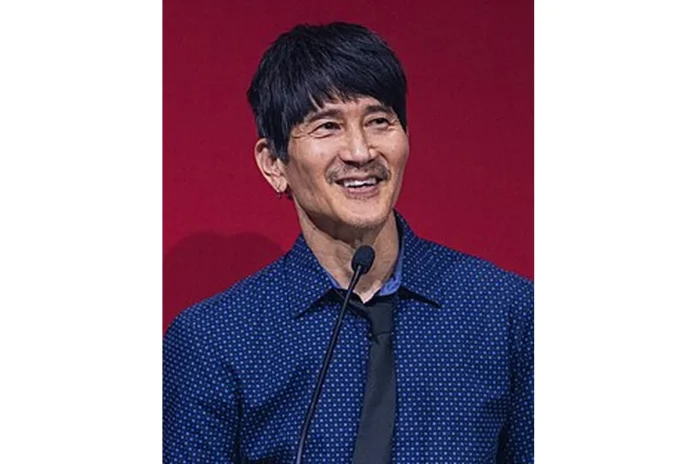
Gregg Araki Bio
Gregg Araki is an American filmmaker whose body of work has made him a leading voice in independent cinema. Born in Los Angeles to Japanese American parents and raised in nearby Santa Barbara, California, he has spent more than three decades crafting provocative films that explore the lives of young people, sexuality, and identity. Araki stands as a defining figure of the New Queer Cinema movement, a wave of filmmaking that emerged in the early 1990s to challenge mainstream representations of LGBTQ+ lives. His work is widely studied for its bold visual style, irreverent tone, and willingness to confront taboo subjects.
Early Life and Background
Gregg Araki was born on December 17, 1959, in Los Angeles, California. He grew up in a Japanese American household, an identity that would later inform his perspective as an artist and public figure. The family later settled in Santa Barbara, where Araki spent his formative years. Growing up along the California coast exposed him to a wide cultural mix that helped shape his creative sensibility.
As a young man, Araki developed a strong interest in storytelling and film, eventually pursuing higher education in the humanities and the arts. He enrolled at the University of California, Santa Barbara, where he earned a Bachelor of Arts degree in 1982. His undergraduate years proved pivotal, as he began experimenting with film projects and developed the early ideas that would later define his career. Several of his future collaborators, including producer Andrea Sperling, came from this same university environment.
Following his graduation, Araki continued his studies at the University of Southern California School of Cinematic Arts. There, he completed a Master of Fine Arts degree in 1985, an experience that sharpened his technical skills and connected him to a wider community of young filmmakers. By the time he left USC, Araki was determined to pursue filmmaking as a full-time profession.
Path to Directing
Gregg Araki launched his directing career in 1987 with his debut feature, Three Bewildered People in the Night. Made on a shoestring budget of just five thousand dollars and shot with a stationary camera, the film announced his willingness to work outside the studio system. The story of a romance between a video artist, her boyfriend, and her gay friend established the kind of intimate, character-driven narratives that would run throughout his career.
Two years later, Araki released The Long Weekend, also known as O’ Despair, once again working with a five-thousand-dollar budget. The financial limitations of these early projects forced a resourceful, improvisational approach. To make his third feature, The Living End, in 1992, Araki relied on borrowed equipment and spare film stock supplied by independent director Jon Jost, a gesture that reflected the supportive network of underground filmmakers working at the time.
Despite the tiny budgets, Araki’s early work earned critical recognition. He collected honors from the Locarno International Film Festival and the Los Angeles Film Critics Association, along with a nomination from the Sundance Film Festival. These accolades helped position him as one of the most promising independent voices of his generation and paved the way for his most celebrated work.
Gregg Araki Career
Early Career (1987–1992)
Gregg Araki’s earliest directorial efforts, Three Bewildered People in the Night and The Long Weekend, set the template for his later work: low budgets, raw visual energy, and stories centered on the romantic and social lives of outsiders. The Living End, his 1992 film about two HIV-positive men on a road trip, brought him wider attention and remains a touchstone of the New Queer Cinema movement.
During this period, Araki built a loyal following on the festival circuit and in the independent film community. Honors from Locarno, the Los Angeles Film Critics Association, and a Sundance nomination signaled that his underground sensibility had real critical weight. These early projects also allowed him to refine the punk-influenced, shoegaze-soundtracked style that would become a signature of his work.
Breakthrough (1993–1999)
Araki’s most celebrated work arrived in the 1990s with a trio of films now known as the Teenage Apocalypse trilogy. The first entry, Totally F***ed Up, appeared in 1993, followed by The Doom Generation in 1995 and Nowhere in 1997. Together, the three films blend teen alienation, hazy sexuality, and aggression into a portrait of young adulthood unlike anything else in American independent cinema. Former student Andrea Sperling co-produced the trilogy, helping bring the projects to the screen.
The trilogy also marked Araki’s growing ability to attract recognized actors. Over the course of these three films, he worked with performers including Rose McGowan, Margaret Cho, Parker Posey, Guillermo Díaz, Ryan Phillippe, Heather Graham, and Mena Suvari. Critical reaction was polarized, with Roger Ebert famously giving one entry a thumbs down while later publications and audiences embraced the films as cult classics.
Following the trilogy, Araki directed Splendor in 1999, a film that doubled as both an homage to screwball comedies of the 1940s and 1950s and a response to the public discussion of his personal life. The film premiered at the Sundance Film Festival and was hailed as the most optimistic work of his career to that point.
Notable Works and Milestones
Beyond the Teenage Apocalypse trilogy, Araki’s most important works include Mysterious Skin (2004), a critically praised adaptation of Scott Heim’s novel, and the stoner comedy Smiley Face (2007) starring Anna Faris. He also created the Starz television series Now Apocalypse in 2019, co-executive produced by Gregory Jacobs and Steven Soderbergh, marking a return to episodic storytelling.
Gregg Araki Award Nominations
Gregg Araki has received a nomination from the Sundance Film Festival, earned in recognition of his early independent work during the late 1980s and early 1990s. He has also collected honors from the Los Angeles Film Critics Association and the Locarno International Film Festival, organizations that recognized his distinctive contributions to American and international cinema.
Gregg Araki Awards Won
Gregg Araki’s most prominent award is the Queer Palm from the Cannes Film Festival, which his film Kaboom won in 2010 as the prize’s inaugural recipient. The award recognized the film’s contribution to lesbian, gay, bisexual, and transgender issues on screen. He also received the Filmmaker on the Edge Award at the 2006 Provincetown International Film Festival. In 2013, the Museum of Arts and Design in New York City honored him with a career retrospective titled God Help Me: Gregg Araki.
Gregg Araki Family
Gregg Araki was born into a Japanese American family in Los Angeles, California, and was raised in nearby Santa Barbara. His cultural background has been a meaningful part of his public identity, and he has spoken about his experiences as a gay Asian American. Other specific details about his parents and extended family are not publicly documented in available sources.
Personal Life
Gregg Araki has previously described himself as a gay Asian American, though he has noted in interviews that his sense of identity has shifted over time. From 1997 to 1999, he was in a relationship with actress Kathleen Robertson, a period that overlapped with the production and release of Splendor. In a 2014 interview, while in a relationship with a male partner, Araki said he did not strongly identify with any label but considered himself gay at that point, acknowledging that he had also been with women.