
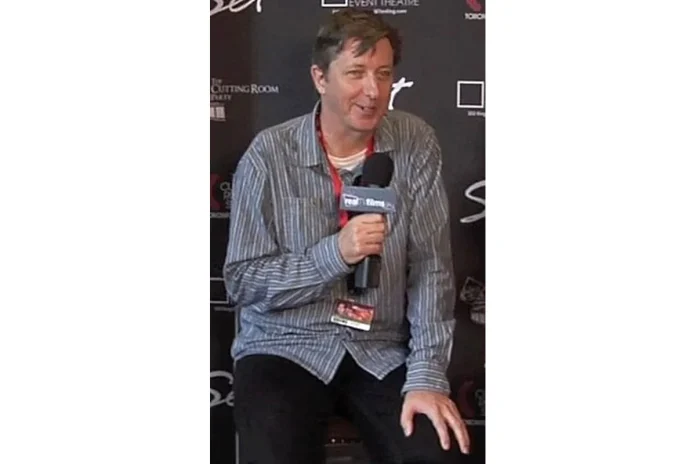
Hal Hartley Bio
Hal Hartley (born November 3, 1959) is an American film director, screenwriter, producer and composer who became a key figure in the American independent film movement of the 1980s and 1990s. His work is widely noted for its deadpan humor, stylized dialogue, philosophical undertones and visual play, with The Unbelievable Truth (1989), Trust (1990), Simple Men (1992), Amateur (1994) and Henry Fool (1997) standing as his most frequently cited features. Hartley often scores his own films, sometimes under the pseudonym Ned Rifle, and his soundtracks have featured music by artists including Sonic Youth, Yo La Tengo and PJ Harvey. His films also provided early career launches for a regular company of actors, including Adrienne Shelly, Edie Falco, James Urbaniak, Martin Donovan, Karen Sillas and Elina Löwensohn.
Across four decades, Hal Hartley has built a body of work that blends theatrical dialogue with experimental form, moving from 35mm features shot on Long Island to digital productions filmed across Europe and beyond. He has continued to expand into theater, television and digital-era filmmaking while remaining closely associated with the offbeat characters and quirky romantic comedies that first brought him to international attention.
Early Life and Background
Hal Hartley was born on November 3, 1959, in Lindenhurst, New York, and grew up on Long Island as the son of an ironworker. From an early age he showed a strong interest in painting and the visual arts, an interest that would shape his later approach to composition, framing and storytelling on film. His Long Island upbringing also informed the suburban settings and working-class characters that appear across many of his earliest features.
After completing his secondary education, Hal Hartley attended the Massachusetts College of Art in Boston, where he studied art and developed a deeper interest in filmmaking. In 1980, he was accepted into the filmmaking program at the State University of New York at Purchase, where he studied film production and met a core group of technicians and actors who would go on to collaborate with him for years. Among the key collaborators he met at SUNY Purchase was his regular cinematographer Michael Spiller, who would shoot many of Hartley’s most celebrated features.
Path to Filmmaker
During his time at SUNY Purchase, Hal Hartley began producing short films and working with a tight-knit group of collaborators drawn from classmates and fellow students. The friendships and creative partnerships he formed in this period became the foundation for his later independent productions, supplying the actors, crew and visual sensibility that would define his early style. His student work and shorts helped him sharpen a deadpan, dialogue-driven approach that set him apart from mainstream Hollywood filmmaking of the era.
Hal Hartley began his professional career in 1984, writing and directing short films and small independent projects while assembling the troupe of actors and technicians who would support his features. By the late 1980s, he was ready to mount his first feature on a shoestring budget, drawing on his Long Island roots and his SUNY Purchase network. The result was The Unbelievable Truth, a project that would announce his arrival on the international festival circuit.
Hal Hartley Career
Early Career (1984–1989)
Hal Hartley launched his professional career in 1984 with short films and independent projects produced outside the studio system. He shot The Unbelievable Truth in 1988 on a shoestring budget, filming on location in his native Long Island. The unconventional love story starred Adrienne Shelly as a suburban Long Island teenager who falls for a handsome mechanic with a criminal past, played by Robert John Burke, both of whom became Hartley regulars. The screenplay introduced what became his trademarks: deadpan humor, offbeat stilted dialogue, philosophical questions about the meaning of life, and a stylized approach to acting, choreography and camera movement. The film received positive reviews and was nominated for the Grand Jury Prize at the 1990 Sundance Film Festival.
Following the success of The Unbelievable Truth, Hartley continued to build his independent filmography with shorts and small features while developing his core company of collaborators. These early projects established his reputation at international film festivals and laid the groundwork for the features that would bring him wider recognition throughout the 1990s.
Breakthrough (1990–1998)
Trust (1990) cemented Hal Hartley’s reputation, again an offbeat romantic comedy starring Adrienne Shelly as a Long Island teenager who forms a complex romantic relationship with a mysterious computer repairman played by Martin Donovan. The film won the Waldo Salt Screenwriting Award at the 1991 Sundance Film Festival. Hartley followed with the short feature Surviving Desire (1991), a romantic comedy about a college professor played by Donovan who has an affair with a student played by Mary B. Ward. Simple Men (1992), a drama about two brothers played by Burke and Bill Sage who reunite to search for their anarchist father, was entered in competition at the 1992 Cannes Film Festival.
Amateur (1994) marked a change of pace for Hartley, exploring somber themes in what has been described as a metaphysical thriller starring Isabelle Huppert as a former nun trying to write pornographic fiction who encounters Thomas, played by Martin Donovan, a man suffering from amnesia, and his wife Sophia, played by Elina Löwensohn. Hartley then developed Flirt (1995) as an extension of his 1993 short film of the same name, a triptych following three separate romantic entanglements set in New York, Berlin and Tokyo, each using the same dialogue and starring Bill Sage, Parker Posey, Martin Donovan, Dwight Ewell and the Japanese actress Miho Nikaido, whom Hartley married in 1996.
Hartley achieved his greatest commercial and critical success with Henry Fool (1997), a comic drama about a near-catatonic garbageman named Simon Grim, played by James Urbaniak, and his sister Fay, played by Parker Posey, who meet Henry Fool, played by Thomas Jay Ryan, a libertine and aspiring novelist. The film garnered positive reviews and was entered into competition at the 1998 Cannes Film Festival, where Hartley won the Best Screenplay Award. He also completed The Book of Life (1998), a digital-video black comedy shot in New York City that imagines Jesus Christ having second thoughts about the Apocalypse, starring Martin Donovan, PJ Harvey and others.
Notable Works and Milestones
Across the 1990s, Hal Hartley built a signature body of work centered on The Unbelievable Truth, Trust, Simple Men, Amateur, Flirt and Henry Fool, films that collectively defined a deadpan, philosophical corner of American independent cinema. The signature milestone of this period was his Best Screenplay Award at the 1998 Cannes Film Festival for Henry Fool, along with earlier recognition at Sundance, including the Waldo Salt Screenwriting Award for Trust and a Grand Jury Prize nomination for The Unbelievable Truth.
Hal Hartley Award Nominations
Hal Hartley has received several high-profile nominations across his career in directing and screenwriting. His first feature, The Unbelievable Truth (1989), earned a nomination for the Grand Jury Prize at the 1990 Sundance Film Festival, signaling early recognition of his distinctive voice. He also received nominations and selections at major international festivals, including competition entries at the 1992 Cannes Film Festival for Simple Men and the 1998 Cannes Film Festival for Henry Fool, where he ultimately won Best Screenplay.
Hal Hartley Awards Won
Hal Hartley has been honored with major awards in film and the arts, recognizing both his screenwriting and his broader cultural contributions. His feature Trust (1990) won the Waldo Salt Screenwriting Award at the 1991 Sundance Film Festival, and Henry Fool (1997) earned him the Best Screenplay Award at the 1998 Cannes Film Festival. In 1996, he was made Chevalier of the Ordre des Arts et des Lettres of the French Republic, and in 2004 he was awarded a fellowship by The American Academy in Berlin.
| Award | Wins | Year |
|---|---|---|
| Sundance Waldo Salt Screenwriting Award (Trust) | 1 | 1991 |
| Cannes Film Festival Best Screenplay (Henry Fool) | 1 | 1998 |
| Ordre des Arts et des Lettres (Chevalier) | 1 | 1996 |
| The American Academy in Berlin (Fellowship) | 1 | 2004 |
Hal Hartley Family
Hal Hartley was born in Lindenhurst, New York, the son of an ironworker. Details of his parents and siblings are not broadly documented in public sources, and verified information about his immediate family remains limited.
Personal Life
Hal Hartley married the Japanese actress Miho Nikaido in 1996. Nikaido had appeared in his 1995 film Flirt and later featured in Hartley’s digital-era productions. The couple’s marriage has been a consistent presence alongside Hartley’s international career, which has included long stretches of work in New York and, from late 2005 onward, in Berlin, where he prepared and shot Fay Grim and continued developing later projects. In addition to his film work, Hartley also wrote the stage play Soon, a drama about the confrontation at Waco, Texas, between the Branch Davidians and the U.S. federal government, first produced at the Salzburg Festival and later staged in Antwerp and in the United States in 2001.